
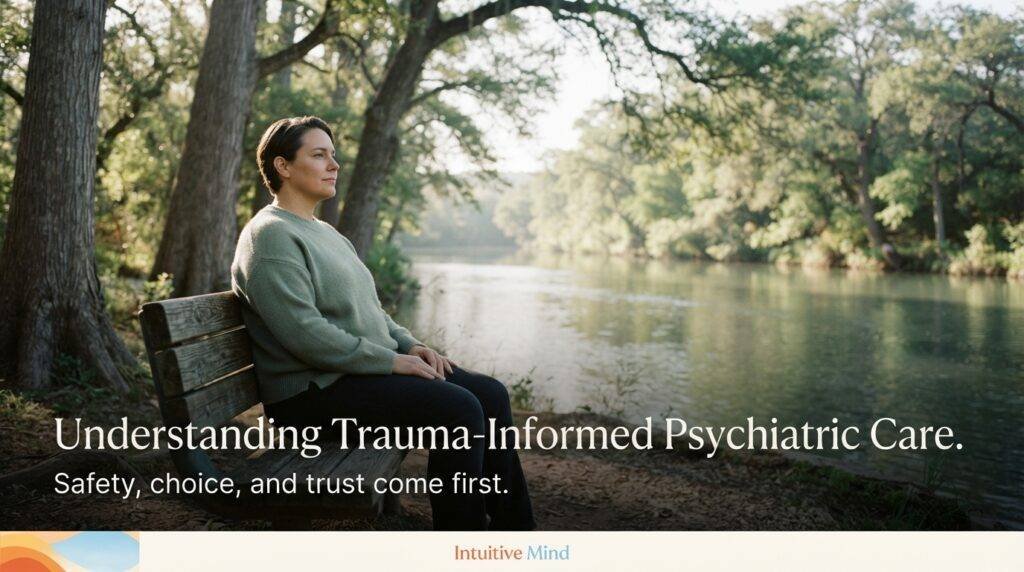
When Getting Help Feels Hard to Trust
Maybe you’ve thought about seeing a psychiatric provider for a long time, but something holds you back. Maybe past experiences in medical settings left you feeling rushed, judged, or powerless. Maybe the thought of being asked about painful memories makes your chest tighten. Or maybe you’ve had experiences in your life that taught you it’s safer not to rely on others. If any of this sounds familiar, trauma-informed care was designed with you in mind.
Trauma is more common than many people realize. It can come from a single frightening event, such as an accident, disaster, or assault, or from experiences that happened over time, such as growing up in an unsafe home, living with violence, or facing ongoing discrimination. Trauma can shape how people respond to stress, relationships, and even health care itself.
For some trauma survivors, ordinary parts of a medical visit, like answering personal questions, waiting in an unfamiliar room, or feeling like decisions are being made for them, can bring up old feelings of fear or loss of control. That can make it hard to seek care, or to return after a first visit.
In Seguin and across Guadalupe County, many people carry these experiences quietly. They may not use the word “trauma” at all. They may simply know that they’re always on alert, that they don’t sleep well, or that certain situations make them shut down.
This guide explains what a trauma-informed approach means, the principles behind it, what it looks like in psychiatric care, who it helps, and how to take a first step at your own pace. Let’s start with the definition.

What Trauma-Informed Care Means
Trauma-informed care is an approach to health care that recognizes how common trauma is, understands how it can affect people, and shapes every part of care to support safety and avoid causing further harm. It isn’t a specific therapy. It’s a way of practicing that guides how providers communicate, ask questions, and make decisions with patients.
SAMHSA describes a trauma-informed approach as one that realizes the widespread impact of trauma, recognizes its signs, responds by integrating that knowledge into practice, and actively works to avoid re-traumatization.
SAMHSA’s six key principles:
- Safety: physical and emotional safety for patients
- Trustworthiness and transparency: clear explanations and consistent follow-through
- Peer support: connection with others who have shared experiences
- Collaboration and mutuality: decisions made with patients, not for them
- Empowerment, voice, and choice: building on strengths and respecting preferences
- Cultural, historical, and gender considerations: recognizing how identity and history shape experiences
Universal precautions. Because providers can’t always know who has experienced trauma, trauma-informed practices are applied to everyone. Patients don’t have to disclose trauma to benefit.
How trauma can show up. The National Center for PTSD notes that trauma is common and that while many people recover, some develop lasting symptoms such as intrusive memories, avoidance, negative changes in mood, and feeling on edge. Trauma can also contribute to depression, anxiety, sleep problems, substance use, and physical health concerns.
Only a qualified clinician can diagnose PTSD or another trauma-related condition.
Why Trauma-Informed Psychiatric Care Matters
Psychiatric care often involves sensitive conversations and decisions about medication and treatment. For trauma survivors, how that care is delivered can make the difference between getting help and staying away.
Traditional settings can feel unsafe. Rushed appointments, unexplained procedures, or feeling unheard can echo past experiences of powerlessness.
Avoidance keeps people from care. Many trauma survivors cancel appointments, skip follow-ups, or never return after a difficult first visit.
Symptoms get misread. Hypervigilance can look like anxiety alone, numbness can look like depression alone, and difficulty trusting providers can be mistaken for noncompliance. A trauma-informed lens helps providers see the whole picture.
Shame keeps stories hidden. Many people feel ashamed of what happened to them, even when it wasn’t their fault. Care that doesn’t require disclosure allows healing to begin anyway.
Control matters. Trauma often involves losing control. Care that offers choices, explains options, and respects a patient’s pace helps rebuild a sense of agency.
[CLINICIAN’S NOTE] Two patterns we see often: believing you must tell your whole story at the first visit, and assuming you’ll be pushed into treatment you don’t want. A trauma-informed approach starts with what’s happening now, such as sleep, mood, and daily functioning, and lets you decide what to share and when. Treatment decisions are made together, with clear explanations of options, benefits, and side effects. If something doesn’t feel right, you can say so, and the plan can change.
What Trauma-Informed Psychiatric Care Looks Like
A trauma-informed approach shows up in small, practical ways throughout care.
Clear explanations. Your provider explains what will happen during a visit, why certain questions are asked, and how information will be used. There shouldn’t be surprises, and you can always ask why.
Choice in what you share. You can skip questions, pause, or say “I’m not ready to talk about that.” You choose the pace.
Choice in how you meet. Telehealth visits from home can feel safer for some people than an office. In-person visits can feel more grounding for others. You can choose what works best.
A calm, respectful setting. In person, that might mean a quiet room, comfortable seating, and the option to sit closer to the door. By telehealth, it means a private space where you feel secure.
Collaborative decisions. Treatment options are explained clearly, including benefits, risks, and alternatives. Your preferences guide the plan.
Focus on strengths. Care recognizes the ways you’ve coped and survived, not just the challenges. The skills that helped you get through hard times are valued and built on.
Preparing before your first visit. It’s okay to ask questions before you ever book. You might want to know how long the first visit lasts, what kinds of questions will be asked, whether you can bring someone with you, and how telehealth works. Knowing what to expect ahead of time reduces uncertainty, which is one of the most common sources of stress for trauma survivors entering care.
Recognizing what feels activating. Some people find that certain sounds, tones of voice, closed doors, or specific questions bring up strong reactions. You’re welcome to share these with your provider, even in general terms, so care can be adjusted. Something as simple as leaving a door partly open, speaking more slowly, or giving advance notice before a sensitive topic can make a visit feel safer.
Handling difficult moments. If you begin to feel overwhelmed during a visit, it’s okay to pause, take a breath, change the subject, or end early. A trauma-informed provider will check in, offer grounding techniques if you’d like them, and never push you to continue when you’re not ready.
Including support people. Some patients feel more comfortable with a trusted person present, such as a partner, friend, or family member, especially at first. Others prefer complete privacy. Either choice is respected, and you can change your mind over time.
Respecting culture, faith, and identity. Experiences of trauma are shaped by culture, faith, race, gender, and history, including experiences of discrimination. Care that acknowledges these factors, and asks how they matter to you, helps treatment fit your life and values rather than working against them.
A comprehensive evaluation. A thorough psychiatric evaluation looks at mood, anxiety, sleep, physical health, substance use, medications, relationships, and current stressors, with general questions about past experiences that you can answer at your own pace. Our approach to trauma care is built around these principles.
Treating anxiety and hypervigilance. Feeling constantly on alert, easily startled, or unable to relax are common after trauma. Treatment can help your body and mind feel safer. Learn more about our anxiety and panic treatment.
Treating depression. Numbness, hopelessness, and withdrawal often accompany trauma. Treating depression can restore energy for healing. See how we approach depression treatment.
Trauma-focused therapy. Structured therapies such as cognitive processing therapy, prolonged exposure, and EMDR have strong research support for PTSD. These are offered gradually, with your consent at each step. We can incorporate trauma-informed therapy into care or help coordinate a referral to a trained therapist.
Medication, when appropriate. Medication can help with symptoms like anxiety, depression, sleep problems, and nightmares. Your prescriber will discuss options and side effects, and decisions are made together. When medication is being considered, pharmacogenomic testing may provide information about how your genes could affect your response to certain medications. It doesn’t guarantee the right medication, but it can help guide choices.
Consistency and follow-through. Trust grows when care is predictable. That means starting appointments on time when possible, following through on what was promised, giving clear notice about any changes, and making sure you know how to reach the office between visits. These small, reliable actions help rebuild a sense that care can be counted on.
Building trust over time. Trust doesn’t have to be there on the first day. Many people start cautiously and open up gradually as they see that their choices are respected. A trauma-informed approach expects that, and welcomes honest feedback about what is and isn’t working for you.
Attention to the body. Functional and hormonal lab testing may be recommended when symptoms suggest a physical contributor. Sleep, movement, nutrition, and reducing alcohol all support recovery.
Care for children and teens. Trauma-informed approaches are especially important for young people. Our page on children’s mental health care explains how we involve parents and caregivers while protecting a child’s sense of safety.
How progress is measured. Success looks like feeling safer, sleeping better, fewer intrusive memories, less avoidance, steadier mood, and greater trust in your own ability to cope, tracked over time with you.
A trauma-informed approach isn’t about treating people as fragile; it’s about treating them as experts in their own lives. When safety, choice, and trust come first, people who once avoided care find they can return, stay, and heal.
Comparing Your Care Options
Here’s how common options compare for people affected by trauma.
| Care Option | What It Addresses | Often a Good Fit When | Limitations to Know |
|---|---|---|---|
| Self-help and grounding skills | Managing day-to-day distress | Symptoms are mild or you’re preparing for care | Not enough for persistent PTSD symptoms |
| Peer support and support groups | Connection, shared experience | You want to feel less alone | Support, not a substitute for treatment |
| General talk therapy | Emotional support | You want a safe place to talk | May not include trauma-focused methods |
| Trauma-focused therapy (CPT, PE, EMDR) | Processing traumatic memories | PTSD symptoms are central and you’re stable enough to begin | Requires commitment; access varies |
| Integrated trauma-informed psychiatric care (Intuitive Mind approach) | Evaluation, stabilization, medication when appropriate, therapy coordination, labs | Symptoms are persistent, overlapping, or affecting daily life | Requires an evaluation first; plan and pace depend on the individual |
NAMI offers resources and support for people living with PTSD and their families.
A practical way to use this table: if you’re just beginning to recognize how trauma affects you, grounding skills and peer support can help. If symptoms are affecting your sleep, relationships, work, or health, a trauma-informed evaluation is a reasonable next step.
What to Expect at Intuitive Mind
For Seguin residents, our New Braunfels office is a short drive, and telehealth is available anywhere in Texas. Our page on mental health care in Seguin has more about serving Guadalupe County.
Initial Evaluation. We start with a calm, unhurried conversation about how you’re doing now: sleep, mood, anxiety, health, and what feels hardest. We’ll explain what we’re asking and why, and you decide what to share. It helps to bring a list of medications and supplements and any relevant records. We handle the assessment and explain what we see in plain language.
Personalized Plan. Together, we build a plan focused on safety and stability first. That may include therapy or coordination with a trauma-focused therapist, medication when appropriate, lab work, sleep support, and coping skills. Your preferences guide every step.
Ongoing Care. Follow-up visits move at your pace. You can slow down, pause, or change direction whenever you need to.
Adjust and Coordinate. As you heal, the plan changes. With your consent, we coordinate with your therapist, primary care provider, or other supports.
Every person’s healing is different, and the pace of progress varies from person to person.
Common Questions About Trauma-Informed Care
Is trauma-informed care only for people with PTSD?
No. A trauma-informed approach benefits everyone, because providers can’t always know who has experienced trauma. Its focus on safety, transparency, and choice makes care more comfortable and effective for all patients, whether or not they have a trauma history or a PTSD diagnosis.
Will I have to talk about my trauma?
Not unless and until you choose to. Care starts with what you’re experiencing now, and you decide what to share. Some treatments eventually involve working with memories, but only gradually and with your consent. Many people feel better before discussing details at all.
What if I’m not safe right now?
If you’re experiencing abuse or violence, safety comes first. In Guadalupe County, Thriving Hearts Crisis Center can be reached at 830-372-2780 or 800-834-2033. The National Domestic Violence Hotline is 1-800-799-7233, and the National Sexual Assault Hotline is 1-800-656-4673. In immediate danger, call 911.
Does insurance cover trauma treatment?
We work with many major insurance plans and also offer self-pay. Contact us to confirm coverage. It can help to check your plan’s mental health benefits before your first appointment.
Your Next Step Is a Conversation
If past experiences have made it hard to trust care, you deserve an approach that puts your safety and choices first. Trauma-informed care is designed to meet you where you are and move at a pace that feels right.
The most useful next step isn’t forcing yourself to tell your story. It’s a comprehensive evaluation, offered with respect and choice, that helps you understand what you’re carrying before deciding what to change.
- Ready to start? Book an evaluation with Intuitive Mind. In-person visits are available in New Braunfels, a short drive from Seguin, with telehealth anywhere in Texas.
- Prefer to talk first? Call us at (830) 302-4097 with your questions.
- Want to learn more? Read about our approach to trauma-informed treatment.
If you’re in crisis or thinking about harming yourself, you don’t have to wait for an appointment. Call or text 988 to reach the 988 Suicide & Crisis Lifeline, available 24/7. Veterans and service members can dial 988 and press 1 for the Veterans Crisis Line. In Guadalupe County, the Bluebonnet Trails 24/7 crisis line is (800) 841-1255. If you or someone else is in immediate danger, call 911 or go to the nearest emergency room. Intuitive Mind is not an emergency service.
About This Article
Written by the Intuitive Mind Behavioral Health Care Team Clinically reviewed by Lydia Kimeli-Pope, MSN, PMHNP
Intuitive Mind Behavioral Health is a psychiatric mental health practice based in New Braunfels, Texas, offering whole-person care for adults, children, and families, in person and through telehealth across Texas and New Mexico. Our approach combines psychiatric evaluation, therapy, medication management, pharmacogenomic testing, functional and hormonal lab testing, and nutritional and lifestyle support.
🌐 intuitive-mind.com 📍 387 W. Mill St. Suite 106, New Braunfels, TX 78130 📞 (830) 302-4097