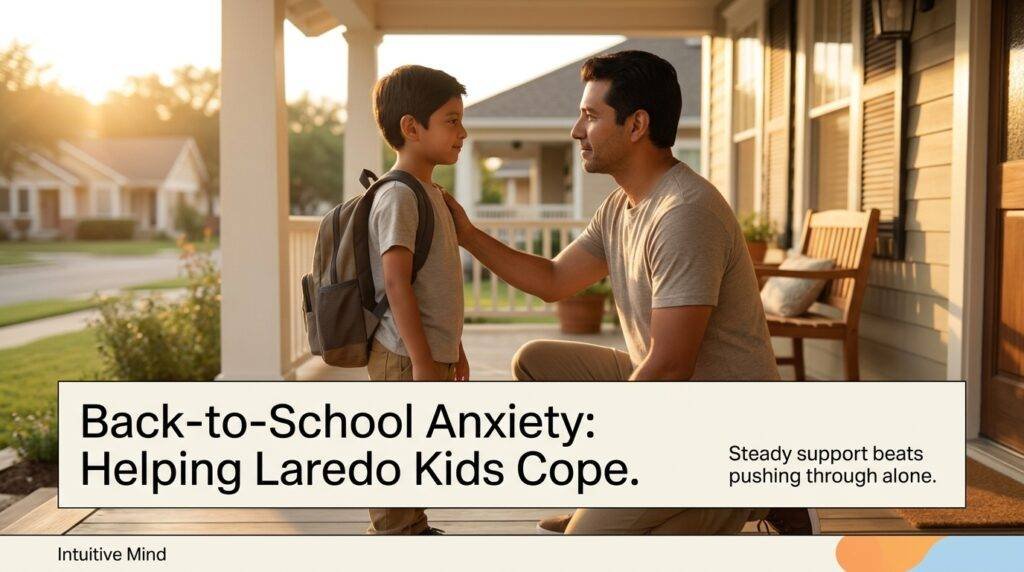
Back-to-School Anxiety: Helping Laredo Kids Cope
When First-Day Nerves Become Something More It’s the night before the first day of school in Laredo. The backpack is packed, the uniform is laid out, and your child is in tears. Or they’ve gone quiet in a way that worries you. Or it’s the third night in a row they’ve said their stomach hurts. Most parents expect some jitters. What’s harder to know is when back-to-school anxiety is a passing phase and when it’s a sign your child needs more support. You may feel stuck between two instincts. One says, “Push through, they’ll be fine once they get there.” The other says, “Something is really wrong, and I don’t want to make it worse.” Both come from love, and neither one, on its own, tells you what your child actually needs. The weeks around a new school year ask a lot of kids. There are new teachers, new classrooms, new social circles, earlier mornings, and, for many children, a new campus altogether. Some kids adjust within days. Others carry the stress home, and it shows up as sleepless nights, short tempers, or a growing list of reasons to stay home. For many Laredo families, getting a child seen by a mental health specialist in person can mean a drive to San Antonio, more than two hours each way. That distance is one reason families wait, hoping things settle on their own. Sometimes they do. When they don’t, the delay can make the next school morning harder than the last. This guide is written for parents and caregivers. It explains what back-to-school worry looks like at different ages, why it’s often missed, what effective care involves, and how to decide when it’s time to talk with a professional. Let’s start with what this kind of anxiety is, and what it isn’t. Understanding Back-to-School Anxiety in Children Back-to-school anxiety is the worry, fear, or dread a child feels about returning to school or starting a new one. It usually peaks in the days before school begins and during the first few weeks of the year. For most children, it fades as routines settle in. For some, it lingers, intensifies, or spreads into other parts of life. Anxiety in children rarely announces itself as “I feel anxious.” It tends to show up in the body and in behavior. Common signs include: How it changes with age. Younger children often struggle with separation from a parent and the unfamiliarity of a new classroom. Middle schoolers tend to worry about fitting in, changing classes, and keeping up. Teenagers may feel pressure about grades, friendships, social media, and the future, and they are more likely to hide what they’re feeling. Life changes add up. A move, a new campus, a family change, or a hard previous year can all make the return to school feel heavier. For children in bilingual homes, the shift from a summer of mostly Spanish at home back to a full day of English instruction can add another layer of effort, especially for younger students. Nerves, or something more? Ordinary first-week nerves are usually short-lived and don’t stop a child from participating. Anxiety that needs attention tends to last several weeks or longer, feels out of proportion to the situation, and interferes with sleep, learning, friendships, or attendance. It also helps to look beyond anxiety itself. Trouble focusing in class can come from worry, from ADHD, or from both. A child who suddenly dreads school may be reacting to something real, such as bullying or a difficult classroom situation, which needs to be addressed directly. In teens, persistent sadness or loss of interest alongside worry can point to depression. Physical complaints deserve to be taken seriously, too. If stomachaches or headaches are new, severe, or come with fever, vomiting, or weight loss, check with your child’s pediatrician first to rule out a medical cause. Only a qualified clinician can diagnose an anxiety disorder. School screenings and online checklists are useful starting points, not answers. Why Anxiety in Kids Is Often Missed or Undertreated Most parents who eventually seek help for an anxious child say the signs were there earlier, but they didn’t look like anxiety at the time. That’s understandable. Childhood anxiety is good at disguising itself. Physical symptoms get treated as physical problems only. A child with recurring stomachaches may see the pediatrician several times, try changes to diet, or take something for nausea. Those steps are reasonable, and ruling out medical causes matters. But if no one asks what’s happening on the mornings the pain shows up, the pattern can go unrecognized for months. Behavior gets labeled instead of understood. An anxious child may refuse, argue, or melt down. To a busy adult, that can look like defiance or “overreacting.” Discipline alone rarely helps when the behavior is driven by fear, and it can leave a child feeling misunderstood. Quiet kids fall through the cracks. Some children hold it together all day at school, comply with every rule, and then fall apart the moment they get home. Teachers may see no problem at all. Parents, meanwhile, are seeing the full weight of it every evening. Families wait it out. Because some nervousness is expected, it’s easy to assume it will pass. Waiting a few weeks is often reasonable. Waiting through a whole semester while things get worse is harder to recover from. Care is split across too many places. The pediatrician sees the stomachaches. The school counselor sees the nurse visits. A therapist, if there is one, sees the child for an hour a week. Without someone pulling the full picture together, each person sees only part of it. The American Academy of Child & Adolescent Psychiatry offers family-focused guidance on anxiety and school avoidance, and a consistent theme in that guidance is early, coordinated attention rather than waiting for a crisis. [CLINICIAN’S NOTE] Two patterns we see often: letting school avoidance become routine, and treating only the symptom. Each extra day at home can bring short-term relief,
Back-to-School Anxiety: Helping Laredo Kids Cope Read More »