
Now accepting new patients in Texas & New Mexico (telehealth)

Trauma & PTSD

Adult sitting calmly by a tree-lined river, reflecting the safety at the heart of trauma-informed care

Understanding Trauma-Informed Psychiatric Care in Seguin

When Getting Help Feels Hard to Trust Maybe you’ve thought about seeing a psychiatric provider for a long time, but something holds you back. Maybe past experiences in medical settings left you feeling rushed, judged, or powerless. Maybe the thought of being asked about painful memories makes your chest tighten. Or maybe you’ve had experiences in your life that taught you it’s safer not to rely on others. If any of this sounds familiar, trauma-informed care was designed with you in mind. Trauma is more common than many people realize. It can come from a single frightening event, such as an accident, disaster, or assault, or from experiences that happened over time, such as growing up in an unsafe home, living with violence, or facing ongoing discrimination. Trauma can shape how people respond to stress, relationships, and even health care itself. For some trauma survivors, ordinary parts of a medical visit, like answering personal questions, waiting in an unfamiliar room, or feeling like decisions are being made for them, can bring up old feelings of fear or loss of control. That can make it hard to seek care, or to return after a first visit. In Seguin and across Guadalupe County, many people carry these experiences quietly. They may not use the word “trauma” at all. They may simply know that they’re always on alert, that they don’t sleep well, or that certain situations make them shut down. This guide explains what a trauma-informed approach means, the principles behind it, what it looks like in psychiatric care, who it helps, and how to take a first step at your own pace. Let’s start with the definition. What Trauma-Informed Care Means Trauma-informed care is an approach to health care that recognizes how common trauma is, understands how it can affect people, and shapes every part of care to support safety and avoid causing further harm. It isn’t a specific therapy. It’s a way of practicing that guides how providers communicate, ask questions, and make decisions with patients. SAMHSA describes a trauma-informed approach as one that realizes the widespread impact of trauma, recognizes its signs, responds by integrating that knowledge into practice, and actively works to avoid re-traumatization. SAMHSA’s six key principles: Universal precautions. Because providers can’t always know who has experienced trauma, trauma-informed practices are applied to everyone. Patients don’t have to disclose trauma to benefit. How trauma can show up. The National Center for PTSD notes that trauma is common and that while many people recover, some develop lasting symptoms such as intrusive memories, avoidance, negative changes in mood, and feeling on edge. Trauma can also contribute to depression, anxiety, sleep problems, substance use, and physical health concerns. Only a qualified clinician can diagnose PTSD or another trauma-related condition. Why Trauma-Informed Psychiatric Care Matters Psychiatric care often involves sensitive conversations and decisions about medication and treatment. For trauma survivors, how that care is delivered can make the difference between getting help and staying away. Traditional settings can feel unsafe. Rushed appointments, unexplained procedures, or feeling unheard can echo past experiences of powerlessness. Avoidance keeps people from care. Many trauma survivors cancel appointments, skip follow-ups, or never return after a difficult first visit. Symptoms get misread. Hypervigilance can look like anxiety alone, numbness can look like depression alone, and difficulty trusting providers can be mistaken for noncompliance. A trauma-informed lens helps providers see the whole picture. Shame keeps stories hidden. Many people feel ashamed of what happened to them, even when it wasn’t their fault. Care that doesn’t require disclosure allows healing to begin anyway. Control matters. Trauma often involves losing control. Care that offers choices, explains options, and respects a patient’s pace helps rebuild a sense of agency. [CLINICIAN’S NOTE] Two patterns we see often: believing you must tell your whole story at the first visit, and assuming you’ll be pushed into treatment you don’t want. A trauma-informed approach starts with what’s happening now, such as sleep, mood, and daily functioning, and lets you decide what to share and when. Treatment decisions are made together, with clear explanations of options, benefits, and side effects. If something doesn’t feel right, you can say so, and the plan can change. What Trauma-Informed Psychiatric Care Looks Like A trauma-informed approach shows up in small, practical ways throughout care. Clear explanations. Your provider explains what will happen during a visit, why certain questions are asked, and how information will be used. There shouldn’t be surprises, and you can always ask why. Choice in what you share. You can skip questions, pause, or say “I’m not ready to talk about that.” You choose the pace. Choice in how you meet. Telehealth visits from home can feel safer for some people than an office. In-person visits can feel more grounding for others. You can choose what works best. A calm, respectful setting. In person, that might mean a quiet room, comfortable seating, and the option to sit closer to the door. By telehealth, it means a private space where you feel secure. Collaborative decisions. Treatment options are explained clearly, including benefits, risks, and alternatives. Your preferences guide the plan. Focus on strengths. Care recognizes the ways you’ve coped and survived, not just the challenges. The skills that helped you get through hard times are valued and built on. Preparing before your first visit. It’s okay to ask questions before you ever book. You might want to know how long the first visit lasts, what kinds of questions will be asked, whether you can bring someone with you, and how telehealth works. Knowing what to expect ahead of time reduces uncertainty, which is one of the most common sources of stress for trauma survivors entering care. Recognizing what feels activating. Some people find that certain sounds, tones of voice, closed doors, or specific questions bring up strong reactions. You’re welcome to share these with your provider, even in general terms, so care can be adjusted. Something as simple as leaving a door partly open, speaking more

Understanding Trauma-Informed Psychiatric Care in Seguin Read More »

Adult at a fence at sunrise in rural Texas, reflecting on the long-term effects of trauma

Recognizing Trauma’s Long-Term Impact on Zorn Adults

When the Past Keeps Showing Up in the Present You may not think of yourself as someone who has “trauma.” Maybe what happened was years ago. Maybe you’ve always told yourself other people had it worse, or that you dealt with it and moved on. And yet some things don’t quite add up: you’re always on alert, you sleep poorly, certain places or sounds put you on edge, or you keep people at arm’s length without knowing why. The long-term effects of trauma often look like this: quiet, persistent, and easy to mistake for personality or stress. Trauma isn’t defined by how dramatic an event looks from the outside. It’s defined by how an experience overwhelmed a person’s ability to cope and feel safe. That can include a single frightening event, such as an accident, a disaster, a sudden loss, or an experience during military or first-responder service. It can also include experiences that happened repeatedly over time, such as growing up in a chaotic or unsafe home, or living through ongoing harm. In small, close-knit communities like Zorn, people often handle hard things quietly. There’s real strength in that self-reliance. But it can also mean carrying the weight of old experiences for decades without support, and without realizing how much they’re still shaping daily life. Many adults only begin to recognize trauma’s impact during a later life transition: becoming a parent, losing a loved one, retiring, a health scare, or a new stress that brings old feelings to the surface. That timing can be confusing, but it’s common. This guide explains how trauma can affect adults over the long term, why its impact is often missed, what effective care looks like, and how to take a first step at your own pace. You won’t be asked to revisit painful details here. Let’s start with what the long-term impact can look like. Understanding the Long-Term Effects of Trauma The long-term effects of trauma are the lasting changes in mood, thinking, behavior, relationships, and physical health that can follow overwhelming experiences. Not everyone who goes through trauma develops lasting symptoms. The National Center for PTSD notes that trauma is common and that many people recover over time, while others develop symptoms that persist and benefit from treatment. Post-traumatic stress disorder (PTSD). PTSD is one possible long-term outcome. Its symptoms generally fall into four groups: Complex trauma. When trauma is repeated or prolonged, especially in childhood, its effects can be broader. People may struggle with managing strong emotions, trusting others, feeling worthy, or knowing what they need in relationships. These patterns are often mistaken for personality traits. Childhood experiences and adult health. Research from the CDC on adverse childhood experiences has linked difficult experiences in childhood with a higher risk of later physical and mental health problems. That doesn’t mean a difficult childhood determines your future, but it can help explain why some struggles persist. Other long-term effects. Trauma can also contribute to: Delayed effects are real. Symptoms sometimes appear months or years after the original experiences. Reminders, anniversaries, new losses, or major life transitions can bring them to the surface. Only a qualified clinician can diagnose PTSD or another trauma-related condition. Why Trauma’s Impact Is So Often Missed Many adults live with the effects of trauma for years without recognizing them. Several patterns explain why. “It wasn’t that bad.” People often compare their experiences to others’ and decide theirs doesn’t count. But trauma’s impact depends on the person, the circumstances, and the support available at the time, not on how it compares. Symptoms look like personality. Being guarded, irritable, controlling, or always busy can feel like “just who I am,” when those patterns may have developed as ways to stay safe. Avoidance works, until it doesn’t. Staying away from reminders can keep symptoms manageable for a long time. But avoidance tends to shrink life over time and can make symptoms harder to address later. The body keeps signaling. Chronic pain, sleep problems, stomach issues, and constant tension often get treated as purely physical, without anyone asking about past experiences. Coping becomes the focus. Alcohol, overwork, or staying constantly busy can numb distress. Others may notice the drinking or the burnout without seeing what’s underneath. Shame keeps people quiet. Many trauma survivors feel shame or self-blame, even when what happened wasn’t their fault. That can make it very hard to bring up, even with a trusted provider. [CLINICIAN’S NOTE] Two patterns we see often: believing you have to tell your whole story to get help, and treating trauma symptoms as separate problems. Many people avoid care because they fear being pushed to relive painful memories. Effective trauma-informed care starts with safety and stabilization, and you choose what to share and when. And when sleep, mood, drinking, and pain are each treated in isolation, the common root can go unaddressed for years. Looking at the whole picture often makes each of those problems more treatable. A Whole-Person, Trauma-Informed Approach Trauma-informed care means care that prioritizes safety, choice, trust, and collaboration. It recognizes how trauma can affect a person and avoids anything that might feel retraumatizing. SAMHSA has emphasized trauma-informed approaches as a foundation for effective behavioral health care. A comprehensive evaluation comes first. A thorough psychiatric evaluation covers current symptoms, sleep, mood, anxiety, substance use, physical health, medications, relationships, and what’s happening in your life now. You’ll be asked general questions about past experiences, but you decide how much detail to share. The goal is to understand how past experiences may be affecting your present. Our page on trauma care explains our approach. Safety and stability first. Before working directly on traumatic memories, care often focuses on building stability: improving sleep, managing overwhelming emotions, reducing crises, and strengthening support. This foundation makes deeper work possible. Trauma-focused therapy. Several structured therapies have strong research support for PTSD, including cognitive processing therapy, prolonged exposure, and eye movement desensitization and reprocessing (EMDR). These approaches help the brain process memories so they lose some of their

Recognizing Trauma’s Long-Term Impact on Zorn Adults Read More »

Adult filling out a checklist at a kitchen table, noting signs your treatment isn't working

Signs Your Current Treatment Isn’t Working: A Geronimo Patient’s Checklist

When “Getting Better” Doesn’t Feel Like Better You started treatment hoping to feel like yourself again. Maybe it’s been a couple of months on a medication for depression or anxiety. Maybe you’ve been going to therapy every week. Some days seem a little easier, but most don’t. Or you feel different, but not better: more tired, more numb, or just stuck. You’re not sure whether to keep waiting, speak up, or accept that this is as good as it gets. If that’s where you are, learning to recognize the signs your treatment isn’t working can help you take the next step with confidence. It’s hard to judge your own progress. Mental health symptoms change gradually, and good weeks and bad weeks blur together. It’s also common to doubt yourself: maybe you haven’t given it enough time, or maybe this is just your personality now. For people in Geronimo and across Guadalupe County, there’s another practical challenge. Appointments may be short, spaced weeks apart, and focused on a quick check-in. Without a clear way to describe what’s changed, important details can get lost. There’s also the worry of being seen as a complainer. Many patients hold back concerns about side effects or slow progress because they don’t want to seem ungrateful or difficult. But your experience is the most important information your provider has. This guide gives you a practical checklist for evaluating your treatment, explains why treatment sometimes stalls, outlines what to do next, and describes when to seek help right away. Let’s start with what reasonable expectations look like. What Progress Should Look Like Signs your treatment isn’t working are easier to spot once you know what normal progress looks like. Most treatments for depression, anxiety, and related conditions don’t work overnight, but they shouldn’t leave you in the same place indefinitely either. Medications take time. The National Institute of Mental Health notes that many psychiatric medications take several weeks to show their full effect, and that it can take time to find the right medication and dose. Early side effects sometimes appear before benefits do, and some side effects ease as your body adjusts. Therapy takes time, too. Therapy often involves learning and practicing new skills. Progress may feel slow at first, and some sessions may feel harder before things improve. Over weeks to months, though, most people should notice some change in how they cope. Progress isn’t a straight line. Good days and bad days are normal. What matters is the overall trend: are your worst days getting less frequent or less intense? Are you functioning better at home, work, or school? “Better” means more than fewer symptoms. Real improvement usually shows up in daily life: sleeping more regularly, having more energy, enjoying things again, getting through work or school, and feeling more connected to people. Partial improvement is a start, but it often means treatment can be refined further. Only a qualified clinician can evaluate whether your treatment is working and recommend changes. The Checklist: Signs It May Be Time to Reassess Use the lists below to reflect on the past several weeks. Checking several items doesn’t mean something is wrong with you; it means it’s worth a conversation with your provider. Progress Side effects Daily life Changes that need prompt attention About that last group. If you checked anything in the final list, contact your prescriber promptly rather than waiting for your next appointment. New or worsening thoughts of suicide, especially in young people when starting or changing an antidepressant, need immediate attention. If you’re in crisis, call or text 988, call the local crisis line, or call 911. Why Treatment Sometimes Stalls When you notice signs your treatment isn’t working, it rarely means nothing will work. More often, something in the picture needs adjusting. Common reasons include: The dose or duration isn’t right yet. A medication may need more time, a different dose, or a different schedule before its full effect is clear. The medication isn’t the right fit. People respond differently to the same medication. Sometimes a different option within the same class, or a different class altogether, works better. The diagnosis needs another look. Symptoms can overlap across conditions. For example, depression that doesn’t respond to treatment is sometimes related to bipolar disorder, ADHD, trauma, or a medical condition. A fresh look at the diagnosis can change the plan. Something physical is involved. Thyroid problems, hormonal changes, sleep disorders like sleep apnea, chronic pain, and nutritional deficiencies can all keep symptoms going even when treatment is otherwise appropriate. Other factors are working against treatment. Alcohol, cannabis, other substances, irregular sleep, other medications, and ongoing stress can blunt the effects of treatment. The therapy approach isn’t matched to the problem. Some conditions respond best to specific therapies. OCD, for example, typically responds to structured exposure-based therapy, while trauma may need trauma-focused approaches. Doses get missed. Cost, side effects, forgetting, or uncertainty about the medication can all lead to inconsistent use, which makes it hard to know whether a treatment is working. [CLINICIAN’S NOTE] Two patterns we see often: stopping medication suddenly when it doesn’t seem to help, and waiting months to mention side effects or slow progress. Stopping some medications abruptly can cause withdrawal-type symptoms or a return of symptoms, so always talk with your prescriber before making changes. And waiting quietly means more weeks spent on a plan that may not be working. Bringing a simple record of your symptoms and side effects to each visit helps your provider make better decisions sooner. What to Do When Treatment Isn’t Working If you checked several items, here’s how to move forward in a way that leads to better care. Start tracking. For two to four weeks, jot down a quick daily rating of mood, anxiety, sleep, and energy on a simple 0 to 10 scale, plus any side effects. Note important events. This record turns a vague sense of “not better” into information your provider can act on. The American Psychiatric Association

Signs Your Current Treatment Isn’t Working: A Geronimo Patient’s Checklist Read More »

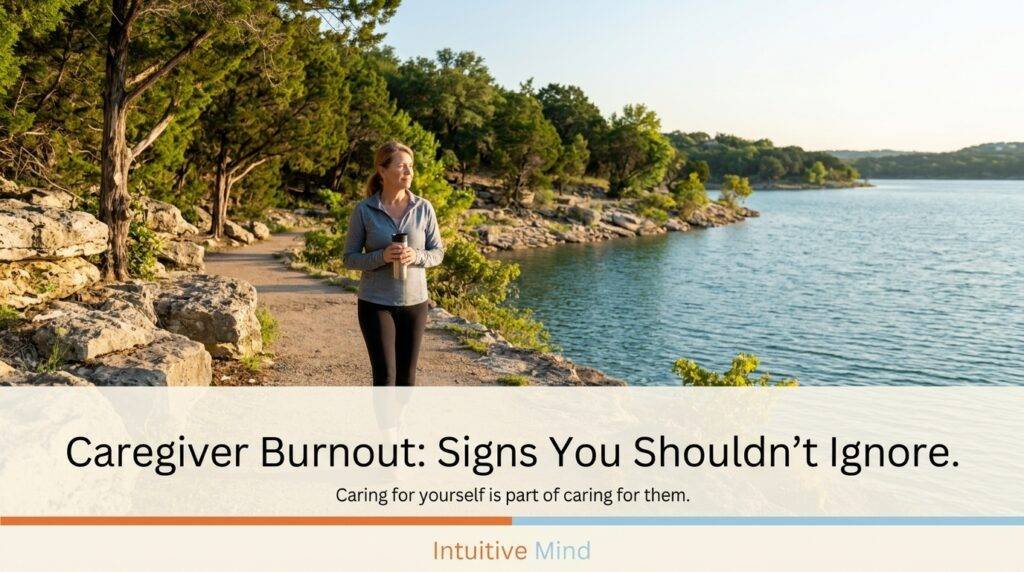
Caregiver taking a quiet morning walk by a Hill Country lake, easing caregiver burnout

Caregiver Burnout: Signs Canyon Lake Caregivers Shouldn’t Ignore

When Caring for Someone Starts Costing You It starts with love and a sense of duty. You help your mother with appointments. You manage your husband’s medications. You coordinate care for a child with special needs, or for a family member living with a serious mental illness. Over months or years, the tasks multiply, the breaks disappear, and one day you realize you can’t remember the last time you felt rested. That’s often how caregiver burnout arrives: not all at once, but gradually, until it’s simply how life feels. Many caregivers don’t think of themselves as caregivers at all. They’re just a daughter, a husband, a mom doing what needs to be done. That’s part of why burnout goes unnoticed. If you don’t see your role as a demanding job, you’re less likely to recognize when it’s wearing you down. Around Canyon Lake, caregiving can carry extra layers. Specialists and support services may be a long drive away, family members may live out of town, and quiet roads can mean quiet isolation. Even with a supportive community nearby, the daily weight often falls on one person. November is National Family Caregivers Month, a good moment to say plainly what many caregivers need to hear: needing support doesn’t mean you’re failing the person you care for. It means you’re human, and that your own health is part of the care plan. This guide explains what burnout looks like, why caregivers so often push past their limits, how burnout connects to depression and anxiety, what actually helps, and where Canyon Lake caregivers can turn, both for practical relief and for mental health care. Let’s start with the signs. What Caregiver Burnout Looks Like Caregiver burnout is a state of physical, emotional, and mental exhaustion that builds when the demands of caring for someone outpace the support and rest available to the caregiver. It isn’t a diagnosis on its own, but it’s a real and recognizable pattern, and it can open the door to conditions that are. Common warning signs include: It doesn’t only affect one kind of caregiver. Burnout can happen whether you’re caring for an aging parent, a spouse with dementia or chronic illness, an adult child with mental illness, or a child with developmental, medical, or emotional needs. If you’re raising a child with mental health challenges, our page on children’s mental health care explains how evaluation and support work for younger patients and their families. Stress vs. burnout vs. depression. Caregiving stress is expected and often comes and goes. Burnout is more persistent: the exhaustion doesn’t lift, and your capacity to cope keeps shrinking. When low mood, hopelessness, loss of interest, or changes in sleep and appetite last most days for two weeks or more, depression may be part of the picture. The National Institute of Mental Health describes these as common signs of depression, and they’re worth taking seriously. Anxiety often comes along. Many caregivers live in a constant state of alert: listening for a fall at night, worrying about the next crisis, rehearsing what could go wrong. Over time, that vigilance can become an anxiety problem of its own. A safety note. Sometimes exhaustion turns into thoughts that frighten caregivers, such as wishing it were all over, feeling like you can’t go on, or fearing you might lose control with the person you care for. These thoughts are signs that you need support right away, not signs that you’re a bad person. Step away if you can, and reach out to someone today. Only a qualified clinician can diagnose depression or anxiety. But you don’t need a diagnosis to deserve help. Why Caregivers Push Past Their Limits Most caregivers know, in theory, that they should take care of themselves. So why is burnout so common? Several patterns keep caregivers running on empty. Guilt. Taking a break can feel like abandoning someone who depends on you. Many caregivers feel guilty for wanting time off, for feeling frustrated, or for imagining life without caregiving responsibilities, even briefly. “No one else can do it.” Sometimes that’s true, at least for certain tasks. Often, though, it’s a belief that keeps caregivers from asking for or accepting help. Over time, one person ends up carrying what could be shared. Invisible work. Much of caregiving is planning, worrying, coordinating, and staying on call. It doesn’t show up on a schedule, so others may not realize how much you’re doing, and you may not either. Your own health comes last. Caregivers often cancel their own appointments, skip meals, lose sleep, and drop the activities that kept them balanced. These small sacrifices add up. Isolation. Caregiving can shrink your world. Friends drift, outings become hard to arrange, and conversations center on the person you care for. The CDC recognizes caregiving as a public health issue because of its effects on caregivers’ own physical and mental health. Waiting for a crisis. Many caregivers don’t seek help until they’re physically ill, emotionally overwhelmed, or unable to continue. By then, recovery takes longer. [CLINICIAN’S NOTE] Two patterns we see often: treating exhaustion as normal, and waiting to seek help until you’re the one in crisis. When fatigue, irritability, and hopelessness become everyday experiences, they’re no longer just part of caregiving; they’re signals that your health is at risk. Caregivers who wait until they can’t function often face a longer recovery and fewer options for the person they care for. If you’ve been feeling this way for weeks, talking with a provider is a reasonable next step, not an indulgence. What Helps: A Whole-Person Approach to Recovery Recovering from burnout isn’t about finding more hours in the day. It’s about lightening the load where possible, getting real support, and treating any mental health conditions that have developed along the way. That takes care that looks at the whole person, including the one doing the caring. Start with an honest look at the load. Write down what you do in a typical week, including the invisible tasks. Seeing it

Caregiver Burnout: Signs Canyon Lake Caregivers Shouldn’t Ignore Read More »

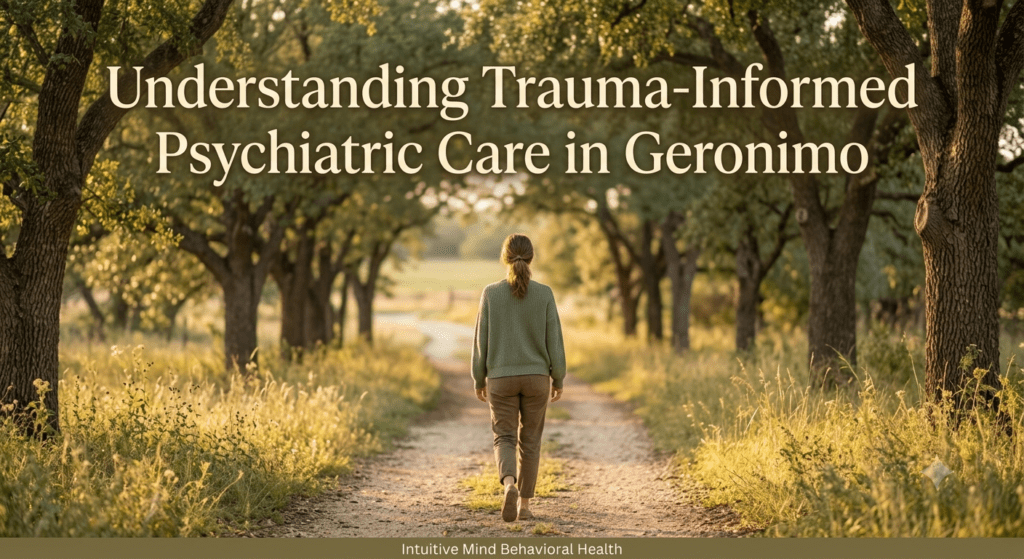
Understanding Trauma-Informed Psychiatric Care in Geronimo

What Does Trauma-Informed Psychiatric Care Mean? For many individuals living in Geronimo and rural Guadalupe County, seeking mental health care can feel daunting. Past negative medical experiences, unprocessed personal trauma, or the stigma surrounding mental health can make taking that first step difficult. Standard clinical environments—where appointments feel rushed and decisions are imposed without explanation—can inadvertently trigger feelings of powerlessness or anxiety. Trauma-informed psychiatric care offers a fundamentally different approach. It recognizes that emotional distress, severe anxiety, depression, and hypervigilance are often adaptive responses to past adverse experiences rather than isolated defects. By centering safety, empowerment, and mutual respect, trauma-informed psychiatric care in Geronimo ensures that every aspect of your clinical journey honors your story, paces care at your comfort level, and supports long-term healing. The 6 Core Principles of Trauma-Informed Care When seeking psychiatric support in Geronimo, understanding these foundational principles helps you know what to expect from a compassionate practitioner: The Mind-Body Connection: How Trauma Lives in the Body Trauma is not held solely in memories; it deeply influences the autonomic nervous system, endocrine system, and immune response. Chronic stress or past adversity keeps the body’s fight-or-flight response continually activated, leading to physiological strain over time. Common Physical and Emotional Expressions of Unresolved Trauma To understand how trauma intersects with mood shifts and emotional fatigue, explore our specialized approaches to anxiety care services, depression care, and mood disorder treatment. Integrative Telehealth & In-Person Care for Geronimo Residents Residents in Geronimo, Seguin, and surrounding areas often balance busy agricultural, professional, or family lives. Finding time to drive to distant clinics or sitting in crowded waiting rooms can add unnecessary stress to an already overloaded schedule. At Intuitive Mind Behavioral Health, we offer flexible care options—including convenient in-person visits at our office in nearby New Braunfels as well as comprehensive telehealth services across Texas. Our integrative model goes beyond quick 15-minute prescription renewals. During our 90-minute initial evaluation, we take time to understand your physical health, lifestyle, and unique history. When medication is recommended, we utilize GeneSight® pharmacogenomic testing to evaluate how your genetic profile processes psychiatric medications, helping avoid trial-and-error and minimizing uncomfortable side effects. “Healing from trauma requires an environment where you feel truly heard, respected, and safe. Care should always be a collaborative partnership that honors your mind, body, and spirit.” — Lydia Kimeli-Pope, MSN, PMHNP-BC Why Trauma-Informed Care Delivers Better Outcomes When psychiatric care accounts for trauma and nervous system regulation, individuals experience deeper clarity, better treatment adherence, and meaningful long-term balance. Traditional Medical Approach Trauma-Informed Integrative Approach Long-Term Benefit Focuses strictly on immediate symptom suppression. Investigates root biological, emotional, and systemic factors. Promotes sustainable neurobiological healing rather than temporary fixes. Brief, 15-minute appointments with minimal discussion. Unhurried 90-minute intakes with patient-centered listening. Builds strong clinical trust and reduces healthcare-related anxiety. Standardized medication trial-and-error. Pharmacogenomic testing and functional blood panels. Improves precision, minimizes side effects, and honors physical health. Learn more about our comprehensive philosophy on our about page and discover our approach to complex conditions like bipolar disorder care. “You do not have to carry the weight of past trauma alone. With gentle pacing and comprehensive care, restoring emotional peace is entirely possible.” — Lydia Kimeli-Pope, MSN, PMHNP-BC If you or someone you love is experiencing a mental health crisis, immediate help is available. Contact the 988 Suicide & Crisis Lifeline by calling or texting 988 for free, confidential, 24/7 support. For additional evidence-based mental health resources, visit the National Institute of Mental Health or the Substance Abuse and Mental Health Services Administration. Why Geronimo Families Choose Intuitive Mind Led by Lydia Kimeli-Pope, MSN, PMHNP-BC—a Board-Certified Psychiatric Mental Health Nurse Practitioner—Intuitive Mind Behavioral Health provides compassionate, high-level psychiatric care tailored to your life. Located just a short drive from Geronimo in New Braunfels, TX, our practice bridges high-quality in-person visits with modern virtual care. We accept major insurance plans to help keep comprehensive care accessible. Step-by-Step Pathway to Care Beginning your mental health journey with us is gentle, predictable, and supportive. Begin Your Healing Journey Today Taking the first step toward mental wellness is an empowering act of self-care. You deserve psychiatric care that respects your history and supports your future. Take the first step today: We are proud to serve residents across Geronimo, Seguin, New Braunfels, and all of Texas. You deserve compassionate, trauma-informed care that honors every part of your story. This content is educational and does not replace a formal clinical evaluation. Every individual’s journey is unique — use this guide to inform your conversation with a licensed healthcare provider. About the Author Intuitive Mind Behavioral Health — Lydia Kimeli-Pope, MSN, PMHNP-BC Board-Certified Psychiatric Mental Health Nurse Practitioner Intuitive Mind Behavioral Health is an integrative psychiatric practice located in New Braunfels, Texas, serving children, young adults, and women across Geronimo, Seguin, San Antonio, and Austin, with telehealth available across Texas and New Mexico. We combine evidence-based psychiatric care with functional testing, nutritional wellness, and trauma-informed principles to support whole-person recovery. 📞 (830) 302-4097 🌐 intuitive-mind.com 📍 387 W. Mill St. Suite 106, New Braunfels, TX 78130 Accepting new patients. Free 15-minute consultations available.

Understanding Trauma-Informed Psychiatric Care in Geronimo Read More »

Skip to content