
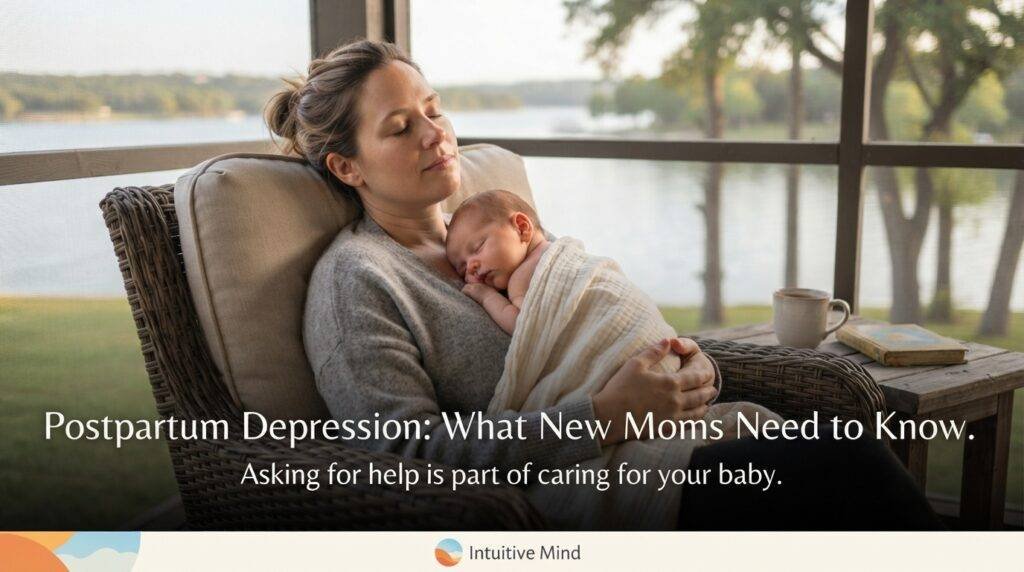
When New Motherhood Feels Heavier Than Expected
Your baby is a few weeks or months old. People keep asking how wonderful it all is, and you smile and say it’s great. But inside, you feel flat, exhausted in a way sleep doesn’t touch, and strangely disconnected. You cry when no one’s looking. You wonder why you don’t feel the way you thought you would. Some days you worry that your baby would be better off with someone else. If any of this sounds familiar, you may be experiencing postpartum depression, and you deserve support, not silence.
Many new moms don’t recognize what’s happening at first. They assume exhaustion, tears, and irritability are just part of having a baby. Others recognize something is wrong but feel too ashamed to say it out loud, worried they’ll be seen as a bad mother.
Here’s what’s important to know: depression after birth is a medical condition, influenced by hormones, sleep loss, stress, and personal history. It isn’t caused by a lack of love for your baby, and it isn’t something you can simply will away.
For moms around McQueeney and Lake McQueeney, close-knit community can be a real comfort. But it can also make it harder to admit you’re struggling when everyone seems to expect you to be glowing. And with family schedules, work, and a newborn, finding time to focus on yourself can feel impossible.
This guide explains what PPD is, how it differs from the baby blues, who’s at higher risk, how it’s identified, how it’s treated, and how partners and families can help. Let’s start with what it is.

Understanding Postpartum Depression
Postpartum depression is a form of depression that occurs during pregnancy or after childbirth. Clinicians often consider depression that begins during pregnancy or anytime within the first year after birth to be related to the perinatal period.
The National Institute of Mental Health describes perinatal depression as a serious but treatable mood disorder that can affect women during pregnancy and after delivery.
Common symptoms of PPD include:
- Persistent sadness, emptiness, or hopelessness
- Loss of interest or pleasure in things you used to enjoy
- Feeling disconnected from your baby, partner, or family
- Intense irritability, anger, or frequent crying
- Feelings of guilt, worthlessness, or being a bad mother
- Trouble sleeping even when the baby sleeps, or sleeping too much
Other symptoms may include changes in appetite, low energy, difficulty concentrating, anxiety or panic, and thoughts of harming yourself.
Baby blues vs. PPD. The baby blues are very common and include mood swings, tearfulness, and feeling overwhelmed in the first days after birth. They usually ease within about two weeks. PPD lasts longer, tends to be more intense, and makes daily functioning harder.
Anxiety often comes along. Many women with PPD also experience significant anxiety, racing thoughts, or frightening intrusive thoughts about their baby’s safety. These are common and treatable.
Bipolar disorder and the postpartum period. For some women, the postpartum period can bring episodes of very high energy, little need for sleep, or racing thoughts, which may signal bipolar disorder. Our page on bipolar disorder explains how this is evaluated.
When to seek emergency help. Postpartum psychosis is rare but serious. Signs include confusion, seeing or hearing things others don’t, extreme agitation, or thoughts of harming yourself or your baby that feel real or urgent. Call 911 or 988 right away.
Only a qualified clinician can diagnose depression after birth.
Who’s at Higher Risk, and Why It Happens
PPD can affect any new mother, regardless of age, background, income, or how much she wanted her baby. Some factors raise the risk:
- A personal history of depression, anxiety, or PPD with an earlier pregnancy
- A history of premenstrual dysphoric disorder (PMDD) or bipolar disorder
- Limited support from a partner, family, or friends
- Stressful life events, financial strain, or relationship difficulties
- Pregnancy or birth complications, or a baby with health challenges
- Thyroid problems or other medical conditions after birth
Why it happens. Several factors usually work together:
Hormonal shifts. Estrogen and progesterone drop sharply after birth, which can affect brain chemistry and mood in women who are sensitive to these changes.
Sleep loss. Ongoing sleep deprivation affects mood, patience, and the ability to cope.
Physical recovery. Healing from birth, feeding challenges, and pain can add strain.
Emotional and life changes. New identity, changes in relationships and work, and the constant demands of a newborn can feel overwhelming.
The Office on Women’s Health notes that a combination of hormonal, physical, emotional, and lifestyle factors likely contributes to depression after birth.
Why PPD Often Goes Untreated
Despite being common and treatable, depression after birth often goes unrecognized. Several patterns explain why.
It gets mistaken for normal exhaustion. Tiredness, irritability, and tears are expected with a newborn, so serious symptoms may be dismissed.
Moms feel ashamed. Many women fear judgment or worry that admitting depression means they’re failing as mothers.
Appointments focus on the baby. Most early visits center on the baby’s health, and moms’ mental health may not come up unless they raise it.
Fear about medication and breastfeeding. Some moms avoid treatment because they assume it isn’t compatible with breastfeeding.
Isolation. Without nearby family or friends, there may be no one to notice changes and encourage help.
[CLINICIAN’S NOTE] Two patterns we see often: waiting for symptoms to pass on their own and staying quiet because of guilt. Baby blues typically ease within about two weeks; symptoms that last longer or keep getting worse deserve evaluation, not more waiting. And many moms hide how they feel because they believe it means they don’t love their baby enough. Depression after birth isn’t about love. It’s a treatable health condition, and getting help is one of the most caring things you can do for your family.
How PPD Is Identified and Treated
The good news is that PPD responds well to treatment. The right approach depends on your symptoms, history, preferences, and whether you’re breastfeeding.
Screening. Many OB-GYNs, midwives, and pediatricians use brief questionnaires to screen new moms for depression. If you’re asked these questions, answer honestly; it’s a way to get help, not a test you can fail.
A comprehensive evaluation. A thorough psychiatric evaluation covers mood, anxiety, sleep, thoughts of harm, birth experience, past mental health history, physical health, medications, breastfeeding, and support at home. Our approach to women’s mental health includes care during pregnancy and after birth.
Therapy. Therapies such as cognitive behavioral therapy and interpersonal therapy can help with PPD. They focus on managing negative thoughts, building support, and navigating changes in relationships and roles.
Medication, when appropriate. Antidepressant medications are commonly used to treat moderate to severe depression after birth. There are also newer medications developed specifically for depression after birth. Your prescriber will discuss options, benefits, side effects, and how each fits with breastfeeding. Learn more about our approach to depression treatment.
Breastfeeding considerations. Many medications can be considered during breastfeeding. Decisions are made together, with your prescriber reviewing benefits and risks and coordinating with your baby’s pediatrician when helpful.
Addressing anxiety too. When anxiety, panic, or intrusive thoughts come along with PPD, treating them directly can make a big difference. See how we approach anxiety and panic treatment.
Pharmacogenomic testing, when it helps. When medication is being considered, pharmacogenomic testing may provide information about how your genes could affect your response to certain medications. It doesn’t guarantee the right medication, but it can help guide choices.
Checking the physical side. Functional and hormonal lab testing may be recommended, since thyroid problems, anemia, and nutritional deficiencies are common after birth and can worsen mood and fatigue.
Practical support. Help with nighttime feedings, meals, household tasks, and childcare gives you room to rest and recover. Accepting help is part of treatment.
Peer support. Talking with other moms who’ve been through depression after birth can ease shame and isolation. Support groups, in person or online, remind many women that they aren’t alone and that recovery is possible.
Staying well after recovery. Once you’re feeling better, staying in touch with your provider helps protect your progress. If you were on medication, your prescriber will talk with you about how long to continue and how to make any changes safely. Knowing your early warning signs, such as changes in sleep, irritability, or withdrawal, makes it easier to reach out quickly if symptoms return.
Planning ahead if you’re at risk. If you’ve had depression or PPD before, talking with your providers during pregnancy about a plan for after birth can help you get support quickly if symptoms return.
How progress is measured. Recovery looks like steadier mood, more energy, better sleep when possible, enjoying moments with your baby, and feeling more like yourself, tracked over time with you.
Depression after birth thrives on silence and shame. The moment a mom says “I’m not okay” and is met with understanding instead of judgment, recovery can begin. Treatment works, and every mom deserves to feel like herself again.
How Partners and Families Can Help
Partners, family members, and friends play an important role in recognizing and supporting a mom with PPD.
Watch for changes. Withdrawal, constant tears, irritability, or saying things like “you’d be better off without me” are signs to take seriously.
Ask gently and listen. Try “You seem really worn down lately. How are you really feeling?” Then listen without judgment or quick fixes.
Share the load. Take on nighttime feedings when possible, handle meals and chores, and protect time for her to rest.
Encourage care. Offer to help schedule an appointment, attend with her, or watch the baby during a telehealth visit.
Take care of yourself too. Partners can experience depression after a baby arrives as well. Your mental health matters.
The CDC recognizes postpartum depression as an important public health concern and encourages women and families to talk with health care providers about symptoms.
Comparing Your Support Options
Here’s how common options compare for new moms.
| Care Option | What It Addresses | Often a Good Fit When | Limitations to Know |
|---|---|---|---|
| Rest, practical help, and connection | Exhaustion, isolation | Symptoms are mild, like baby blues | Not enough for PPD on its own |
| OB-GYN or midwife | Physical recovery, screening, referrals | You need a first check-in | Limited time for in-depth mental health care |
| Support groups and helplines | Connection, encouragement | You feel alone | Support, not a substitute for treatment |
| Therapy | Coping skills, relationships, adjustment | Symptoms are mild to moderate | May not address medication questions |
| Integrated psychiatric care (Intuitive Mind approach) | Evaluation, therapy, medication when appropriate, labs, coordination | Symptoms are persistent, moderate to severe, or include anxiety | Requires an evaluation first; plan and pace depend on the individual |
| Crisis services (988, maternal hotline, 911) | Immediate safety and support | You’re having thoughts of harm or feel unsafe | For emergencies and urgent support, not ongoing care |
A practical way to use this table: if you’re in the first couple of weeks and coping, rest and support may be enough. If symptoms last longer, are getting worse, or include thoughts of harm, reach out for professional help.
What to Expect at Intuitive Mind
For moms in McQueeney, our New Braunfels office is a short drive away, and telehealth is available anywhere in Texas, which can be a big help with a newborn at home.
Initial Evaluation. We start with a compassionate, unhurried conversation about how you’re feeling, your birth experience, sleep, past mental health history, and any frightening thoughts. It helps to bring a list of medications and supplements, whether you’re breastfeeding, and any recent lab results or records from your OB-GYN. It’s fine to have your baby with you during a telehealth visit. We handle the assessment and explain what we see in plain language.
Personalized Plan. Together, we build a plan that may include therapy, medication when appropriate, lab work, sleep strategies, and practical support. Your role is to share what feels realistic.
Ongoing Care. Follow-up visits track how you’re feeling and adjust the plan. Telehealth makes it easier to fit care around feeding and nap schedules.
Adjust and Coordinate. As you recover, the plan changes. With your consent, we coordinate with your OB-GYN, your baby’s pediatrician, or a therapist so your care stays connected.
Every mom’s experience is different, and the pace of recovery varies from person to person.
Common Questions About Postpartum Depression
How long does PPD last?
It varies. Without treatment, depression after birth can last months or longer. With treatment, many women begin to feel better within weeks to a few months. Getting help early usually shortens the road to recovery.
Can I take medication while breastfeeding?
Many medications can be considered during breastfeeding. Your prescriber will review the benefits and risks with you and can coordinate with your baby’s pediatrician. Therapy is also an effective option, either on its own or together with medication.
Does PPD mean I’m a bad mother?
No. Depression after birth is a medical condition influenced by hormones, sleep loss, stress, and personal history. It doesn’t reflect your love for your baby or your ability to be a good parent. Seeking help is a strong, caring step for you and your family.
Does insurance cover treatment for depression after birth?
We work with many major insurance plans and also offer self-pay. Contact us to confirm coverage. It can help to check your plan’s mental health benefits before your first appointment.
Your Next Step Is a Conversation
New motherhood is a huge transition, and it’s okay if it doesn’t feel the way you expected. Postpartum depression is common, it isn’t your fault, and it’s very treatable. Reaching out is one of the best things you can do for yourself and your baby.
The most useful next step isn’t waiting it out alone. It’s a comprehensive evaluation that helps you understand what you’re experiencing before deciding what to change.
- Ready to start? Book an evaluation with Intuitive Mind. In-person visits are available in New Braunfels, a short drive from McQueeney, with telehealth anywhere in Texas.
- Prefer to talk first? Call us at (830) 302-4097 with your questions.
- Want to learn more? Explore our approach to mental health care for women.
If you’re in crisis or having thoughts of harming yourself or your baby, you don’t have to wait for an appointment. Call or text 988 to reach the 988 Suicide & Crisis Lifeline, available 24/7. The National Maternal Mental Health Hotline offers free, confidential support by call or text 24/7 at 1-833-TLC-MAMA (1-833-852-6262). In Guadalupe County, the Bluebonnet Trails 24/7 crisis line is (800) 841-1255. If you or someone else is in immediate danger, call 911 or go to the nearest emergency room. Intuitive Mind is not an emergency service.
About This Article
Written by the Intuitive Mind Behavioral Health Care Team Clinically reviewed by Lydia Kimeli-Pope, MSN, PMHNP
Intuitive Mind Behavioral Health is a psychiatric mental health practice based in New Braunfels, Texas, offering whole-person care for adults, children, and families, in person and through telehealth across Texas and New Mexico. Our approach combines psychiatric evaluation, therapy, medication management, pharmacogenomic testing, functional and hormonal lab testing, and nutritional and lifestyle support.
🌐 intuitive-mind.com 📍 387 W. Mill St. Suite 106, New Braunfels, TX 78130 📞 (830) 302-4097