
Understanding Child Development: Phase or Red Flag?
For parents raising children in Hunter and nearby Guadalupe and Comal Counties, watching a child grow comes with constant questions. When your typically easygoing seven-year-old starts having dramatic meltdowns, or your ten-year-old suddenly refuses to go to school, it is natural to ask: Is this just a normal developmental phase, or is it a sign of something deeper?
Children undergo rapid emotional, cognitive, and social shifts. Mild rebellion, temporary sleep resistance, and transient emotional moodiness are common markers of childhood development.
However, when emotional distress or disruptive behaviors become the daily norm, families can feel exhausted and uncertain. Recognizing the difference between a child behavior phase vs. concern in Hunter empowers parents to step in early with gentle, effective, whole-child support before minor challenges escalate into chronic distress.
Key Signs It May Be More Than a Phase
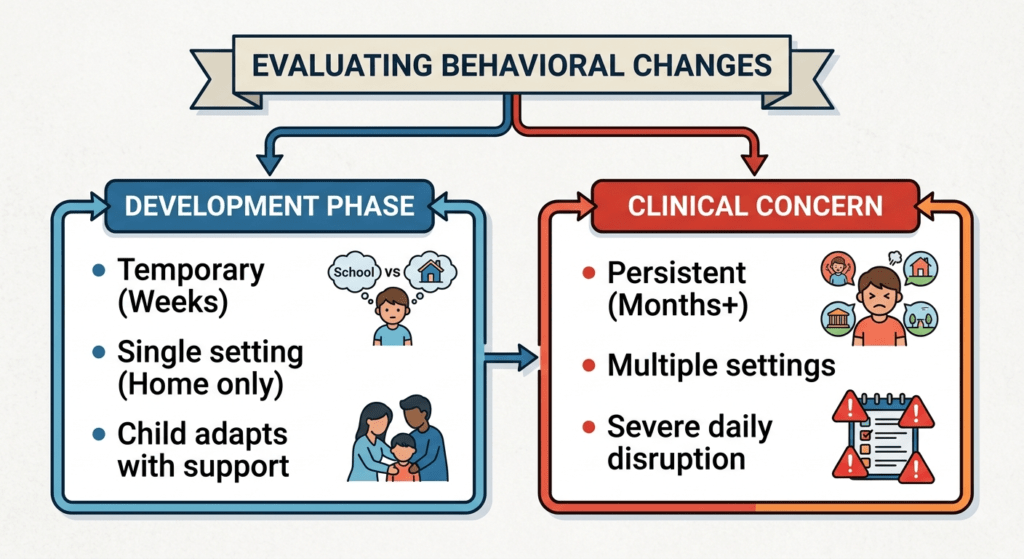
While every child develops at their own rhythm, persistent patterns across multiple areas of life often indicate that professional guidance is needed.
Behavioral & Emotional Indicators to Watch
- Duration & Persistence: Symptoms or intense behaviors that continue consistently for longer than 4 to 6 weeks without improvement.
- Pervasiveness Across Settings: Emotional outbursts, extreme inattention, or defiance appearing both at home and at school, daycare, or social events.
- Severe Daily Disruption: Behaviors that consistently interfere with family routines, classroom learning, or making and keeping friends.
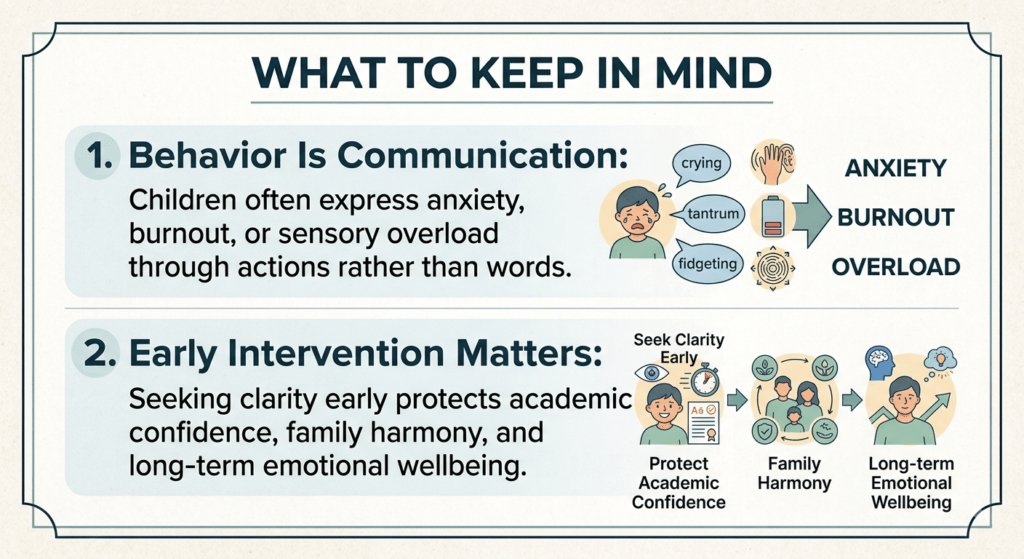
- Significant Regression: Wettiing the bed after years of continent sleep, reverting to intense separation anxiety, or abandoning previously mastered self-soothing skills.
- Intense Emotional Dysregulation: Meltdowns or panic responses that seem out of proportion to the trigger and take an unusually long time to calm down from.
- Somatic Symptoms & Sleep Changes: Frequent, unexplained stomachaches or headaches before school, chronic nightmares, or difficulty falling asleep night after night.
Exploring Underlying Drivers of Behavioral Changes
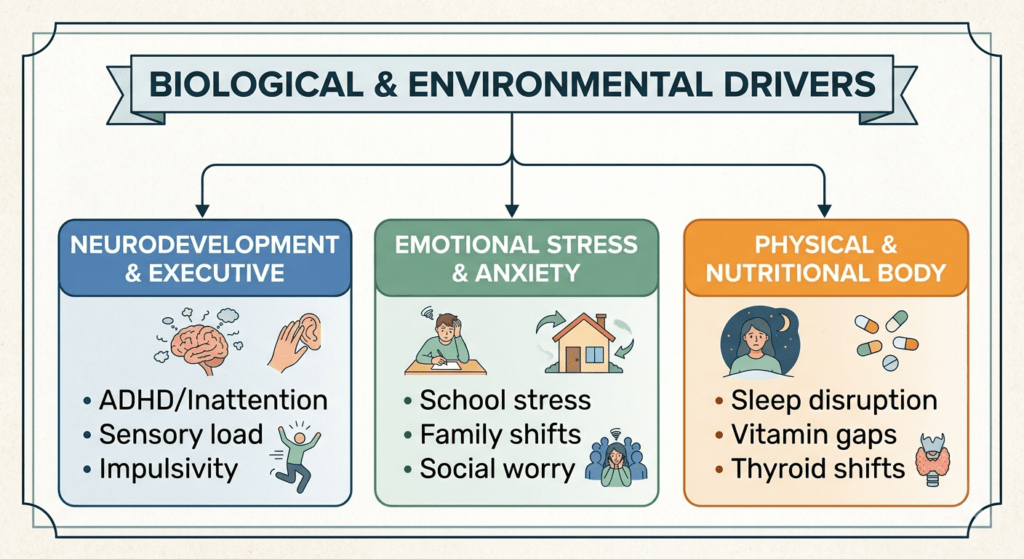
When a child experiences behavioral shifts, it is rarely just “bad behavior.” Children’s nervous systems are sensitive to internal and external influences. Underlying factors often include:
- Neurodevelopmental Shifts (ADHD): Difficulty regulating executive function can manifest as restlessness, impulsivity, or task avoidance, often mistaken for intentional defiance.
- Unaddressed Anxiety: In children, anxiety frequently presents as irritability, anger, stomachaches, or severe school avoidance rather than verbalized worries.
- Sleep Architecture & Physical Health: Poor sleep quality, nutritional gaps (such as iron or vitamin D deficiencies), or thyroid dysfunction directly impact a child’s mood and self-regulation.
To explore how these challenges relate to broader mental health care, learn more about our approaches to child and adolescent ADHD care, anxiety care services, and mood disorder treatment.
Traditional vs. Integrative Pediatric Psychiatric Evaluation
When families seek help for behavioral concerns, traditional visits can sometimes feel rushed, focusing solely on immediate symptom management or quick prescriptions without looking deeper into contributing factors.
At Intuitive Mind Behavioral Health, located just a short drive from Hunter in New Braunfels, we offer a comprehensive, gentle, and unhurried evaluation that respects your child’s unique developmental story.
During our 90-minute initial evaluation, we partner with parents to understand home routines, academic expectations, sleep patterns, and physical health. We order functional blood work when appropriate to rule out underlying physiological triggers, such as thyroid dysfunction, anemia, or systemic inflammation.
If medication is ever recommended as part of a comprehensive care plan, we offer GeneSight® pharmacogenomic testing to evaluate how your child’s unique biology processes medications, helping us choose precision treatments with minimal risk of side effects.
“Understanding a child’s behavior requires looking past the surface symptoms to understand their nervous system, physical health, and environment. When we support the whole child, we help them thrive.”
— Lydia Kimeli-Pope, MSN, PMHNP-BC
How Hunter Parents Can Support Their Child at Home
If you are currently navigating challenging behaviors, implementing structured support at home can help regulate your child’s nervous system while you seek professional guidance.
| Action Step | What It Looks Like in Daily Life | Why It Matters |
| Track Patterns in a Journal | Note time of day, triggers, sleep quality, and hunger levels during meltdowns. | Helps identify clear sensory, emotional, or physiological triggers. |
| Prioritize Co-Regulation | Stay calm and lower your vocal tone during emotional outbursts instead of escalating discipline. | Children borrow their parents’ calm to regulate their own nervous system. |
| Protect Sleep Hygiene | Maintain predictable bedtime routines, limit screen exposure before bed, and ensure adequate sleep hours. | Consistent sleep restores emotional resilience and neurochemical balance. |
| Schedule a Comprehensive Assessment | Reach out to a pediatric mental health provider who offers whole-child care. | Provides diagnostic clarity and a clear roadmap for family support. |
Learn more about our clinical philosophy on our about page and discover our specialized care for depression care.
“Seeking help for your child is a act of love and proactive parenting. You are giving your child the tools they need to navigate their world with confidence.”
— Lydia Kimeli-Pope, MSN, PMHNP-BC
If your family is facing an acute crisis, safety is always the priority. Contact the 988 Suicide & Crisis Lifeline by calling or texting 988 for free, confidential, 24/7 support.
For additional educational materials on pediatric mental health and child development, visit the American Academy of Child & Adolescent Psychiatry (AACAP) or the National Institute of Mental Health (NIMH).
Why Guadalupe & Comal County Families Choose Intuitive Mind
Intuitive Mind Behavioral Health is led by Lydia Kimeli-Pope, MSN, PMHNP-BC—a Board-Certified Psychiatric Mental Health Nurse Practitioner dedicated to supporting children, adolescents, and families.
Located close to Hunter, York Creek, San Marcos, and New Braunfels, our practice provides a warm, welcoming environment for in-person evaluations alongside flexible statewide telehealth care. Learn more on our contact page.
Step-by-Step Pathway to Care
Getting answers and starting a supportive care journey for your child is designed to be straightforward and reassuring.
- Free 15-Minute Consultation: A brief, confidential phone call to share your concerns and confirm our practice approach matches your family’s needs.
- Pre-Appointment Intake: Complete comprehensive background history and developmental forms online at your own pace before your visit.
- 90-Minute Initial Intake: An unhurried session (in-person or virtual) focused on understanding your child’s emotional, social, academic, and physical health.
- Targeted Testing & Functional Labs: Ordering functional blood panels or GeneSight® testing as clinically indicated.
- Collaborative Care Plan: Creating a personalized plan combining practical lifestyle support, school accommodations, therapy alignment, and precision medication when appropriate.
Gain Clarity for Your Child’s Future Today
You do not have to guess whether your child’s behavior is a temporary phase or a deeper concern. Expert, compassionate support is available right in your community.
Take the first step toward understanding and support:
- Primary Step: Book a Free 15-Minute Consult
- Direct Phone: Call us directly at (830) 302-4097
- Learn More: Explore details on our category page for ADHD care
We proudly serve children and families in Hunter, New Braunfels, San Marcos, Seguin, and across Texas. Let us help your child thrive with clarity, confidence, and compassion.
This content is educational and does not substitute for a formal clinical evaluation. Every child’s development is unique — use this guide to inform your conversation with a licensed healthcare provider.
About the Author
Intuitive Mind Behavioral Health — Lydia Kimeli-Pope, MSN, PMHNP-BC
Board-Certified Psychiatric Mental Health Nurse Practitioner
Intuitive Mind Behavioral Health is an integrative psychiatric practice located in New Braunfels, Texas, serving children, young adults, and families across Hunter, Guadalupe County, San Antonio, and Austin, with telehealth available across Texas and New Mexico. We combine evidence-based psychiatric care with functional lab testing, nutritional wellness, and pharmacogenomic-guided medication management.
📍 387 W. Mill St. Suite 106, New Braunfels, TX 78130
Accepting new patients. Free 15-minute consultations available.