

For many professionals, parents, and community leaders navigating high-functioning depression in San Antonio, daily life looks remarkably successful on the outside. You may reliably hit targets at your downtown office, manage household responsibilities in Alamo Heights or Stone Oak, commute along I-35 without missing a beat, and show up for friends and family with a smile. Yet behind that polished exterior, every single task feels like wading through heavy water. The energy required to maintain your routine consumes your reserves, leaving you exhausted, emotionally flat, and wondering why accomplishments no longer bring genuine satisfaction.
Recognizing high-functioning depression in San Antonio requires looking beyond traditional stereotypes of mental health struggles. Popular culture often portrays depression as an inability to get out of bed or complete basic daily routines. However, persistent depressive disorder—the clinical framework that frequently underlies high-functioning depression—presents differently. Individuals experiencing this condition often overcompensate through intense discipline, structured habits, and sheer determination. They function at a high level not because they feel well, but because the alternative of letting down colleagues or family feels unacceptable.
At Intuitive Mind Behavioral Health, we understand the immense weight of carrying high expectations while feeling internally disconnected. Led by Lydia Kimeli-Pope, MSN, PMHNP-BC, our practice offers compassionate, evidence-based psychiatric evaluations tailored to adults across San Antonio, New Braunfels, Seguin, San Marcos, and the broader Texas Hill Country. Through our integrative care model, available both in person and via secure telehealth across Texas and New Mexico, we help you uncover the root causes of persistent emotional exhaustion and chart a path back toward authentic vitality.
Section 1: Why It’s More Than Just Feeling Sad or Overworked
It is common to dismiss persistent fatigue, irritability, or joylessness as simple workplace stress, caregiver fatigue, or a temporary phase of life. In a growing metropolitan hub like San Antonio, where professional demands and family commitments run high, high-functioning individuals routinely normalize chronic strain. However, high-functioning depression is fundamentally different from everyday stress or situational sadness.
Clinically understood as persistent depressive disorder (PDD) or chronic dysthymia, this condition involves a depressed mood that persists for at least two years in adults, accompanied by additional neurovegetative and cognitive symptoms. Because the onset is often gradual, individuals frequently absorb these feelings into their sense of identity, concluding “this is just who I am” rather than recognizing a treatable health condition.
3 Contributing Clinical Factors in High-Functioning Depression
- Neurochemical Disruption & Chronic HPA Axis Activation: Persistent depressive states involve alterations in key neurotransmitter systems, including serotonin, norepinephrine, and dopamine, which regulate mood, motivation, and reward processing. Concurrently, prolonged psychological stress keeps the hypothalamic-pituitary-adrenal (HPA) axis continuously activated. This elevation of stress hormones impairs neuroplasticity and drains cognitive reserves, making daily tasks feel effortful despite high physical capability. When left unaddressed, underlying biological vulnerabilities can contribute to chronic depression patterns that resist quick lifestyle fixes.
- Psychological Masking and Internalized Stigma: High-achieving individuals often develop sophisticated defense mechanisms to hide internal distress. Driven by fear of appearing vulnerable or incompetent, they pour their energy into performance. This cognitive dissociation between internal suffering and external performance creates profound isolation. Many individuals carry unaddressed psychological trauma or childhood expectations of perfectionism, reinforcing the belief that their worth depends entirely on continuous productivity.
- Overlapping Executive Function Strain: Managing persistent depressive symptoms while maintaining a demanding schedule taxes executive functioning networks in the brain. Individuals must exert double the cognitive energy to plan, organize, and initiate tasks that used to feel automatic. In some cases, adults struggling with unmanaged ADHD develop secondary persistent depressive symptoms as a direct result of the relentless effort required to compensate for executive deficits over many years.
Recognizing Subtle Patterns in Daily Life
High-functioning depression rarely manifests as overt crisis initially. Instead, it appears as quiet changes in how you experience the world:
- Functional Anhedonia: Participating in hobbies, social gatherings, or family events in San Antonio because you know you “should,” but feeling detached, numb, or relieved when they are over.
- Persistent Low Energy: Waking up tired regardless of sleep duration, requiring high caffeine intake or extreme effort to start the day.
- Heightened Irritability and Self-Criticism: Directing frustration inward through harsh inner monologues, or experiencing a short fuse with loved ones despite maintaining strict composure at work.
- Somatic Discomfort: Carrying physical tension in the neck, shoulders, or jaw, or experiencing digestive upset without a clear medical cause.
- Internal Isolation: Feeling completely alone in a room full of colleagues or family members, convinced that no one truly knows the effort required to keep going.

Reader Care Note: Recognizing these patterns is not a sign of personal weakness, nor does it diminish what you have accomplished. It is an indication that your nervous system has been carrying an unsustainable burden and deserves thoughtful, clinical support.
Understanding how neurobiology, coping patterns, and environmental stress interact is the first step toward reclaiming emotional energy and clarity.
Section 2: The Clinical Approach vs. Self-Management Alone
When high-functioning adults realize they are struggling, their initial instinct is often to manage the problem independently. They may buy wellness planners, try strict routine changes, increase workout intensity, or consume self-help media. While healthy habits support well-being, self-management techniques alone often fall short when addressing persistent neurochemical imbalances and chronic nervous system dysregulation.
Attempting to solve persistent depressive disorder through sheer willpower can inadvertently deepen frustration. When self-help efforts fail to restore genuine joy or energy, individuals often blame themselves rather than recognizing that an underlying medical condition requires clinical evaluation. Furthermore, high-functioning depression frequently masks co-occurring conditions, such as generalized anxiety or an underlying mood disorder, which require precise differential diagnosis to treat effectively.
Comprehensive Psychiatric Evaluation Protocol at Intuitive Mind
At Intuitive Mind Behavioral Health, we reject one-size-fits-all questionnaires and rushed medical visits. Our evaluation protocol is designed to provide a comprehensive, respectful assessment of your complete health profile.
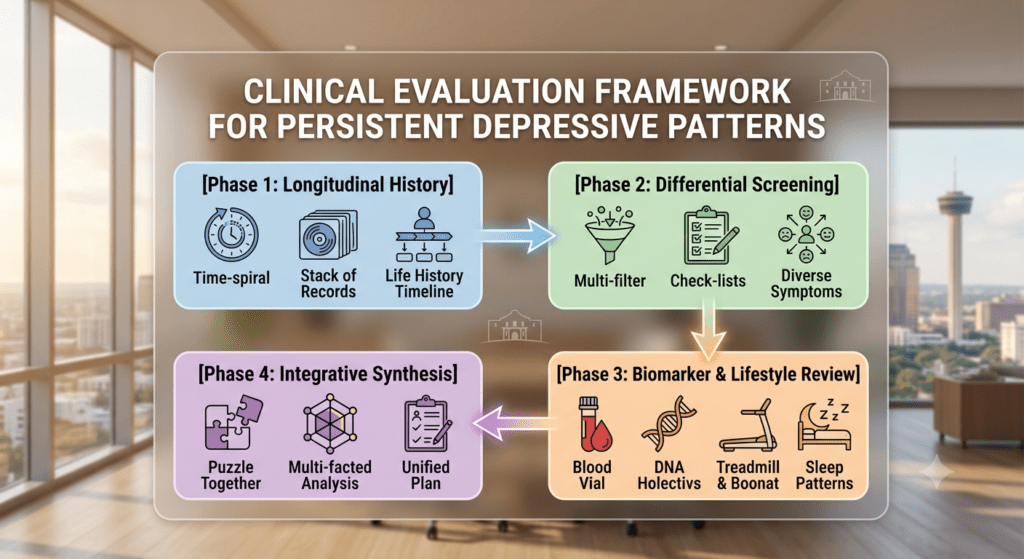
- Longitudinal History Assessment: We take time to map your emotional and physical health over years, identifying when subtle shifts in energy, mood, and stress tolerance began. Understanding your timeline helps distinguish chronic persistent depressive patterns from acute major depressive episodes or burnout.
- Comprehensive Differential Screening: We systematically evaluate overlapping symptoms. Persistent low energy and executive strain can stem from mood disorders, unaddressed trauma, neurodevelopmental variations, or anxiety disorders. Identifying the true primary drivers ensures your care plan targets the root cause.
- Biomarker and Physiological Review: Mental health is inextricably linked to physical health. We review medical history and order appropriate laboratory testing to evaluate thyroid function, vitamin levels (such as Vitamin D and B12), metabolic parameters, and inflammatory markers that directly influence neurochemistry and energy levels.
- Integrative Synthesis & Goal Setting: We combine clinical data with your personal priorities. Our goal is not simply symptom reduction, but helping you regain emotional vitality, cognitive ease, and meaningful connection in your daily life.
“A thorough psychiatric evaluation looks beyond external productivity to understand the internal cost of function, providing a precise roadmap for sustainable recovery.”
By grounding our practice in clinical standards established by professional organizations like the American Psychiatric Nurses Association (APNA), we ensure every patient receives evidence-based, compassionate care aligned with advanced psychiatric nursing principles.
Section 3: The Real Cost of Waiting for Support
Because high-functioning depression does not immediately disrupt employment or physical safety, individuals often postpone seeking care for years. It is easy to convince yourself that “things aren’t bad enough” to warrant professional help, especially when comparing your situation to those in acute crisis. However, living in a state of continuous emotional drain carries significant cumulative consequences.
Over time, the chronic stress associated with unaddressed persistent depressive disorder affects multiple domains of life, transforming manageable daily responsibilities into heavy burdens.
| Stage of Impact | Functional & Cognitive Impact | Interpersonal & Emotional Impact | Physical & Long-Term Health Impact |
| Early Manifestation | Tasks require extra effort; reliance on rigid routines or caffeine to maintain focus; feeling drained by end of workday. | Decreased patience with family; declining interest in social outings in San Antonio; masking fatigue in public settings. | Mild sleep disturbances, subtle muscle tension, occasional headaches, feeling unrested upon waking. |
| Progressing Strain | Cognitive fatigue increases; decision-making becomes taxing; work quality maintained only through overtime or extreme stress. | Emotional detachment from partner or children; avoidance of non-essential social contact; pervasive guilt about lack of presence. | Chronic insomnia or oversleeping, persistent gastrointestinal issues, weakened immune response, systemic fatigue. |
| Crisis-Level Impact | Executive burnout; inability to sustain work performance despite high effort; risk of a major depressive episode (“double depression”). | Deep emotional isolation; feeling completely misunderstood; severe strain on marriages or close family relationships. | Significant physical exhaustion, heightened risk of cardiovascular stress, emergence of complex mood shifts resembling bipolar disorder during periods of extreme burnout. |
“Delaying care for persistent depressive symptoms does not build resilience—it drains the reserves required to thrive in your personal and professional life.”

Seeking evaluation early halts this progressive drain on your system, allowing you to restore balance before reaching a state of complete physical or emotional exhaustion.
Section 4: Why Choose Intuitive Mind Behavioral Health
Selecting a psychiatric provider is a deeply personal decision. For high-functioning adults in San Antonio and the surrounding Hill Country, finding a practice that offers both clinical rigor and nuanced empathy is essential. Intuitive Mind Behavioral Health was founded to provide high-touch, evidence-based psychiatric care that honors the whole person.
Our Core Trust Signals
- Expert Psychiatric Leadership: Practice founder Lydia Kimeli-Pope, MSN, PMHNP-BC, is a board-certified Psychiatric Mental Health Nurse Practitioner licensed under the rigorous standards of the Texas Board of Nursing. Advanced practice psychiatric nursing combines expert diagnostic capability and psychopharmacology with a holistic, patient-centered philosophy.
- Integrative Psychiatric Philosophy: We look beyond simple prescription writing. While targeted medication can be a powerful tool for restoring neurochemical balance, our integrative approach also incorporates nutritional psychiatry, sleep hygiene optimization, lifestyle adjustments, and stress-resilience strategies.
- Whole-Family Perspective: Emotional health exists within a broader social context. We understand how career demands, parenting stress, and family dynamics influence individual well-being. Our practice provides comprehensive care for adults, adolescents, and children, supporting health across generations.
- Convenient Local and Virtual Care: Located in nearby New Braunfels, our physical office is easily accessible to residents across San Antonio, Seguin, and Hays County. For individuals with demanding schedules, our secure telehealth platform brings expert care directly to your home or office across Texas and New Mexico.
Illustrative Patient Scenario
(The following scenario is a composite illustration based on common clinical presentations and does not represent a real, identifiable individual.)
Case Example: Marcus’s Journey to Reclaiming Energy
Marcus, a 42-year-old executive living in San Antonio, had maintained an impressive career while raising two children. Over four years, however, he felt an escalating sense of internal numbness. Work achievements felt hollow, weekends were spent recovering from exhaustion, and he found himself reacting with unusual irritability toward his family. He convinced himself that he was simply working hard and had no right to complain.
After scheduling an evaluation at Intuitive Mind Behavioral Health, Marcus learned that his symptoms aligned with persistent depressive disorder complicated by chronic sleep disruption. Together, we designed a step-by-step integrative care plan that included conservative, targeted medication management, biological lab optimization, and structured boundary strategies for work hours. Within three months, Marcus reported a profound shift: his morning fatigue lifted, his mental clarity returned, and he felt genuinely present with his family for the first time in years.
Related Conditions We Treat
In addition to evaluating and treating persistent depressive patterns, our practice provides comprehensive psychiatric care across a full spectrum of behavioral health needs, including specialized support for co-occurring eating disorders and complex stress conditions.
Section 5: What to Expect When You Reach Out
Taking the first step toward psychiatric care should feel straightforward, supportive, and dignified. We have designed our intake process to ensure you feel respected and understood from your very first point of contact.
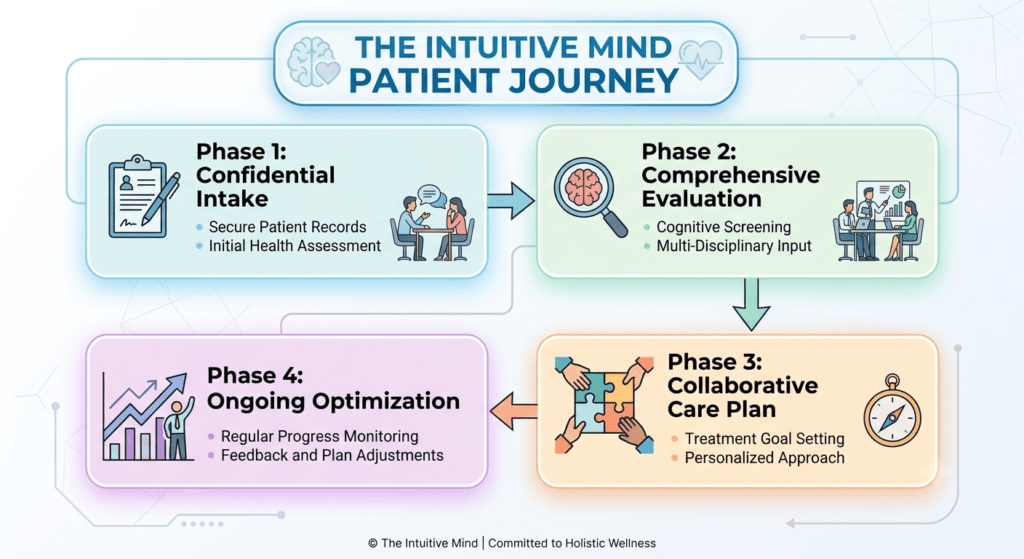
The 4-Phase Client Journey
- Phase 1: Initial Consultation & IntakeYour journey begins with a confidential inquiry through our website or phone. Our intake team gathers initial background information, answers your questions regarding care, and schedules your initial comprehensive evaluation at a time that fits your calendar.
- Phase 2: Comprehensive Psychiatric EvaluationIn your initial 60- to 90-minute appointment—conducted in our New Braunfels office or via secure telehealth—we explore your complete health history, current stressors, biological symptoms, and personal goals in a comfortable, pressure-free setting.
- Phase 3: Collaborative Care Plan DevelopmentWe review clinical findings together and design a tailored, multi-faceted treatment plan. If medication is recommended, options are discussed transparently, including mechanisms of action and expected timelines. We also outline complementary lifestyle and wellness strategies.
- Phase 4: Ongoing Care & Fine-TuningHealing is an evolving process. Regular follow-up appointments allow us to monitor your progress, adjust interventions as needed, and provide continuous support as your energy, clarity, and life satisfaction improve.
Geographic Service Reach
We are proud to serve communities across the region:
- In-Person Office Location: Conveniently located in New Braunfels, serving patients from San Antonio, Seguin, San Marcos, Alamo Heights, Stone Oak, Schertz, Cibolo, and surrounding areas in Comal, Guadalupe, Bexar, and Hays Counties.
- Telehealth Services: High-quality virtual psychiatric care accessible to residents throughout Texas and New Mexico.
For complex clinical presentations requiring specialized differential evaluation, such as late-onset mood changes or early psychotic symptoms associated with conditions like schizophrenia, our practice offers detailed assessment and referral coordination.
To take the first step, contact our office directly at 830-302-4097 to discuss your needs with our clinical coordination team.
Frequently Asked Questions
What is high-functioning depression?
High-functioning depression is a non-clinical term often used to describe persistent depressive disorder (PDD) or dysthymia. It refers to a chronic, low-grade depressive state where an individual continues to meet work, family, and social obligations, despite experiencing ongoing sadness, cognitive fatigue, emotional numbness, and low energy internally.
How long does a psychiatric evaluation for high-functioning depression take?
An initial comprehensive psychiatric evaluation at Intuitive Mind Behavioral Health typically lasts between 60 and 90 minutes. This unhurried intake allows our clinical team to thoroughly review your developmental, medical, and emotional background, evaluate lifestyle and biological factors, and establish an accurate diagnosis.
Can high-functioning depression worsen over time if left unaddressed?
Yes. While individuals can maintain high productivity for months or years, living with persistent depressive disorder exerts chronic stress on the brain and body. Over time, this often leads to physical exhaustion, cognitive burnout, damaged relationships, or double depression—a state where an acute major depressive episode develops on top of chronic underlying depression.
How do hormonal changes affect persistent depressive symptoms in women?
Hormonal fluctuations directly influence brain neurotransmitter systems governing mood and stress resilience. Shifts occurring during reproductive transitions, postpartum periods, or midlife can amplify underlying depressive tendencies. Our practice offers specialized expertise in women’s mental health, addressing unique biological considerations including neurohormonal transitions during perimenopause to ensure comprehensive, effective treatment.
Conclusion
Carrying high expectations while struggling with internal emptiness is exhausting, but you do not have to navigate persistent depressive symptoms alone. Recognizing the signs of high-functioning depression is an act of self-advocacy that opens the door to genuine relief, restored energy, and renewed purpose.
Your mental health is the most overlooked infrastructure in your life — until it affects everything else.
At Intuitive Mind Behavioral Health, we are committed to providing compassionate, evidence-based psychiatric care that honors your strengths while addressing your underlying health needs. Whether you prefer an in-person visit at our New Braunfels practice or the convenience of telehealth across Texas and New Mexico, our clinical team is here to support your journey back to wellness.
To explore evidence-based research and educational materials on mood disorders, visit the National Institute of Mental Health (NIMH). When you are ready to prioritize your mental health and schedule a comprehensive evaluation, we invite you to Book an appointment or call our local team directly at 830-302-4097
Crisis Safety Note: If you or someone you know is in crisis, call or text 988 (Suicide & Crisis Lifeline) for immediate, confidential support.