
What Lies Beneath Postpartum Mood Shifts
Bringing a new baby home to your family in San Antonio, whether you are settling into quiet evenings in Alamo Heights or navigating busy mornings in Stone Oak, comes with an expectation of joy. Yet for many new mothers across Central Texas, the reality after childbirth feels strikingly different. Instead of emotional warmth and seamless bonding, you may feel an inexplicable sense of emptiness, overwhelming dread, or a persistent fog of exhaustion that sleep cannot fix.
When you quietly express these feelings, friends or family members might reassure you that you are just “tired from the new routine.” But when tearfulness, intense anxiety, or a disturbing feeling of detachment from your baby lasts for weeks, it is not simply fatigue.
Surface symptoms like sudden irritability, guilt, and emotional shutdown are rarely just about stress. While adjusting to parenthood brings undeniable life changes, postpartum depression stems from profound physiological, neurochemical, and hormonal shifts occurring inside your body. Seeking effective care for postpartum depression in San Antonio starts with understanding that these feelings reflect real biological adjustments that deserve compassionate, expert support.
Exploring the Mind-Body Connection After Childbirth
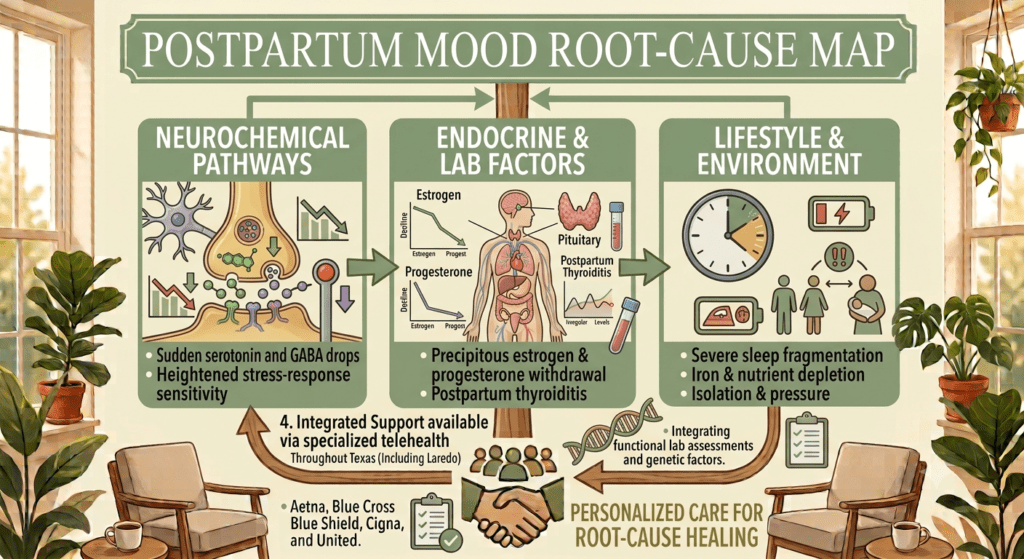
In the hours immediately following delivery, your body experiences the largest hormonal shift a human being can undergo in a 24-hour window. Levels of estrogen and progesterone drop precipitously—falling by more than 90% back to baseline levels.
Progesterone acts as a natural stabilizer for gamma-aminobutyric acid (GABA), the neurochemical responsible for calming the central nervous system. When progesterone drops abruptly, GABA activity decreases dramatically, leaving the brain vulnerable to heightened anxiety, panic, and racing thoughts. Simultaneously, the sharp decline in estrogen affects serotonin and dopamine pathways, which regulate mood stability, pleasure, and emotional resilience.
Contributing Factors Behind Postpartum Depression
When evaluating emotional shifts after delivery, several biological and environmental systems often intersect:
- Abrupt Endocrine Withdrawal: The sudden drop in placental hormones destabilizes mood-regulating neurotransmitters in the brain.
- Thyroid Dysregulation: Up to 10% of women experience postpartum thyroiditis, where thyroid inflammation causes mood swings, severe fatigue, and anxiety that mimic psychiatric conditions.
- Nutrient & Iron Depletion: Blood loss during delivery combined with the high metabolic demands of pregnancy and lactation can deplete key nutrients like ferritin, zinc, folate, and vitamin D.
How Postpartum Depression Differs from the “Baby Blues”
It is essential to distinguish between expected early transition shifts and clinical postpartum depression. Up to 80% of new mothers experience the “baby blues”—a mild, short-lived period of moodiness, tearfulness, and anxiety that peaks within a few days of delivery and resolves naturally within two weeks.
In contrast, postpartum depression persists beyond two weeks and often intensifies over time. It can manifest as pervasive sadness, intrusive worrisome thoughts, panic episodes, severe sleep disruption even when the baby is sleeping, or a distressing feeling of detachment from your child. Recognizing these differences ensures mothers receive timely, specialized support rather than waiting for symptoms to clear on their own.

Integrative Psychiatry vs. Conventional Symptom Suppression
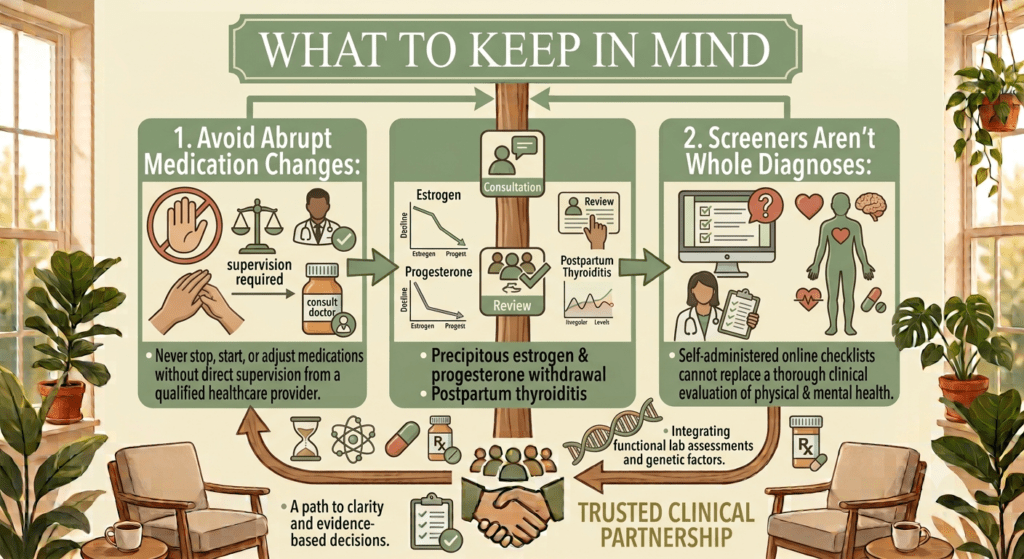
Standard psychiatric visits are often brief, rushed appointments that focus solely on prescribing an antidepressant without examining underlying physical or nutritional factors. While medication can be a helpful component of treatment, relying on it exclusively without investigating physical health can leave many new mothers feeling incompletely cared for.
At Intuitive Mind Behavioral Health, we utilize an integrative, whole-person approach. We recognize that postpartum mental health is intimately tied to your physical recovery, hormonal balance, and emotional well-being.
During our unhurried 90-minute psychiatric intake, we take the time to evaluate your full story—exploring pregnancy history, delivery complications, sleep patterns, nutritional status, and personal goals. When clinically indicated, we order targeted functional labs to assess thyroid function, iron levels, and nutrient status.
If medication is appropriate, we can use pharmacogenomic testing (such as GeneSight®) to analyze how your body metabolizes specific medications. This helps us select treatment options tailored to your genetic profile, minimizing trial-and-error.
Learn more about how we support mothers through complex life transitions by exploring our specialized women’s mental health services and our dedicated support for children and families.
“Postpartum care must look beyond symptom checklists. When we evaluate hormonal recovery, nutritional depletion, and neurobiology together, we give new mothers the comprehensive support they truly deserve.”
— Lydia Kimeli-Pope, MSN, PMHNP-BC
Why Early Intervention Supports Long-Term Family Well-Being
Here’s what we see happen when these symptoms go unaddressed: persistent emotional distress depletes a mother’s physical reserves, heightens feelings of isolation, and creates ongoing strain within partner and family relationships. Leaving postpartum depression untreated prolongs suffering, but getting early, structured support brings stability and relief back to your home.
| Scenario | What Support Can Look Like | Common Ripple Effects | Why Timing Matters |
| Addressed Early | Comprehensive intake, functional lab testing, targeted nutrition, therapy alignment, and tailored medication management. | Restored emotional balance, improved sleep quality, stronger bond with baby, and reduced partner strain. | Prevents chronic nervous system exhaustion and supports healthy early family bonding. |
| Left Unaddressed | Pushing through symptoms alone, isolated self-doubt, or relying on temporary coping strategies. | Deepening depression, persistent anxiety, severe exhaustion, and emotional detachment. | Extended nervous system strain makes recovery more complex over time. |
Seeking care early protects both your long-term health and your family’s dynamic. If you want to learn more about how we evaluate complex emotional challenges, explore our approach to depression treatment and specialized care for perinatal and perimenopausal mood changes.
“Asking for mental health support after having a baby is not a sign of weakness or failure—it is a courageous, proactive step toward healing yourself and nurturing your family.”
— Lydia Kimeli-Pope, MSN, PMHNP-BC
If you or someone you love is in crisis, you can reach the 988 Suicide & Crisis Lifeline by calling or texting 988, any time, for free and confidential support. Additional evidence-based mental health resources are available through the Substance Abuse and Mental Health Services Administration.
Why Central Texas Families Choose Intuitive Mind
Families across San Antonio, New Braunfels, and Central Texas trust Intuitive Mind Behavioral Health because we replace rushed medical visits with respectful, evidence-based, whole-person care. Led by Lydia Kimeli-Pope, MSN, PMHNP-BC—a Board-Certified Psychiatric Mental Health Nurse Practitioner—our practice is dedicated to providing warm, culturally attuned mental health care.
We welcome patients at our practice in New Braunfels, serving San Antonio, Austin, and neighboring communities like Seguin and Canyon Lake, while offering secure telehealth visits for mothers anywhere across Texas and New Mexico. To help ensure care is accessible, we accept major insurance plans—including Aetna, Blue Cross Blue Shield, Cigna, and United Healthcare—alongside self-pay options. Learn more about our clinical mission on our about us page.
What to Expect When You Reach Out
Reaching out for help during the postpartum period requires courage. We ensure our client journey is straightforward, reassuring, and stress-free.
![An informational infographic titled "YOUR CARE JOURNEY," set in a sunlit room featuring multi-paned windows, potted houseplants, and two armchairs with coffee cups. The design uses a color scheme of sage green, brown, cream, and terracotta, outlining a three-step medical care pathway connected by sequential green arrows.Step 1 (Left Panel): Titled "[Step 1: Free Consult] • 15-min phone call," showing illustrations of a hand holding a smartphone, speech bubbles, calendars, and a telephone receiver. A bullet point at the bottom reads: "Never stop, start, or adjust medications without direct supervision from a qualified healthcare provider."Step 2 (Center Panel): Titled "[Step 2: 90-Min Intake] • Deep-dive assessment," containing anatomical diagrams, hormone level charts for estrogen and progesterone, and an illustration of a medical team labeled "Review" and "Comprehensive Physiological Mapping." A text block below notes: "In-depth review of medical history, current symptoms, and full physical-mental evaluation."Step 3 (Right Panel): Titled "[Step 3: Plan] • Labs & care path," showing illustrations of a microscope, medical report documents, a petri dish, a calendar labeled "Personalized Action Plan," and a "Healthy Food Plate" diagram. The description below reads: "Custom integration of lab test results, functional genetic analysis, personalized lifestyle routines, and refined medication options."Bottom Elements: The lower section includes interconnected feedback arrows, a DNA strand, a prescription bottle, an hourglass, an atom, and a central handshake icon beneath a diverse group of people. Text blocks read "A path to clarity and evidence-based decisions" and "Integrating functional lab assessments and genetic factors," anchored at the bottom center by the title "PERSONALIZED RECOVERY PATH."](https://intuitive-mind.com/wp-content/uploads/2026/07/Gemini_Generated_Image_ddqy5dddqy5dddqy-1024x559.png)
- Free 15-Minute Consultation: A gentle, low-pressure telephone conversation to share what you are experiencing, ask questions, and confirm if our practice is the right fit.
- Simple Intake Scheduling: We collect background health history ahead of time so your appointment can focus entirely on your needs.
- The 90-Minute Initial Visit: An unhurried consultation held in-person or via secure telehealth, reviewing your physical, emotional, and postpartum recovery history.
- Targeted Diagnostic Testing: Ordering functional lab panels or GeneSight® testing when clinically beneficial.
- Collaborative Care Strategy: Designing a personalized treatment plan combining lifestyle adjustments, nutritional support, therapy coordination, or targeted medication management.
Illustrative Patient Experience
The following scenario represents a composite profile to illustrate our clinical approach:
Case Illustration: “Elena,” a 31-year-old mother living in northern San Antonio, experienced severe postpartum anxiety and persistent insomnia three weeks after the birth of her daughter. She felt overwhelmed by guilt, believing her inability to feel joyful meant she was failing as a parent.
During her 90-minute intake at Intuitive Mind Behavioral Health, we conducted a thorough evaluation that included functional lab work. The results revealed significantly low ferritin (iron store) levels and subclinical thyroid inflammation following delivery. By addressing these nutrient gaps alongside targeted therapy coordination and gentle, temporary medication support, Elena saw her sleep stabilize and her anxiety subside over several weeks, allowing her to feel present and confident with her baby.
The First Step Is a Conversation
You do not need to have all your symptoms sorted out before reaching out. You don’t have to have it all figured out before you reach out. That’s what this first call is for.
If you are ready for mental healthcare that honors your entire story, we invite you to connect with our team today:
- Primary Step: Book a Free 15-Minute Consult
- Direct Phone: Call our office directly at (830) 302-4097
- Learn More: Discover details regarding our specialized anxiety treatment options
We offer flexible scheduling with in-person visits in New Braunfels and telehealth appointments throughout Texas and New Mexico. You deserve supportive, judgment-free care that helps you feel grounded, healthy, and resilient again.
This content is educational and does not replace a full psychiatric evaluation. Every person’s situation is different — the information here is a starting point for a conversation, not a diagnosis.
About the Author
Intuitive Mind Behavioral Health — Lydia Kimeli-Pope, MSN, PMHNP-BC
Board-Certified Psychiatric Mental Health Nurse Practitioner
Intuitive Mind Behavioral Health is an integrative psychiatric practice based in New Braunfels, Texas, serving children, young adults, and women across New Braunfels, San Antonio, and Austin, with telehealth available across Texas and New Mexico. Our whole-person approach combines evidence-based psychiatric care with functional lab testing, nutritional support, and pharmacogenomic-guided medication management — because your story is never just a diagnosis.
📞 (830) 302-4097
📍 387 W. Mill St. Suite 106, New Braunfels, TX 78130
Now accepting new patients in Texas and New Mexico. Free 15-minute consultations available.