

When Emotional Shifts Become Hard to Navigate
It often begins after a particularly demanding stretch in Albuquerque, a stressful week in Santa Fe, or quiet evenings in Las Cruces when you notice your energy levels dropping without a clear explanation. Everyone experiences difficult days, periods of irritability, or temporary burnout from work and family pressures. Normally, a restful weekend or a resolution to a specific stressor allows your nervous system to reset.
However, for many New Mexico residents, the emotional weight does not lift. Days of feeling inexplicably low, numb, or detached may suddenly shift into periods of intense restlessness, racing thoughts, or overwhelming anxiety. You might wonder whether you are simply experiencing a rough patch or if something deeper is occurring within your neurobiology.
When emotional surges or profound fatigue persist, surface explanations like “being overworked” rarely tell the whole story. Distinguishing between a temporary stress response and a condition like Major Depressive Disorder or Bipolar Disorder requires looking beneath daily circumstances. Accessing compassionate, specialized care through telehealth psychiatry New Mexico services allows you to explore root causes without the barrier of long travel times.
Understanding the Biological Foundations of Mood Shifts
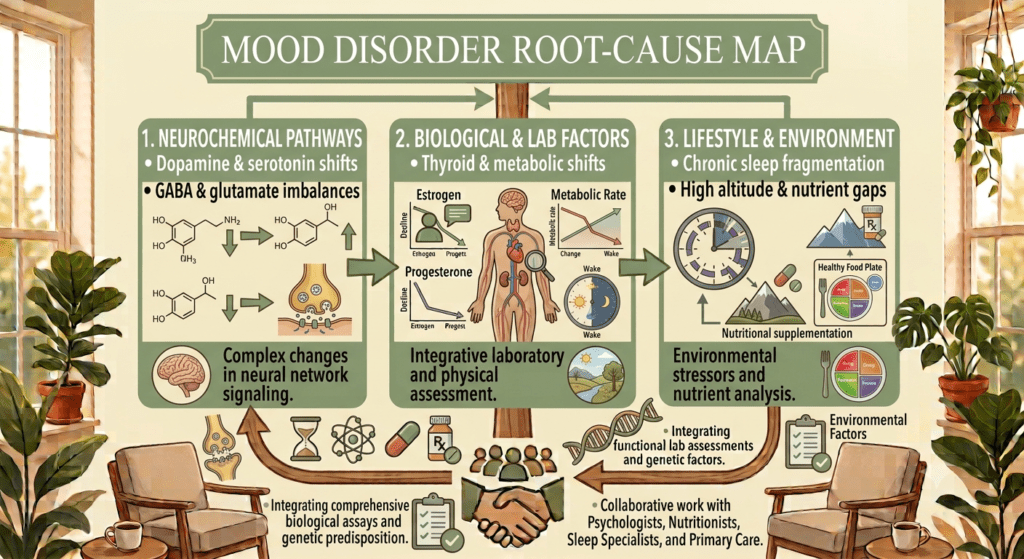
The human brain relies on a delicate balance of neurotransmitters—including serotonin, dopamine, norepinephrine, and glutamate—to regulate mood, motivation, and sleep. When these chemical pathways experience sustained disruption, emotional regulation becomes significantly more challenging.
In conditions such as Major Depressive Disorder, persistent neurochemical imbalances can lead to anhedonia (the inability to feel pleasure), deep cognitive fatigue, and heavy emotional sadness. In Bipolar Disorder, fluctuations between neurotransmitter depletion and surge can cause dramatic shifts between depressive lows and hypomanic or manic highs characterized by decreased need for sleep, impulsivity, and grandiosity.
Contributing Factors Behind Persistent Mood Shifts
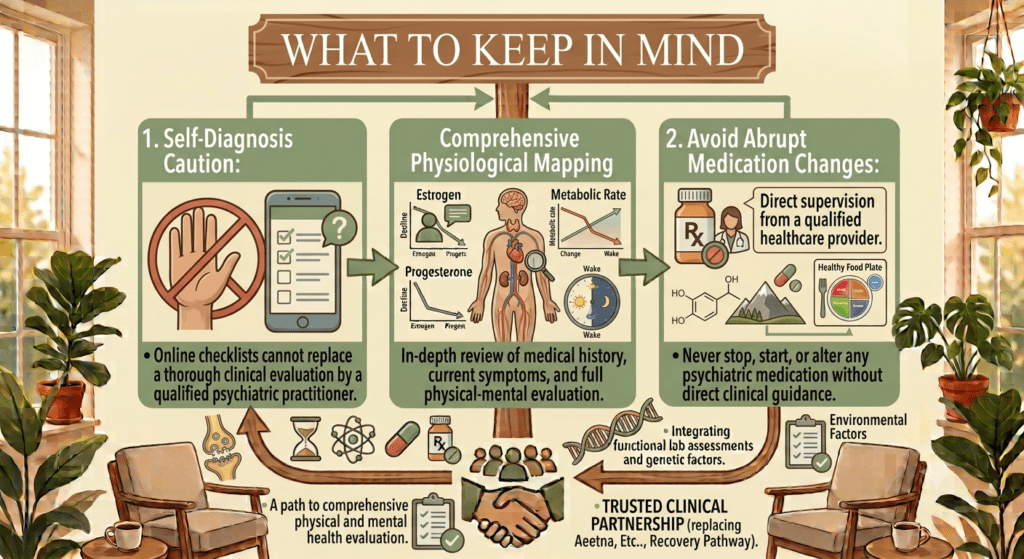
When evaluating whether emotional volatility reflects a situational response or a underlying mood condition, several biological factors often intersect:
- Circadian & Seasonal Disruption: Shifts in light patterns and high-altitude living can affect melatonin and serotonin synthesis, impacting sleep architecture and mood stability.
- Thyroid & Endocrine Imbalances: Subclinical thyroid dysfunction or adrenal dysregulation frequently presents with symptoms mimicking depression or panic.
- Nutrient & Metabolic Gaps: Deficiencies in key micronutrients—such as vitamin D, B12, folate, and iron—can impair neurotransmitter synthesis and energy production.
How Telehealth Psychiatry New Mexico Bridges the Gap in Mood Evaluation
Living in rural or suburban areas across New Mexico can make accessing specialized psychiatric evaluation difficult. Distance, limited local providers, and busy schedules often cause individuals to postpone seeking care.
Through virtual psychiatric care, residents across the state can connect with experienced clinicians from the comfort of their home, ensuring that persistent mood shifts receive the careful, thorough evaluation they require.

ntegrative Telehealth Psychiatry vs. Symptom Suppression
Traditional psychiatric encounters are frequently constrained to brief 15-minute medication management visits. In these rapid sessions, providers may prescribe a medication based on a quick symptom checklist without investigating underlying hormonal, nutritional, or biological contributors. While psychiatric medications are important medical tools, relying on them exclusively without exploring root causes can leave patients with incomplete relief.
At Intuitive Mind Behavioral Health, we practice a whole-person, integrative model. We believe that emotional health is inextricably linked to physical well-being, metabolic balance, and personal life context.
During our comprehensive 90-minute psychiatric intake—conducted via secure telehealth—we examine your full health history. When clinically indicated, we order targeted functional labs to check thyroid parameters, vitamin levels, and metabolic indicators.
If medication is part of your care plan, we utilize GeneSight® pharmacogenomic testing to evaluate how your genetic profile metabolizes different psychiatric medications, reducing the trial-and-error process.
To learn more about how we evaluate complex emotional fluctuations, explore our approaches to mood disorder treatment and bipolar disorder care.
“A mood disorder is not a personal weakness or a character flaw. It is a complex biological condition that deserves deep clinical listening, accurate diagnostic precision, and a truly whole-person treatment path.”
— Lydia Kimeli-Pope, MSN, PMHNP-BC
Why Addressing Mood Fluctuations Early Matters
Here’s what we see happen when this goes unaddressed. Prolonged emotional instability can strain relationships, impair career progress, and disrupt sleep architecture, leading to chronic physical and mental exhaustion.
| Scenario | What Support Can Look Like | Common Ripple Effects | Why Timing Matters |
| Addressed Early | 90-minute intake, functional lab testing, lifestyle alignment, and targeted therapy or pharmacogenomic-guided medication. | Restored emotional balance, steady work performance, improved sleep, and protected personal relationships. | Prevents chronic nervous system exhaustion and reduces the severity of future mood episodes. |
| Left Unaddressed | Attempting to push through alone, relying on unguided coping mechanisms, or isolating from loved ones. | Deepening emotional fatigue, heightened anxiety, severe sleep loss, and burnout. | Prolonged neurochemical dysregulation can make mood stabilization longer and more complex. |
Early identification provides clarity and equips you with personalized tools to regain stability. Read more about our specialized support for depression care to understand how integrative psychiatry approaches persistent low mood.
“Seeking support when you feel emotionally off-balance is an act of self-advocacy. You do not have to wait for a crisis to deserve compassionate, high-quality care.”
— Lydia Kimeli-Pope, MSN, PMHNP-BC
If you or someone you love is in crisis, you can reach the 988 Suicide & Crisis Lifeline by calling or texting 988, any time, for free and confidential support.
For additional evidence-based mental health resources, visit the National Institute of Mental Health or the Substance Abuse and Mental Health Services Administration.
Why New Mexico Residents Turn to Intuitive Mind
Residents across New Mexico and Texas choose Intuitive Mind Behavioral Health because we combine high-level clinical authority with genuine empathy. Led by Lydia Kimeli-Pope, MSN, PMHNP-BC—a Board-Certified Psychiatric Mental Health Nurse Practitioner—our practice is grounded in evidence-based integrative psychiatry.
We provide accessible care through telehealth across Texas and New Mexico, as well as in-person visits at our office in New Braunfels, Texas (serving San Antonio and Austin). To help make care accessible, we accept major insurance plans—including Aetna, Blue Cross Blue Shield, Cigna, and United Healthcare—alongside self-pay options. Learn more on our about page.
Navigating Your Care Journey Step by Step
Reaching out for mental health support via telehealth should feel seamless and straightforward.
![An informational infographic titled "YOUR CARE JOURNEY," set in a sunlit room featuring multi-paned windows, potted houseplants, and two armchairs with coffee cups. The design uses a color scheme of sage green, brown, cream, and terracotta, outlining a three-step medical care pathway connected by sequential green arrows. Step 1 (Left Panel): Titled "[Step 1: Free Consult] • 15-min phone call," showing illustrations of a hand holding a smartphone, speech bubbles, calendars, and a telephone receiver. A bullet point at the bottom reads: "Never stop, start, or adjust medications without direct supervision from a qualified healthcare provider." Step 2 (Center Panel): Titled "[Step 2: 90-Min Intake] • Deep-dive assessment," containing anatomical diagrams, hormone level charts for estrogen and progesterone, and an illustration of a medical team labeled "Review" and "Comprehensive Physiological Mapping." A text block below notes: "In-depth review of medical history, current symptoms, and full physical-mental evaluation." Step 3 (Right Panel): Titled "[Step 3: Plan] • Labs & care path," showing illustrations of a microscope, medical report documents, a petri dish, a calendar labeled "Personalized Action Plan," and a "Healthy Food Plate" diagram. The description below reads: "Custom integration of lab test results, functional genetic analysis, personalized lifestyle routines, and refined medication options." Bottom Elements: The lower section includes interconnected feedback arrows, a DNA strand, a prescription bottle, an hourglass, an atom, and a central handshake icon beneath a diverse group of people. Text blocks read "A path to clarity and evidence-based decisions" and "Integrating functional lab assessments and genetic factors," anchored at the bottom center by the title "PERSONALIZED RECOVERY PATH."](https://intuitive-mind.com/wp-content/uploads/2026/07/Gemini_Generated_Image_ddqy5dddqy5dddqy-1024x559.png)
- Free 15-Minute Consultation: A brief phone call to discuss your primary concerns and confirm if our telehealth practice aligns with your needs.
- Pre-Appointment Intake: Completing medical and emotional history forms online prior to your visit.
- The 90-Minute Virtual Intake: An unhurried, video consultation exploring your physical health, emotional well-being, lifestyle, and clinical history.
- Targeted Testing: Ordering functional lab panels or GeneSight® genetic testing when appropriate.
- Collaborative Care Plan: Creating a tailored treatment plan incorporating lifestyle recommendations, therapy alignment, or medication management.
Illustrative Patient Experience
The following scenario represents a composite profile to illustrate our clinical approach:
Case Illustration: “Marcus,” a 38-year-old living near Santa Fe, noticed unpredictable cycles where two weeks of intense work productivity and minimal sleep were followed by a month of severe fatigue and difficulty completing basic tasks. He assumed he was just failing at stress management.
Through a 90-minute telehealth intake with Intuitive Mind Behavioral Health, we conducted a whole-person assessment and ordered functional blood panels. The evaluation helped identify patterns consistent with a mild mood disorder, alongside significant vitamin D and B-complex deficiencies. By combining targeted nutritional support with a pharmacogenomic-guided medication management plan, Marcus experienced stabilized energy levels and fewer emotional swings over subsequent months.
Your Path Forward Starts with a Simple Conversation
You don’t have to have it all figured out before you reach out. That’s what this first call is for. Whether you are experiencing persistent low mood, emotional fluctuations, or simply want clarity, our clinical team is here to support you.
Take the first step toward balance today:
- Primary Step: Book a Free 15-Minute Consult
- Direct Phone: Call us directly at (830) 302-4097
- Learn More: Explore details on our anxiety care services
We provide secure, convenient telehealth appointments to residents across Texas and New Mexico. You deserve collaborative, judgment-free mental healthcare that honors your entire story.
This content is educational and does not replace a full psychiatric evaluation. Every person’s situation is different — the information here is a starting point for a conversation, not a diagnosis.
About the Author
Intuitive Mind Behavioral Health — Lydia Kimeli-Pope, MSN, PMHNP-BC
Board-Certified Psychiatric Mental Health Nurse Practitioner
Intuitive Mind Behavioral Health is an integrative psychiatric practice based in New Braunfels, Texas, serving children, young adults, and women across New Braunfels, San Antonio, and Austin, with telehealth available across Texas and New Mexico. Our whole-person approach combines evidence-based psychiatric care with functional lab testing, nutritional support, and pharmacogenomic-guided medication management — because your story is never just a diagnosis.
📞 (830) 302-4097
📍 387 W. Mill St. Suite 106, New Braunfels, TX 78130
Now accepting new patients in Texas and New Mexico. Free 15-minute consultations available.