
Now accepting new patients in Texas & New Mexico (telehealth)

socialivymedia.com

A candid, photorealistic photograph captures a comforting scene inside a home in Zorn, Texas. A woman in her mid-40s, with warm brown hair tied loosely, is resting on a plush armchair in a sun-drenched, bright room. She is looking out a large window into a lush green garden with a calm, peaceful expression. Soft, natural sunlight filters through the window, illuminating the room and creating a warm glow. She is wearing a soft, textured sage green knit sweater and warm socks, her hands gently resting on a mug in her lap. Text in the upper third, in clean, elegant white serif typography with small gold and green line-art leaf accents, reads: "Perimenopause and Mood Swings: A Zorn Woman's Guide". A small, subtle dark grey text bar at the bottom reads: "Intuitive Mind Behavioral Health". The visual atmosphere is built on soothing sage green, soft gold, and warm wood tones.

Perimenopause and Mood Swings: A Zorn Woman’s Guide

For women in Zorn and surrounding Guadalupe County, balancing family life, careers, and daily responsibilities requires energy and emotional resilience. However, in your 40s—or sometimes late 30s—you may begin noticing subtle or intense emotional shifts that feel completely out of character. You might find yourself snapping over small inconveniences, feeling a wave of unprovoked anxiety before a work meeting, or lying awake at 3:00 AM while your mind races. If this sounds familiar, you are not alone, and you are not “losing your mind.” You may be experiencing perimenopause—the transitional phase leading up to menopause. Understanding perimenopause mood swings in Zorn helps women seek targeted, integrative care rather than suffering in silence. Common Emotional and Physical Signs of Perimenopause Perimenopause can begin 4 to 10 years before your final menstrual period. While hot flashes and irregular cycles are well-known signs, mood changes often appear first and can be the most disruptive. Primary Symptoms to Track The Biological Science Behind Hormonal Mood Shifts Estrogen and progesterone are not just reproductive hormones; they are powerful chemical messengers in the brain. To explore how hormonal shifts interact with other emotional challenges, read our guides on mood disorder treatment, depression care, and anxiety care services. Traditional vs. Integrative Women’s Psychiatric Care When women present with mood swings during their 40s, standard healthcare visits may result in a quick prescription for a high-dose antidepressant or a dismissal that “it’s just stress.” At Intuitive Mind Behavioral Health, located near Zorn in New Braunfels, we utilize a holistic, root-cause approach tailored specifically to women’s neurobiology. During our unhurried initial evaluation, we examine your complete physiological profile. We evaluate thyroid panel markers, vitamin D and B12 levels, cortisol patterns, and sex hormone balance to ensure no physical issue is being overlooked. If psychiatric medication is appropriate, we offer GeneSight® pharmacogenomic testing to identify how your body processes different medications, minimizing unwanted side effects and optimizing therapeutic results. “Perimenopause is a profound biological transformation. When we honor a woman’s hormonal reality with compassionate, science-backed psychiatric care, we restore balance and quality of life.” — Lydia Kimeli-Pope, MSN, PMHNP-BC Practical Daily Strategies for Zorn Women While professional care provides long-term stability, small daily shifts can help calm your nervous system and support hormonal transitions. Strategy Actionable Step Physiological Benefit Balance Blood Sugar Pair complex carbohydrates with healthy fats and lean protein at every meal. Prevents cortisol surges that exacerbate anxiety and mood swings. Prioritize Magnesium & Omega-3s Incorporate leafy greens, nuts, seeds, and high-quality supplements after consulting your provider. Supports GABA receptor function and reduces systemic neuroinflammation. Protect Evening Circadian Rhythms Dim household lighting 2 hours before bed and avoid screen blue light. Encourages natural melatonin production despite fluctuating estrogen levels. Engage in Gentle Movement Practice daily walking, yoga, or swimming rather than high-intensity, stress-inducing workouts. Lowers circulating adrenal stress hormones while boosting mood-elevating endorphins. Learn more about our philosophy on our about page and see how we treat overlapping conditions like bipolar disorder care. “You do not have to accept chronic emotional exhaustion as an inevitable part of aging. Proper support can make this transition a time of renewed strength.” — Lydia Kimeli-Pope, MSN, PMHNP-BC If you or a loved one are experiencing an overwhelming mental health crisis, immediate help is available. Contact the 988 Suicide & Crisis Lifeline by calling or texting 988 for free, confidential support 24/7. For additional resources on perimenopause health and women’s wellness, explore materials from the The Menopause Society or the Office on Women’s Health (OWH). Why Guadalupe County Women Choose Intuitive Mind Intuitive Mind Behavioral Health is led by Lydia Kimeli-Pope, MSN, PMHNP-BC—a Board-Certified Psychiatric Mental Health Nurse Practitioner specializing in integrative care for women, young adults, and families. Conveniently located near Zorn, Seguin, and San Marcos, our New Braunfels clinic offers a peaceful setting for in-person evaluations, alongside secure telehealth across the state. Connect with us on our contact page. Step-by-Step Pathway to Care Getting started with personalized care is straightforward and structured to support you at every stage. Reclaim Your Emotional Balance Today You deserve to feel grounded, vibrant, and in control of your health through perimenopause and beyond. Take the first step toward personalized support: We are proud to serve women in Zorn, New Braunfels, Seguin, San Marcos, and across Texas. Let us help you navigate this transition with clarity, balance, and confidence. This content is educational and does not substitute for a formal clinical evaluation. Every individual’s health needs are unique—use this guide to inform your conversation with a licensed healthcare provider. About the Author Intuitive Mind Behavioral Health — Lydia Kimeli-Pope, MSN, PMHNP-BC Board-Certified Psychiatric Mental Health Nurse Practitioner Intuitive Mind Behavioral Health is an integrative psychiatric practice located in New Braunfels, Texas, serving women, children, and young adults across Zorn, Seguin, San Antonio, and Austin, with telehealth available across Texas and New Mexico. We combine evidence-based psychiatric care with functional lab testing, nutritional wellness, and pharmacogenomic-guided medication management. 📞 (830) 302-4097 🌐 intuitive-mind.com 📍 387 W. Mill St. Suite 106, New Braunfels, TX 78130 Accepting new patients. Free 15-minute consultations available.

Perimenopause and Mood Swings: A Zorn Woman’s Guide Read More »

"Early warning signs of psychosis McQueeney guide illustrating young adult family support."

Early Warning Signs of Psychosis in McQueeney Young Adults

Understanding the Early Stages of Psychosis For young adults living in McQueeney and surrounding Guadalupe County, transitioning into higher education, careers, and independent living is an exciting milestone. However, late adolescence and early adulthood (ages 16–25) also mark a vulnerable biological window when neurodevelopmental shifts can manifest as changes in mental health. When a young adult begins acting differently—isolating in their room, expressing unusual fears, or struggling to follow conversations—families often wonder if it is severe stress, drug experimentation, or a emerging mental health condition. Psychosis is not a sudden break from reality; it is a spectrum of perceptual and cognitive changes that usually begins with a subtle phase known as the prodrome. Recognizing the early warning signs of psychosis in McQueeney young adults allows families to seek gentle, compassionate care early, preventing severe crises down the road. Early Warning Signs: What Families Should Look For During the early or prodromal stage, symptoms can be quiet and easily mistaken for typical teenage moodiness or academic burnout. However, a persistent pattern across several areas of life warrants a professional psychiatric evaluation. Behavioral & Cognitive Shifts The Neurobiology Behind Early Perceptual Shifts Psychosis involves complex dysregulation within dopamine, glutamate, and neuroinflammatory pathways in the brain. During young adulthood, the brain undergoes major synaptic pruning and structural maturation. When genetic vulnerabilities intersect with environmental stressors, sleep deprivation, or substance use, these chemical pathways can become unbalanced. To understand how early perceptual shifts intersect with broader mood disorders, explore our specialized care for bipolar disorder care, mood disorder treatment, and anxiety care services. Traditional vs. Integrative Psychiatric Evaluation Standard emergency or traditional clinic visits during a mental health crisis can sometimes feel overwhelming and transactional. Standard care frequently focuses solely on immediate symptom suppression through high-dose medications, without investigating contributing physical, nutritional, or lifestyle factors. At Intuitive Mind Behavioral Health, located just a short drive from McQueeney in New Braunfels, we provide an unhurried, whole-person approach designed to reduce anxiety for both the young adult and their family. During our comprehensive 90-minute intake, we take time to understand the full context of your loved one’s story. We order targeted blood tests to rule out thyroid dysfunction, autoimmune encephalitis, vitamin deficiencies, or metabolic issues that can mimic psychiatric symptoms. When medication management is beneficial, we utilize GeneSight® pharmacogenomic testing to evaluate how their genetics metabolize different medications, helping us choose treatments with high precision and minimal side effects. “Early warning signs are an invitation to provide gentle, comprehensive support. When we step in early with neurobiological precision and deep empathy, we protect the young adult’s future and restore hope to the family.” — Lydia Kimeli-Pope, MSN, PMHNP-BC How Families in McQueeney Can Offer Immediate Support If you suspect a young adult in your home is exhibiting early warning signs, your response can create a safe bridge toward healing. Action Step What It Looks Like in Daily Life Why It Matters Validate Emotions, Not Delusions Say, “I can see that you are feeling scared right now, and I am here with you,” rather than arguing about reality. Maintains trust and safety without reinforcing distressing hallucinations or paranoia. Reduce Environmental Stress Simplify daily expectations, minimize loud or chaotic environments, and encourage calm routines. Calms an overstimulated nervous system and lowers acute anxiety levels. Prioritize Sleep Hygiene Help re-establish a consistent bedtime schedule and quiet evening environment. Restoring circadian rhythms supports neurochemical stabilization and brain recovery. Schedule a Comprehensive Intake Connect with a psychiatric provider who specializes in early young adult evaluation. Ensures accurate diagnostic clarity before symptoms escalate into a crisis. Learn more about our practice approach on our about page and discover our strategies for depression care. “Seeking support at the first sign of perceptual change is not an overreaction—it is proactive healthcare. You are giving your child the best chance to thrive.” — Lydia Kimeli-Pope, MSN, PMHNP-BC If your family is facing an acute crisis, safety is the top priority. Contact the 988 Suicide & Crisis Lifeline by calling or texting 988 for free, confidential, 24/7 assistance. For additional research and educational resources on early psychosis recognition, visit the National Institute of Mental Health (NIMH) or the Substance Abuse and Mental Health Services Administration (SAMHSA). Why Guadalupe County Families Partner with Intuitive Mind Intuitive Mind Behavioral Health is led by Lydia Kimeli-Pope, MSN, PMHNP-BC—a Board-Certified Psychiatric Mental Health Nurse Practitioner dedicated to supporting adolescents, young adults, and families.Located close to McQueeney, Seguin, and Lake Dunlap, our New Braunfels practice offers accessible in-person consultations alongside statewide telehealth options. Discover options on our contact page. Step-by-Step Pathway to Care Connecting your young adult with compassionate, structured support is designed to be clear and seamless. Take the First Step Toward Clarity Today You do not have to handle troubling changes in your child’s thinking or behavior alone. Compassionate, expert care is available close to home. Reach out to start the conversation today: We are proud to serve young adults and families in McQueeney, New Braunfels, Seguin, and across Texas. Your family deserves whole-person care grounded in respect, safety, and hope. This content is educational and does not substitute for a formal clinical evaluation. Every individual’s journey is unique — use this guide to inform your conversation with a licensed healthcare provider. About the Author Intuitive Mind Behavioral Health — Lydia Kimeli-Pope, MSN, PMHNP-BC Board-Certified Psychiatric Mental Health Nurse Practitioner Intuitive Mind Behavioral Health is an integrative psychiatric practice located in New Braunfels, Texas, serving children, young adults, and women across McQueeney, Seguin, San Antonio, and Austin, with telehealth available across Texas and New Mexico. We combine evidence-based psychiatric care with functional lab testing, nutritional wellness, and pharmacogenomic-guided medication management. 📞 (830) 302-4097 🌐 intuitive-mind.com 📍 387 W. Mill St. Suite 106, New Braunfels, TX 78130 Accepting new patients. Free 15-minute consultations available.

Early Warning Signs of Psychosis in McQueeney Young Adults Read More »

"Invisible eating disorders Lake Dunlap guide illustrating parent-teen connection and awareness."

Eating Disorders Aren’t Always Visible: A Warning for Lake Dunlap Parents

The Dangerous Myth of the “Visible” Eating Disorder For parents living along Lake Dunlap and across Guadalupe County, watching children grow through adolescence and young adulthood brings both joy and new challenges. When we picture someone living with an eating disorder, popular media often leads us to imagine a severely underweight or emaciated individual. However, clinical research and real-world experience tell a very different story: the vast majority of people with eating disorders do not look visibly ill. Conditions such as Atypical Anorexia Nervosa, Bulimia Nervosa, Binge Eating Disorder (BED), and Avoidant/Restrictive Food Intake Disorder (ARFID) frequently affect teens and young adults who appear completely healthy on the outside. Because physical appearance can be deceiving, many parents miss the early warning signs of invisible eating disorders near Lake Dunlap, allowing disordered patterns to quietly take root. Recognizing the Hidden Signs: Beyond the Scale When weight remains stable, disordered eating relies on psychological patterns, secretive behaviors, and subtle shifts in daily routines. Parents should look out for a combination of emotional, behavioral, and physical cues. Behavioral & Emotional Red Flags Medical Risks Hidden Beneath the Surface The physical impact of disordered eating occurs internally long before outward changes show up. Chronic caloric restriction, purging, or bingeing creates significant metabolic strain across the entire body. To understand how eating disorders intersect with co-occurring mood challenges, explore our dedicated services for anxiety care services, depression care, and mood disorder treatment. Traditional vs. Integrative Psychiatric Care Standard psychiatric visits often last only 15 minutes and rely heavily on quick symptom checks and immediate prescription writing. While psychiatric medications play an important role, managing complex conditions like eating disorders requires looking at the whole picture—including biology, nutrition, and mental health. At Intuitive Mind Behavioral Health, located just minutes from Lake Dunlap in New Braunfels, we provide comprehensive, whole-person care. During our 90-minute initial intake, we evaluate overall physical health, nutritional balance, sleep patterns, and emotional well-being. When medication is beneficial to treat underlying anxiety, depression, or obsessive thoughts, we utilize GeneSight® pharmacogenomic testing to identify medications that align best with your child’s genetic profile, minimizing side effects and avoiding unnecessary trial-and-error. “Eating disorders thrive in secrecy and isolation. When parents learn to look beyond weight and observe behavioral shifts, early intervention can protect a young person’s health and future.” — Lydia Kimeli-Pope, MSN, PMHNP-BC How Parents Near Lake Dunlap Can Take Action If you notice subtle red flags in your adolescent or young adult child, taking early action is key to their recovery. Action Step What It Looks Like in Daily Life Why It Matters Shift the Focus Away from Weight Focus conversations on energy, mood, hobbies, and emotional well-being rather than body size. Removes the pressure surrounding physical appearance and creates a safer space for open dialogue. Schedule a Comprehensive Assessment Seek a clinical evaluation that includes medical labs, emotional history, and dietary patterns. Identifies hidden physiological strain before long-term health complications arise. Maintain Regular Family Mealtimes Offer relaxed, low-pressure family meals where food is neutral and enjoyment is prioritized. Reduces mealtime anxiety and models a balanced, comfortable relationship with food. Coordinate Care Teams Work with a psychiatric provider who collaborates directly with therapists and registered dietitians. Delivers a unified treatment strategy that supports both mind and body. Learn more about our practice philosophy on our about page and review our approach to complex conditions like bipolar disorder care. “You don’t need to wait for a severe physical crisis to validate your intuition. If something feels off with your child’s relationship with food or energy, reaching out for guidance is the right step.” — Lydia Kimeli-Pope, MSN, PMHNP-BC If your family is dealing with a severe emotional or mental health crisis, immediate support is always available. Contact the 988 Suicide & Crisis Lifeline by calling or texting 988 for free, confidential, 24/7 support. For additional educational resources on eating disorder recognition and recovery, visit the National Eating Disorders Association (NEDA) or the Substance Abuse and Mental Health Services Administration. Why Guadalupe County Families Turn to Intuitive Mind Intuitive Mind Behavioral Health is led by Lydia Kimeli-Pope, MSN, PMHNP-BC—a Board-Certified Psychiatric Mental Health Nurse Practitioner dedicated to serving children, adolescents, young adults, and women. Conveniently located in New Braunfels, TX, our clinic offers accessible in-person visits for families across Lake Dunlap, Seguin, and San Marcos, as well as virtual telehealth options statewide. Discover details on our contact page. Step-by-Step Pathway to Care Getting your child or loved one connected with supportive care is clear, straightforward, and collaborative. Reach Out for Compassionate Guidance Today You do not have to navigate concerns about your child’s health alone. Gentle, expert guidance is available right here in your community. Take the first step toward clarity and healing today: We are honored to serve families in Lake Dunlap, New Braunfels, Guadalupe County, and across Texas. Your child deserves compassionate, whole-person care that sees beyond the surface. This content is educational and does not replace a formal medical or psychiatric evaluation. Every young person’s situation is unique — use this guide to inform your conversation with a qualified healthcare provider. About the Author Intuitive Mind Behavioral Health — Lydia Kimeli-Pope, MSN, PMHNP-BC Board-Certified Psychiatric Mental Health Nurse Practitioner Intuitive Mind Behavioral Health is an integrative psychiatric practice based in New Braunfels, Texas, serving children, adolescents, young adults, and women across Lake Dunlap, Seguin, San Antonio, and Austin, with telehealth available across Texas and New Mexico. We combine evidence-based psychiatric care with functional lab testing, nutritional wellness, and pharmacogenomic-guided medication management. 📞 (830) 302-4097 🌐 intuitive-mind.com 📍 387 W. Mill St. Suite 106, New Braunfels, TX 78130 Accepting new patients. Free 15-minute consultations available.

Eating Disorders Aren’t Always Visible: A Warning for Lake Dunlap Parents Read More »

Understanding Trauma-Informed Psychiatric Care in Geronimo

What Does Trauma-Informed Psychiatric Care Mean? For many individuals living in Geronimo and rural Guadalupe County, seeking mental health care can feel daunting. Past negative medical experiences, unprocessed personal trauma, or the stigma surrounding mental health can make taking that first step difficult. Standard clinical environments—where appointments feel rushed and decisions are imposed without explanation—can inadvertently trigger feelings of powerlessness or anxiety. Trauma-informed psychiatric care offers a fundamentally different approach. It recognizes that emotional distress, severe anxiety, depression, and hypervigilance are often adaptive responses to past adverse experiences rather than isolated defects. By centering safety, empowerment, and mutual respect, trauma-informed psychiatric care in Geronimo ensures that every aspect of your clinical journey honors your story, paces care at your comfort level, and supports long-term healing. The 6 Core Principles of Trauma-Informed Care When seeking psychiatric support in Geronimo, understanding these foundational principles helps you know what to expect from a compassionate practitioner: The Mind-Body Connection: How Trauma Lives in the Body Trauma is not held solely in memories; it deeply influences the autonomic nervous system, endocrine system, and immune response. Chronic stress or past adversity keeps the body’s fight-or-flight response continually activated, leading to physiological strain over time. Common Physical and Emotional Expressions of Unresolved Trauma To understand how trauma intersects with mood shifts and emotional fatigue, explore our specialized approaches to anxiety care services, depression care, and mood disorder treatment. Integrative Telehealth & In-Person Care for Geronimo Residents Residents in Geronimo, Seguin, and surrounding areas often balance busy agricultural, professional, or family lives. Finding time to drive to distant clinics or sitting in crowded waiting rooms can add unnecessary stress to an already overloaded schedule. At Intuitive Mind Behavioral Health, we offer flexible care options—including convenient in-person visits at our office in nearby New Braunfels as well as comprehensive telehealth services across Texas. Our integrative model goes beyond quick 15-minute prescription renewals. During our 90-minute initial evaluation, we take time to understand your physical health, lifestyle, and unique history. When medication is recommended, we utilize GeneSight® pharmacogenomic testing to evaluate how your genetic profile processes psychiatric medications, helping avoid trial-and-error and minimizing uncomfortable side effects. “Healing from trauma requires an environment where you feel truly heard, respected, and safe. Care should always be a collaborative partnership that honors your mind, body, and spirit.” — Lydia Kimeli-Pope, MSN, PMHNP-BC Why Trauma-Informed Care Delivers Better Outcomes When psychiatric care accounts for trauma and nervous system regulation, individuals experience deeper clarity, better treatment adherence, and meaningful long-term balance. Traditional Medical Approach Trauma-Informed Integrative Approach Long-Term Benefit Focuses strictly on immediate symptom suppression. Investigates root biological, emotional, and systemic factors. Promotes sustainable neurobiological healing rather than temporary fixes. Brief, 15-minute appointments with minimal discussion. Unhurried 90-minute intakes with patient-centered listening. Builds strong clinical trust and reduces healthcare-related anxiety. Standardized medication trial-and-error. Pharmacogenomic testing and functional blood panels. Improves precision, minimizes side effects, and honors physical health. Learn more about our comprehensive philosophy on our about page and discover our approach to complex conditions like bipolar disorder care. “You do not have to carry the weight of past trauma alone. With gentle pacing and comprehensive care, restoring emotional peace is entirely possible.” — Lydia Kimeli-Pope, MSN, PMHNP-BC If you or someone you love is experiencing a mental health crisis, immediate help is available. Contact the 988 Suicide & Crisis Lifeline by calling or texting 988 for free, confidential, 24/7 support. For additional evidence-based mental health resources, visit the National Institute of Mental Health or the Substance Abuse and Mental Health Services Administration. Why Geronimo Families Choose Intuitive Mind Led by Lydia Kimeli-Pope, MSN, PMHNP-BC—a Board-Certified Psychiatric Mental Health Nurse Practitioner—Intuitive Mind Behavioral Health provides compassionate, high-level psychiatric care tailored to your life. Located just a short drive from Geronimo in New Braunfels, TX, our practice bridges high-quality in-person visits with modern virtual care. We accept major insurance plans to help keep comprehensive care accessible. Step-by-Step Pathway to Care Beginning your mental health journey with us is gentle, predictable, and supportive. Begin Your Healing Journey Today Taking the first step toward mental wellness is an empowering act of self-care. You deserve psychiatric care that respects your history and supports your future. Take the first step today: We are proud to serve residents across Geronimo, Seguin, New Braunfels, and all of Texas. You deserve compassionate, trauma-informed care that honors every part of your story. This content is educational and does not replace a formal clinical evaluation. Every individual’s journey is unique — use this guide to inform your conversation with a licensed healthcare provider. About the Author Intuitive Mind Behavioral Health — Lydia Kimeli-Pope, MSN, PMHNP-BC Board-Certified Psychiatric Mental Health Nurse Practitioner Intuitive Mind Behavioral Health is an integrative psychiatric practice located in New Braunfels, Texas, serving children, young adults, and women across Geronimo, Seguin, San Antonio, and Austin, with telehealth available across Texas and New Mexico. We combine evidence-based psychiatric care with functional testing, nutritional wellness, and trauma-informed principles to support whole-person recovery. 📞 (830) 302-4097 🌐 intuitive-mind.com 📍 387 W. Mill St. Suite 106, New Braunfels, TX 78130 Accepting new patients. Free 15-minute consultations available.

Understanding Trauma-Informed Psychiatric Care in Geronimo Read More »

Bipolar I vs Bipolar II Laredo guide illustrating family support and psychiatric understanding.

Bipolar I vs. Bipolar II: What Laredo Families Should Understand

Navigating Mood Shifts as a Family in Laredo When a loved one experiences unpredictable shifts in energy, sleep, and mood, family life can quickly feel uncertain. In Laredo, where multi-generational households and close family ties play a central role in daily life, mental health challenges impact the entire home. You might notice a family member going days with almost no sleep while taking on ambitious projects, only to crash into weeks of deep exhaustion, withdrawal, and despair. It is common to wonder: Is this extreme stress, major depression, or a form of bipolar disorder? And why does it look so different from one month to the next? Understanding the distinction between Bipolar I and Bipolar II is one of the most critical first steps toward clarity. While both conditions involve significant mood fluctuations, they present differently in intensity, duration, and clinical needs. Accessing compassionate, specialized care through integrative psychiatry Texas services allows families in Web County and South Texas to receive clear evaluations and personalized care without unnecessary barriers. Comparing Bipolar I vs. Bipolar II To understand how clinicians evaluate these conditions, it helps to examine their primary differences side by side. Feature / Dimension Bipolar I Disorder Bipolar II Disorder Defining Feature Must have had at least one full manic episode. Must have had at least one hypomanic episode AND one major depressive episode. High Phase (Mania/Hypomania) Full Mania: Extreme energy, euphoria or extreme irritability, racing thoughts, uninhibited behaviors, reduced need for sleep. Hypomania: Noticeable rise in energy and mood, high productivity, but without psychosis or severe daily disruption. Low Phase (Depression) Frequent and severe, though technically not required for formal diagnosis. Required. Depressive episodes are often long-lasting, deeply debilitating, and carry high risk of distress. Hospitalization & Psychosis Mania may involve psychosis (delusions/hallucinations) and often requires emergency stabilization. Psychosis does not occur during hypomania. If psychosis occurs, the diagnosis shifts to Bipolar I. Daily Functioning Manic episodes severely impair work, social, and family responsibilities. Hypomania may appear highly functional or productive initially, but the following depressive phase causes major disruption. Understanding the Biological Roots of Bipolar Spectrum Conditions Bipolar disorder is not a personality trait or a choice—it is a complex neurobiological condition involving neurotransmitter regulation, circadian rhythms, and genetic factors. Key Biological & Environmental Contributors To learn more about how we evaluate complex mood conditions, explore our dedicated services for bipolar disorder care and mood disorder treatment. Integrative Telehealth Psychiatry vs. Traditional Care For many families in Laredo, finding specialized psychiatric care locally can be challenging due to long waitlists or rushed office visits. Standard psychiatric visits often last only 15 minutes, focusing solely on immediate symptom control without investigating underlying biological, nutritional, or lifestyle contributors. At Intuitive Mind Behavioral Health, we use a whole-person, integrative framework that treats you as a unique individual, not a checklist of symptoms. Through secure telehealth visits, Laredo families gain access to thorough 90-minute psychiatric intakes. When appropriate, we order functional lab tests to check thyroid health, vitamin levels, and metabolic markers. If mood-stabilizing medication is part of your treatment plan, we utilize GeneSight® pharmacogenomic testing to evaluate how your genes process specific medications, helping eliminate guesswork and minimize side effects. “Bipolar disorder requires diagnostic precision and deep listening. When families understand the neurobiology behind mood shifts, compassion replaces frustration, and healing becomes a shared journey.” — Lydia Kimeli-Pope, MSN, PMHNP-BC How Families Can Support a Loved One with Bipolar Disorder Supporting a family member with Bipolar I or Bipolar II requires balance, patience, and clear communication. Action Step What It Looks Like in Daily Life Why It Matters Track Early Signs Keep a shared calendar noting changes in sleep duration, speech speed, or withdrawal. Helps spot shifts into hypomania or depression before a full episode develops. Protect Sleep Routines Encourage regular bedtimes and quiet evening environments. Stable sleep patterns act as a natural buffer against manic and depressive triggers. Open Communication Discuss care preferences and boundaries during periods of stable mood (euthymia). Establishes trust so crisis plans feel collaborative rather than punitive. Seek Family Support Connect with psychiatric care that includes family education and guidance. Reduces caregiver burnout and strengthens the home environment. Learn more about our holistic approach to mental health through our depression care and anxiety care services. “Families do not have to navigate mood disorders in isolation. Structured support, accurate diagnosis, and collaborative care can restore stability and peace to your home.” — Lydia Kimeli-Pope, MSN, PMHNP-BC If you or someone you love is experiencing a crisis, immediate help is available. Contact the 988 Suicide & Crisis Lifeline by calling or texting 988 for free, confidential, 24/7 support. For additional educational materials on bipolar disorder, visit the National Institute of Mental Health or the Substance Abuse and Mental Health Services Administration. Why Laredo Families Partner with Intuitive Mind Intuitive Mind Behavioral Health provides comprehensive psychiatric care led by Lydia Kimeli-Pope, MSN, PMHNP-BC—a Board-Certified Psychiatric Mental Health Nurse Practitioner. We deliver accessible telehealth care across Texas—including Laredo, McAllen, and San Antonio—as well as in-person appointments at our New Braunfels office. We accept major insurance plans to ensure care remains attainable. Discover more on our about page. Step-by-Step Pathway to Care Getting started with virtual psychiatric support is straightforward and designed with your convenience in mind. Begin Your Journey Toward Stability Today You don’t have to carry the weight of bipolar spectrum shifts alone. Professional, empathetic guidance is available for you and your family. Take the first step toward lasting balance: We deliver secure, high-quality telehealth care to families across Laredo and Texas. You deserve compassionate, evidence-based care tailored to your life. This content is educational and does not replace a formal psychiatric assessment. Every situation is unique — this guide is intended to inform your conversation with a qualified healthcare professional. About the Author Intuitive Mind Behavioral Health — Lydia Kimeli-Pope, MSN, PMHNP-BC Board-Certified Psychiatric Mental Health Nurse Practitioner Intuitive Mind Behavioral Health is an integrative psychiatric practice offering virtual care across Texas (including Laredo, San Antonio,

Bipolar I vs. Bipolar II: What Laredo Families Should Understand Read More »

Telehealth psychiatry New Mexico guide illustrating an individual reflecting in a calm home setting.

Is It a Mood Disorder or Just a Bad Week? A Guide for New Mexico Residents

When Emotional Shifts Become Hard to Navigate It often begins after a particularly demanding stretch in Albuquerque, a stressful week in Santa Fe, or quiet evenings in Las Cruces when you notice your energy levels dropping without a clear explanation. Everyone experiences difficult days, periods of irritability, or temporary burnout from work and family pressures. Normally, a restful weekend or a resolution to a specific stressor allows your nervous system to reset. However, for many New Mexico residents, the emotional weight does not lift. Days of feeling inexplicably low, numb, or detached may suddenly shift into periods of intense restlessness, racing thoughts, or overwhelming anxiety. You might wonder whether you are simply experiencing a rough patch or if something deeper is occurring within your neurobiology. When emotional surges or profound fatigue persist, surface explanations like “being overworked” rarely tell the whole story. Distinguishing between a temporary stress response and a condition like Major Depressive Disorder or Bipolar Disorder requires looking beneath daily circumstances. Accessing compassionate, specialized care through telehealth psychiatry New Mexico services allows you to explore root causes without the barrier of long travel times. Understanding the Biological Foundations of Mood Shifts The human brain relies on a delicate balance of neurotransmitters—including serotonin, dopamine, norepinephrine, and glutamate—to regulate mood, motivation, and sleep. When these chemical pathways experience sustained disruption, emotional regulation becomes significantly more challenging. In conditions such as Major Depressive Disorder, persistent neurochemical imbalances can lead to anhedonia (the inability to feel pleasure), deep cognitive fatigue, and heavy emotional sadness. In Bipolar Disorder, fluctuations between neurotransmitter depletion and surge can cause dramatic shifts between depressive lows and hypomanic or manic highs characterized by decreased need for sleep, impulsivity, and grandiosity. Contributing Factors Behind Persistent Mood Shifts When evaluating whether emotional volatility reflects a situational response or a underlying mood condition, several biological factors often intersect: How Telehealth Psychiatry New Mexico Bridges the Gap in Mood Evaluation Living in rural or suburban areas across New Mexico can make accessing specialized psychiatric evaluation difficult. Distance, limited local providers, and busy schedules often cause individuals to postpone seeking care. Through virtual psychiatric care, residents across the state can connect with experienced clinicians from the comfort of their home, ensuring that persistent mood shifts receive the careful, thorough evaluation they require. ntegrative Telehealth Psychiatry vs. Symptom Suppression Traditional psychiatric encounters are frequently constrained to brief 15-minute medication management visits. In these rapid sessions, providers may prescribe a medication based on a quick symptom checklist without investigating underlying hormonal, nutritional, or biological contributors. While psychiatric medications are important medical tools, relying on them exclusively without exploring root causes can leave patients with incomplete relief. At Intuitive Mind Behavioral Health, we practice a whole-person, integrative model. We believe that emotional health is inextricably linked to physical well-being, metabolic balance, and personal life context. During our comprehensive 90-minute psychiatric intake—conducted via secure telehealth—we examine your full health history. When clinically indicated, we order targeted functional labs to check thyroid parameters, vitamin levels, and metabolic indicators. If medication is part of your care plan, we utilize GeneSight® pharmacogenomic testing to evaluate how your genetic profile metabolizes different psychiatric medications, reducing the trial-and-error process. To learn more about how we evaluate complex emotional fluctuations, explore our approaches to mood disorder treatment and bipolar disorder care. “A mood disorder is not a personal weakness or a character flaw. It is a complex biological condition that deserves deep clinical listening, accurate diagnostic precision, and a truly whole-person treatment path.” — Lydia Kimeli-Pope, MSN, PMHNP-BC Why Addressing Mood Fluctuations Early Matters Here’s what we see happen when this goes unaddressed. Prolonged emotional instability can strain relationships, impair career progress, and disrupt sleep architecture, leading to chronic physical and mental exhaustion. Scenario What Support Can Look Like Common Ripple Effects Why Timing Matters Addressed Early 90-minute intake, functional lab testing, lifestyle alignment, and targeted therapy or pharmacogenomic-guided medication. Restored emotional balance, steady work performance, improved sleep, and protected personal relationships. Prevents chronic nervous system exhaustion and reduces the severity of future mood episodes. Left Unaddressed Attempting to push through alone, relying on unguided coping mechanisms, or isolating from loved ones. Deepening emotional fatigue, heightened anxiety, severe sleep loss, and burnout. Prolonged neurochemical dysregulation can make mood stabilization longer and more complex. Early identification provides clarity and equips you with personalized tools to regain stability. Read more about our specialized support for depression care to understand how integrative psychiatry approaches persistent low mood. “Seeking support when you feel emotionally off-balance is an act of self-advocacy. You do not have to wait for a crisis to deserve compassionate, high-quality care.” — Lydia Kimeli-Pope, MSN, PMHNP-BC If you or someone you love is in crisis, you can reach the 988 Suicide & Crisis Lifeline by calling or texting 988, any time, for free and confidential support. For additional evidence-based mental health resources, visit the National Institute of Mental Health or the Substance Abuse and Mental Health Services Administration. Why New Mexico Residents Turn to Intuitive Mind Residents across New Mexico and Texas choose Intuitive Mind Behavioral Health because we combine high-level clinical authority with genuine empathy. Led by Lydia Kimeli-Pope, MSN, PMHNP-BC—a Board-Certified Psychiatric Mental Health Nurse Practitioner—our practice is grounded in evidence-based integrative psychiatry. We provide accessible care through telehealth across Texas and New Mexico, as well as in-person visits at our office in New Braunfels, Texas (serving San Antonio and Austin). To help make care accessible, we accept major insurance plans—including Aetna, Blue Cross Blue Shield, Cigna, and United Healthcare—alongside self-pay options. Learn more on our about page. Navigating Your Care Journey Step by Step Reaching out for mental health support via telehealth should feel seamless and straightforward. Illustrative Patient Experience The following scenario represents a composite profile to illustrate our clinical approach: Case Illustration: “Marcus,” a 38-year-old living near Santa Fe, noticed unpredictable cycles where two weeks of intense work productivity and minimal sleep were followed by a month of severe fatigue and difficulty completing basic tasks. He assumed he

Is It a Mood Disorder or Just a Bad Week? A Guide for New Mexico Residents Read More »

ADHD evaluation New Braunfels guide showing a young girl studying at a wooden desk in natural light.

ADHD in Girls: Why It’s Often Missed in San Marcos Schools

The Hidden Struggle Behind High Marks and Quiet Desks It often unfolds during the drive home along Wonder World Drive or after a long evening at the kitchen table in San Marcos. A daughter who appears bright, polite, and well-behaved at school unravels the moment she steps through the front door. Her teacher might report that she is a dream to have in class—quiet, helpful, and attentive. Yet at home, completing a simple homework packet takes hours of tears, intense frustration, and total emotional exhaustion. For many Hays County families, this sharp divide between school performance and home life creates profound confusion. Parents watch their daughters pour immense energy into “holding it together” during the school day, only to collapse from overwhelm once the pressure releases. Surface behaviors like chronic disorganization, late-night tears over schoolwork, and sudden emotional outbursts are rarely just “typical teenage drama” or laziness. In girls, attention-deficit/hyperactivity disorder (ADHD) manifests differently than the classic male stereotype. Seeking an accurate ADHD evaluation in New Braunfels or San Marcos begins with understanding how girls quietly adapt to executive dysfunction—and why their symptoms are so frequently overlooked in classroom settings. What’s Really Going On Underneath In traditional classroom settings across San Marcos, diagnostic frameworks historically focused on hyperactive, disruptive behaviors—the student who cannot sit still, frequently interrupts, or acts impulsively. Because boys are diagnosed with hyperactive-impulsive subtype ADHD at significantly higher rates, school referral systems remain subtly conditioned to spot external disruption. Girls, however, are far more likely to present with the predominantly inattentive subtype of ADHD. Instead of acting out, a girl with ADHD turns her struggle inward. She daydreams, gets lost in internal thoughts, or works twice as hard as her peers to compensate for a brain that struggles with working memory, task initiation, and cognitive processing speed. Contributing Factors to Delayed Diagnosis in Girls When examining why female ADHD goes undetected until adolescence or early adulthood, several biological and social factors intersect: How This Shows Up Differently in Kids vs. Adults While a young girl in elementary school might express her executive overload through daydreaming or hyper-fixation on social acceptance, an adolescent girl or young adult faces escalating demands. As she transitions to middle school, high school, or Texas State University, the structural scaffolding provided by parents and structured classrooms disappears. Without targeted support, executive dysfunction transforms into chronic burnout, severe sleep disruption, and deep-seated self-doubt—often leading young women to believe they are fundamentally flawed rather than neurodivergent. Integrative Care vs. Symptom-Only Treatment Conventional psychiatric approaches to ADHD frequently rely on rapid 15-minute consultations that jump straight to stimulant prescriptions based on a single standardized questionnaire. While medication can be a transformative tool, prescribing without a deep understanding of the child’s complete biological, emotional, and environmental landscape can lead to intolerable side effects or incomplete relief. At Intuitive Mind Behavioral Health, we offer an integrative, whole-person approach. We recognize that a girl’s focus, energy, and mood are tied to her overall physical and emotional health. During our unhurried 90-minute psychiatric intake, we explore your daughter’s full story—examining emotional health, physical development, sleep architecture, nutritional status, and academic environment. When appropriate, we utilize functional lab testing to identify root contributors like ferritin (iron) deficiencies, B12 depletion, or thyroid imbalances that mimic or worsen inattention. If medication forms part of her care plan, we utilize GeneSight® pharmacogenomic testing to evaluate how her unique genetic profile processes specific medications, minimizing trial-and-error. Learn more about how we support children and teens navigating focus and mood challenges—see our full approach to child and adolescent psychiatry. “When a girl’s ADHD is missed, she learns to attribute her biological struggles to personal defect. Integrative care lifts that heavy veil of shame—helping her understand her unique neurobiology so she can thrive with confidence.” — Lydia Kimeli-Pope, MSN, PMHNP-BC Why Waiting Rarely Makes It Easier Here’s what we see happen when this goes unaddressed. As academic and social expectations increase, the internal strain of masking executive dysfunction leads to chronic nervous system fatigue, anxiety, and diminished self-esteem. Scenario What Support Can Look Like Common Ripple Effects Why Timing Matters Addressed Early Comprehensive 90-min intake, functional lab work, executive skill strategies, family support, and tailored medication management. Restored self-confidence, improved family dynamics, reduced academic anxiety, and healthier sleep. Prevents chronic burnout, internalizing shame, and secondary mood disorders in adolescence. Left Unaddressed Relying on punitive measures, increasing academic pressure, or treating secondary anxiety without addressing core ADHD. Deepening depression, severe academic overwhelm, chronic exhaustion, and strained parent-child bonds. Prolonged executive overload makes emotional recovery and academic catch-up more complex. Uncovering the root cause of focus and learning challenges early preserves a young girl’s relationship with learning and herself. To explore our comprehensive evaluations for focus and neurodiversity, read about our ADHD care options and our dedicated support for women’s mental health across all life stages. “Early, compassionate identification of ADHD isn’t about giving a child a label—it is about giving her a roadmap to understand her mind and honor her true potential.” — Lydia Kimeli-Pope, MSN, PMHNP-BC If you or someone you love is in crisis, you can reach the 988 Suicide & Crisis Lifeline by calling or texting 988, any time, for free and confidential support. Additional evidence-based mental health resources are available through the American Psychiatric Association. Why Families Choose Intuitive Mind Families across San Marcos, New Braunfels, and Central Texas trust Intuitive Mind Behavioral Health because we replace rushed, transactional visits with deep, compassionate listening and evidence-based medicine. Led by Lydia Kimeli-Pope, MSN, PMHNP-BC—a Board-Certified Psychiatric Mental Health Nurse Practitioner—our practice is built on clinical integrity and cultural responsiveness. We welcome families in person at our New Braunfels office—serving San Marcos, Seguin, San Antonio, and Austin—while offering secure telehealth visits for residents across Texas and New Mexico. We accept major insurance plans, including Aetna, Blue Cross Blue Shield, Cigna, and United Healthcare, along with self-pay options. Read more about our practice philosophy on our about page. What to Expect When You Reach Out Seeking

ADHD in Girls: Why It’s Often Missed in San Marcos Schools Read More »

Postpartum depression San Antonio guide depicting a new mother holding her baby in warm natural light.

Postpartum Depression: What New Moms in San Antonio Need to Know

What Lies Beneath Postpartum Mood Shifts Bringing a new baby home to your family in San Antonio, whether you are settling into quiet evenings in Alamo Heights or navigating busy mornings in Stone Oak, comes with an expectation of joy. Yet for many new mothers across Central Texas, the reality after childbirth feels strikingly different. Instead of emotional warmth and seamless bonding, you may feel an inexplicable sense of emptiness, overwhelming dread, or a persistent fog of exhaustion that sleep cannot fix. When you quietly express these feelings, friends or family members might reassure you that you are just “tired from the new routine.” But when tearfulness, intense anxiety, or a disturbing feeling of detachment from your baby lasts for weeks, it is not simply fatigue. Surface symptoms like sudden irritability, guilt, and emotional shutdown are rarely just about stress. While adjusting to parenthood brings undeniable life changes, postpartum depression stems from profound physiological, neurochemical, and hormonal shifts occurring inside your body. Seeking effective care for postpartum depression in San Antonio starts with understanding that these feelings reflect real biological adjustments that deserve compassionate, expert support. Exploring the Mind-Body Connection After Childbirth In the hours immediately following delivery, your body experiences the largest hormonal shift a human being can undergo in a 24-hour window. Levels of estrogen and progesterone drop precipitously—falling by more than 90% back to baseline levels. Progesterone acts as a natural stabilizer for gamma-aminobutyric acid (GABA), the neurochemical responsible for calming the central nervous system. When progesterone drops abruptly, GABA activity decreases dramatically, leaving the brain vulnerable to heightened anxiety, panic, and racing thoughts. Simultaneously, the sharp decline in estrogen affects serotonin and dopamine pathways, which regulate mood stability, pleasure, and emotional resilience. Contributing Factors Behind Postpartum Depression When evaluating emotional shifts after delivery, several biological and environmental systems often intersect: How Postpartum Depression Differs from the “Baby Blues” It is essential to distinguish between expected early transition shifts and clinical postpartum depression. Up to 80% of new mothers experience the “baby blues”—a mild, short-lived period of moodiness, tearfulness, and anxiety that peaks within a few days of delivery and resolves naturally within two weeks. In contrast, postpartum depression persists beyond two weeks and often intensifies over time. It can manifest as pervasive sadness, intrusive worrisome thoughts, panic episodes, severe sleep disruption even when the baby is sleeping, or a distressing feeling of detachment from your child. Recognizing these differences ensures mothers receive timely, specialized support rather than waiting for symptoms to clear on their own. Integrative Psychiatry vs. Conventional Symptom Suppression Standard psychiatric visits are often brief, rushed appointments that focus solely on prescribing an antidepressant without examining underlying physical or nutritional factors. While medication can be a helpful component of treatment, relying on it exclusively without investigating physical health can leave many new mothers feeling incompletely cared for. At Intuitive Mind Behavioral Health, we utilize an integrative, whole-person approach. We recognize that postpartum mental health is intimately tied to your physical recovery, hormonal balance, and emotional well-being. During our unhurried 90-minute psychiatric intake, we take the time to evaluate your full story—exploring pregnancy history, delivery complications, sleep patterns, nutritional status, and personal goals. When clinically indicated, we order targeted functional labs to assess thyroid function, iron levels, and nutrient status. If medication is appropriate, we can use pharmacogenomic testing (such as GeneSight®) to analyze how your body metabolizes specific medications. This helps us select treatment options tailored to your genetic profile, minimizing trial-and-error. Learn more about how we support mothers through complex life transitions by exploring our specialized women’s mental health services and our dedicated support for children and families. “Postpartum care must look beyond symptom checklists. When we evaluate hormonal recovery, nutritional depletion, and neurobiology together, we give new mothers the comprehensive support they truly deserve.” — Lydia Kimeli-Pope, MSN, PMHNP-BC Why Early Intervention Supports Long-Term Family Well-Being Here’s what we see happen when these symptoms go unaddressed: persistent emotional distress depletes a mother’s physical reserves, heightens feelings of isolation, and creates ongoing strain within partner and family relationships. Leaving postpartum depression untreated prolongs suffering, but getting early, structured support brings stability and relief back to your home. Scenario What Support Can Look Like Common Ripple Effects Why Timing Matters Addressed Early Comprehensive intake, functional lab testing, targeted nutrition, therapy alignment, and tailored medication management. Restored emotional balance, improved sleep quality, stronger bond with baby, and reduced partner strain. Prevents chronic nervous system exhaustion and supports healthy early family bonding. Left Unaddressed Pushing through symptoms alone, isolated self-doubt, or relying on temporary coping strategies. Deepening depression, persistent anxiety, severe exhaustion, and emotional detachment. Extended nervous system strain makes recovery more complex over time. Seeking care early protects both your long-term health and your family’s dynamic. If you want to learn more about how we evaluate complex emotional challenges, explore our approach to depression treatment and specialized care for perinatal and perimenopausal mood changes. “Asking for mental health support after having a baby is not a sign of weakness or failure—it is a courageous, proactive step toward healing yourself and nurturing your family.” — Lydia Kimeli-Pope, MSN, PMHNP-BC If you or someone you love is in crisis, you can reach the 988 Suicide & Crisis Lifeline by calling or texting 988, any time, for free and confidential support. Additional evidence-based mental health resources are available through the Substance Abuse and Mental Health Services Administration. Why Central Texas Families Choose Intuitive Mind Families across San Antonio, New Braunfels, and Central Texas trust Intuitive Mind Behavioral Health because we replace rushed medical visits with respectful, evidence-based, whole-person care. Led by Lydia Kimeli-Pope, MSN, PMHNP-BC—a Board-Certified Psychiatric Mental Health Nurse Practitioner—our practice is dedicated to providing warm, culturally attuned mental health care. We welcome patients at our practice in New Braunfels, serving San Antonio, Austin, and neighboring communities like Seguin and Canyon Lake, while offering secure telehealth visits for mothers anywhere across Texas and New Mexico. To help ensure care is accessible, we accept major insurance plans—including

Postpartum Depression: What New Moms in San Antonio Need to Know Read More »

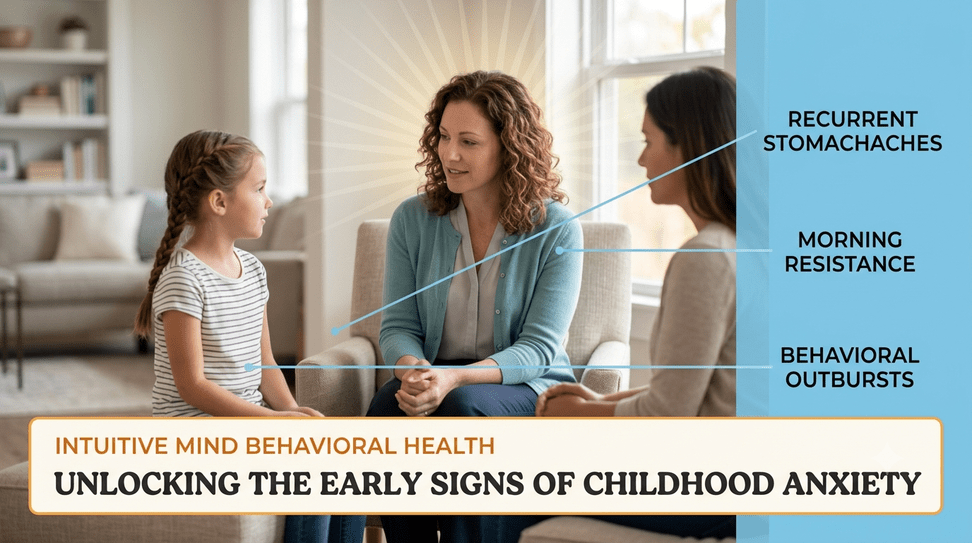
Signs of Anxiety in Children: A Guide for Seguin Parents

For many professionals, parents, and community leaders navigating high-functioning depression in San Antonio, daily life looks remarkably successful on the outside. You may reliably hit targets at your downtown office, manage household responsibilities in Alamo Heights or Stone Oak, commute along I-35 without missing a beat, and show up for friends and family with a smile. Yet behind that polished exterior, every single task feels like wading through heavy water. The energy required to maintain your routine consumes your reserves, leaving you exhausted, emotionally flat, and wondering why accomplishments no longer bring genuine satisfaction. Recognizing high-functioning depression in San Antonio requires looking beyond traditional stereotypes of mental health struggles. Popular culture often portrays depression as an inability to get out of bed or complete basic daily routines. However, persistent depressive disorder—the clinical framework that frequently underlies high-functioning depression—presents differently. Individuals experiencing this condition often overcompensate through intense discipline, structured habits, and sheer determination. They function at a high level not because they feel well, but because the alternative of letting down colleagues or family feels unacceptable. At Intuitive Mind Behavioral Health, we understand the immense weight of carrying high expectations while feeling internally disconnected. Led by Lydia Kimeli-Pope, MSN, PMHNP-BC, our practice offers compassionate, evidence-based psychiatric evaluations tailored to adults across San Antonio, New Braunfels, Seguin, San Marcos, and the broader Texas Hill Country. Through our integrative care model, available both in person and via secure telehealth across Texas and New Mexico, we help you uncover the root causes of persistent emotional exhaustion and chart a path back toward authentic vitality. Section 1: Why It’s More Than Just Feeling Sad or Overworked It is common to dismiss persistent fatigue, irritability, or joylessness as simple workplace stress, caregiver fatigue, or a temporary phase of life. In a growing metropolitan hub like San Antonio, where professional demands and family commitments run high, high-functioning individuals routinely normalize chronic strain. However, high-functioning depression is fundamentally different from everyday stress or situational sadness. Clinically understood as persistent depressive disorder (PDD) or chronic dysthymia, this condition involves a depressed mood that persists for at least two years in adults, accompanied by additional neurovegetative and cognitive symptoms. Because the onset is often gradual, individuals frequently absorb these feelings into their sense of identity, concluding “this is just who I am” rather than recognizing a treatable health condition. 3 Contributing Clinical Factors in High-Functioning Depression Recognizing Subtle Patterns in Daily Life High-functioning depression rarely manifests as overt crisis initially. Instead, it appears as quiet changes in how you experience the world: Reader Care Note: Recognizing these patterns is not a sign of personal weakness, nor does it diminish what you have accomplished. It is an indication that your nervous system has been carrying an unsustainable burden and deserves thoughtful, clinical support. Understanding how neurobiology, coping patterns, and environmental stress interact is the first step toward reclaiming emotional energy and clarity. Section 2: The Clinical Approach vs. Self-Management Alone When high-functioning adults realize they are struggling, their initial instinct is often to manage the problem independently. They may buy wellness planners, try strict routine changes, increase workout intensity, or consume self-help media. While healthy habits support well-being, self-management techniques alone often fall short when addressing persistent neurochemical imbalances and chronic nervous system dysregulation. Attempting to solve persistent depressive disorder through sheer willpower can inadvertently deepen frustration. When self-help efforts fail to restore genuine joy or energy, individuals often blame themselves rather than recognizing that an underlying medical condition requires clinical evaluation. Furthermore, high-functioning depression frequently masks co-occurring conditions, such as generalized anxiety or an underlying mood disorder, which require precise differential diagnosis to treat effectively. Comprehensive Psychiatric Evaluation Protocol at Intuitive Mind At Intuitive Mind Behavioral Health, we reject one-size-fits-all questionnaires and rushed medical visits. Our evaluation protocol is designed to provide a comprehensive, respectful assessment of your complete health profile. “A thorough psychiatric evaluation looks beyond external productivity to understand the internal cost of function, providing a precise roadmap for sustainable recovery.” By grounding our practice in clinical standards established by professional organizations like the American Psychiatric Nurses Association (APNA), we ensure every patient receives evidence-based, compassionate care aligned with advanced psychiatric nursing principles. Section 3: The Real Cost of Waiting for Support Because high-functioning depression does not immediately disrupt employment or physical safety, individuals often postpone seeking care for years. It is easy to convince yourself that “things aren’t bad enough” to warrant professional help, especially when comparing your situation to those in acute crisis. However, living in a state of continuous emotional drain carries significant cumulative consequences. Over time, the chronic stress associated with unaddressed persistent depressive disorder affects multiple domains of life, transforming manageable daily responsibilities into heavy burdens. Stage of Impact Functional & Cognitive Impact Interpersonal & Emotional Impact Physical & Long-Term Health Impact Early Manifestation Tasks require extra effort; reliance on rigid routines or caffeine to maintain focus; feeling drained by end of workday. Decreased patience with family; declining interest in social outings in San Antonio; masking fatigue in public settings. Mild sleep disturbances, subtle muscle tension, occasional headaches, feeling unrested upon waking. Progressing Strain Cognitive fatigue increases; decision-making becomes taxing; work quality maintained only through overtime or extreme stress. Emotional detachment from partner or children; avoidance of non-essential social contact; pervasive guilt about lack of presence. Chronic insomnia or oversleeping, persistent gastrointestinal issues, weakened immune response, systemic fatigue. Crisis-Level Impact Executive burnout; inability to sustain work performance despite high effort; risk of a major depressive episode (“double depression”). Deep emotional isolation; feeling completely misunderstood; severe strain on marriages or close family relationships. Significant physical exhaustion, heightened risk of cardiovascular stress, emergence of complex mood shifts resembling bipolar disorder during periods of extreme burnout. “Delaying care for persistent depressive symptoms does not build resilience—it drains the reserves required to thrive in your personal and professional life.” Seeking evaluation early halts this progressive drain on your system, allowing you to restore balance before reaching a state of complete physical or emotional exhaustion. Section

Signs of Anxiety in Children: A Guide for Seguin Parents Read More »

Skip to content