
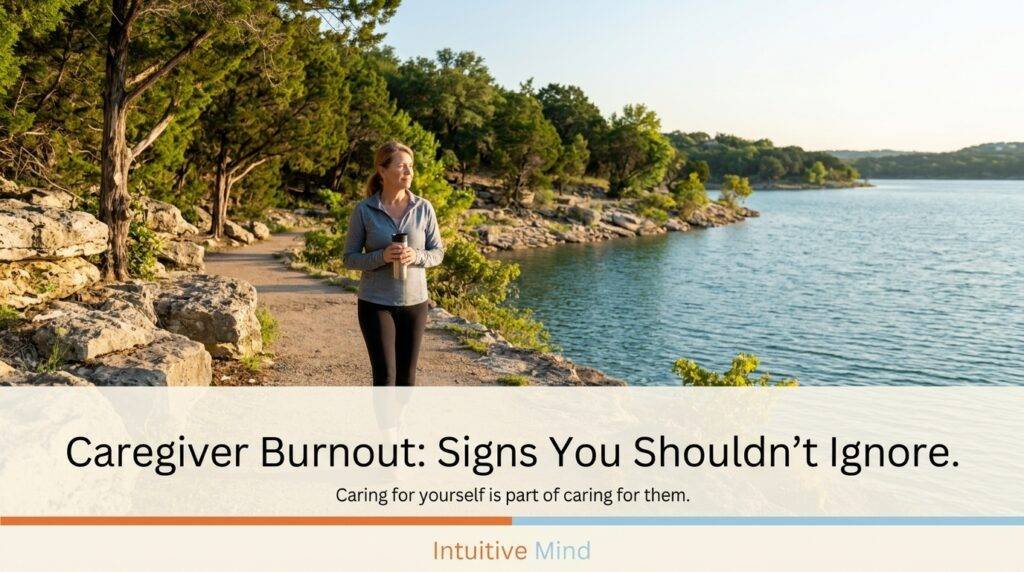
When Caring for Someone Starts Costing You
It starts with love and a sense of duty. You help your mother with appointments. You manage your husband’s medications. You coordinate care for a child with special needs, or for a family member living with a serious mental illness. Over months or years, the tasks multiply, the breaks disappear, and one day you realize you can’t remember the last time you felt rested. That’s often how caregiver burnout arrives: not all at once, but gradually, until it’s simply how life feels.
Many caregivers don’t think of themselves as caregivers at all. They’re just a daughter, a husband, a mom doing what needs to be done. That’s part of why burnout goes unnoticed. If you don’t see your role as a demanding job, you’re less likely to recognize when it’s wearing you down.
Around Canyon Lake, caregiving can carry extra layers. Specialists and support services may be a long drive away, family members may live out of town, and quiet roads can mean quiet isolation. Even with a supportive community nearby, the daily weight often falls on one person.
November is National Family Caregivers Month, a good moment to say plainly what many caregivers need to hear: needing support doesn’t mean you’re failing the person you care for. It means you’re human, and that your own health is part of the care plan.
This guide explains what burnout looks like, why caregivers so often push past their limits, how burnout connects to depression and anxiety, what actually helps, and where Canyon Lake caregivers can turn, both for practical relief and for mental health care. Let’s start with the signs.

What Caregiver Burnout Looks Like
Caregiver burnout is a state of physical, emotional, and mental exhaustion that builds when the demands of caring for someone outpace the support and rest available to the caregiver. It isn’t a diagnosis on its own, but it’s a real and recognizable pattern, and it can open the door to conditions that are.
Common warning signs include:
- Feeling tired all the time, even after sleeping
- Irritability, resentment, or a short temper with the person you care for or others
- Pulling away from friends, hobbies, church, or activities you used to enjoy
- Sleeping poorly, or sleeping much more than usual
- Getting sick more often, or neglecting your own medical care
- Feeling hopeless, numb, trapped, or like nothing you do is enough
It doesn’t only affect one kind of caregiver. Burnout can happen whether you’re caring for an aging parent, a spouse with dementia or chronic illness, an adult child with mental illness, or a child with developmental, medical, or emotional needs. If you’re raising a child with mental health challenges, our page on children’s mental health care explains how evaluation and support work for younger patients and their families.
Stress vs. burnout vs. depression. Caregiving stress is expected and often comes and goes. Burnout is more persistent: the exhaustion doesn’t lift, and your capacity to cope keeps shrinking. When low mood, hopelessness, loss of interest, or changes in sleep and appetite last most days for two weeks or more, depression may be part of the picture. The National Institute of Mental Health describes these as common signs of depression, and they’re worth taking seriously.
Anxiety often comes along. Many caregivers live in a constant state of alert: listening for a fall at night, worrying about the next crisis, rehearsing what could go wrong. Over time, that vigilance can become an anxiety problem of its own.
A safety note. Sometimes exhaustion turns into thoughts that frighten caregivers, such as wishing it were all over, feeling like you can’t go on, or fearing you might lose control with the person you care for. These thoughts are signs that you need support right away, not signs that you’re a bad person. Step away if you can, and reach out to someone today.
Only a qualified clinician can diagnose depression or anxiety. But you don’t need a diagnosis to deserve help.
Why Caregivers Push Past Their Limits
Most caregivers know, in theory, that they should take care of themselves. So why is burnout so common? Several patterns keep caregivers running on empty.
Guilt. Taking a break can feel like abandoning someone who depends on you. Many caregivers feel guilty for wanting time off, for feeling frustrated, or for imagining life without caregiving responsibilities, even briefly.
“No one else can do it.” Sometimes that’s true, at least for certain tasks. Often, though, it’s a belief that keeps caregivers from asking for or accepting help. Over time, one person ends up carrying what could be shared.
Invisible work. Much of caregiving is planning, worrying, coordinating, and staying on call. It doesn’t show up on a schedule, so others may not realize how much you’re doing, and you may not either.
Your own health comes last. Caregivers often cancel their own appointments, skip meals, lose sleep, and drop the activities that kept them balanced. These small sacrifices add up.
Isolation. Caregiving can shrink your world. Friends drift, outings become hard to arrange, and conversations center on the person you care for. The CDC recognizes caregiving as a public health issue because of its effects on caregivers’ own physical and mental health.
Waiting for a crisis. Many caregivers don’t seek help until they’re physically ill, emotionally overwhelmed, or unable to continue. By then, recovery takes longer.
[CLINICIAN’S NOTE] Two patterns we see often: treating exhaustion as normal, and waiting to seek help until you’re the one in crisis. When fatigue, irritability, and hopelessness become everyday experiences, they’re no longer just part of caregiving; they’re signals that your health is at risk. Caregivers who wait until they can’t function often face a longer recovery and fewer options for the person they care for. If you’ve been feeling this way for weeks, talking with a provider is a reasonable next step, not an indulgence.
What Helps: A Whole-Person Approach to Recovery
Recovering from burnout isn’t about finding more hours in the day. It’s about lightening the load where possible, getting real support, and treating any mental health conditions that have developed along the way. That takes care that looks at the whole person, including the one doing the caring.
Start with an honest look at the load. Write down what you do in a typical week, including the invisible tasks. Seeing it on paper often makes clear where help is possible and which tasks could be shared, simplified, or let go.
Ask for specific help. “Let me know if you need anything” rarely leads anywhere. “Could you sit with Dad on Thursday afternoons?” or “Could you handle the pharmacy runs?” gives people a clear way to help.
Use respite care. Respite means short-term relief, whether a few hours, a day, or longer, while someone else provides care. In Comal County, the Alamo Area Agency on Aging offers caregiver support services, including respite and caregiver education, through the Alamo Service Connection at (866) 231-4922. The Eldercare Locator at 1-800-677-1116 can also connect you with local services.
Find people who understand. Support groups connect you with others facing the same challenges. NAMI offers free support and education programs for family members of people living with mental illness, and many caregivers say talking with others in the same situation is one of the most helpful things they’ve done.
Treat depression if it’s there. When burnout has crossed into persistent low mood, hopelessness, or loss of interest, it’s time for professional care. Treatment can include therapy, lifestyle support, and medication when appropriate. Learn more about our approach to depression treatment.
Calm the constant alarm. For caregivers who feel always on edge, therapy offers practical tools for managing worry, setting boundaries, and getting back some sense of control. Anxiety treatment can also improve sleep and patience. See how we approach anxiety and panic treatment.
Look at the physical side. Long-term stress can affect sleep, appetite, blood pressure, and immune health. Functional and hormonal lab testing may be recommended when exhaustion seems out of proportion or symptoms suggest a physical contributor, such as thyroid problems or nutritional deficiencies. For women in midlife, perimenopause-related mood changes can add to caregiving fatigue and are worth checking.
Medication, when appropriate. If medication becomes part of your care, your prescriber will discuss options, benefits, and side effects, and how they fit with a demanding schedule. When medication is being considered, pharmacogenomic testing may provide information about how your genes could affect your response to certain medications. It doesn’t guarantee the right medication, but it can help guide choices.
Protect the basics. Sleep, meals, movement, and time outdoors aren’t luxuries. Even small, protected pieces of time, like a short walk by the lake, coffee with a friend, or one evening a week off duty, help restore capacity.
Set boundaries without guilt. Saying no to some requests lets you keep saying yes to what matters most. Therapy can help you work through the guilt that often comes with setting limits.
How progress is measured. Recovery looks like more energy, better sleep, less irritability, feeling more like yourself, and having support in place so caregiving feels sustainable rather than crushing.
Caregivers are often told to take care of themselves, as if it were one more task on the list. Real support changes the load itself: shared tasks, respite, connection, and treatment for what burnout has left behind. When the caregiver is cared for, the person they love is better cared for, too.
Comparing Your Support Options
Most caregivers benefit from more than one kind of support. Here’s how the main options compare.
| Care Option | What It Addresses | Often a Good Fit When | Limitations to Know |
|---|---|---|---|
| Self-care and boundaries | Rest, routines, personal limits | Stress is building but still manageable | Hard to sustain without practical help |
| Family and friends sharing tasks | Workload, isolation | Others are willing and nearby | Depends on availability and follow-through |
| Respite and community services | Time off, practical relief, caregiver education | You need regular breaks or extra help at home | Availability and eligibility vary |
| Caregiver support groups | Connection, shared experience, coping ideas | You feel alone or misunderstood | Support, not treatment for depression or anxiety |
| Therapy only | Stress, guilt, boundaries, coping skills | Emotional strain is the main issue | May not address medication or physical factors |
| Integrated psychiatric care (Intuitive Mind approach) | Evaluation, therapy, medication when appropriate, labs, lifestyle, coordination | Burnout has led to persistent low mood, anxiety, or poor functioning | Requires an evaluation first; plan and pace depend on the individual |
A practical way to use this table: if stress is building but you’re still coping, start with boundaries, shared tasks, and respite. If exhaustion, low mood, or anxiety has lasted several weeks or is affecting your health or relationships, a professional evaluation is a reasonable next step.
What to Expect at Intuitive Mind
For caregivers in Canyon Lake, our New Braunfels office is a manageable drive, and telehealth is available anywhere in Texas, which can be easier when leaving home means arranging coverage for someone you care for.
Initial Evaluation. We start with a conversation about how you’re doing: sleep, mood, energy, stress, health history, and what your caregiving role involves. It helps to bring a list of your own medications and supplements, any recent lab results or medical records, and a few notes on what a typical week looks like. We handle the assessment and explain what we see in plain language.
Personalized Plan. Together, we build a plan around your needs and the realities of your caregiving schedule. That may include therapy, lifestyle steps, lab work, a discussion of medication, or connecting you with practical resources. Your role is to tell us what’s realistic.
Ongoing Care. Follow-up visits track how you’re feeling and whether the plan is working, including whether your caregiving load has become more sustainable. Telehealth visits can make follow-ups easier to fit in.
Adjust and Coordinate. As your situation changes, the plan changes. With your consent, we coordinate with your primary care provider or other clinicians so your care stays connected.
Every caregiver’s situation is different, and the pace of progress varies from person to person.
Common Questions About Caregiver Burnout
How do I know if I’m burned out?
Common signs include constant fatigue, irritability, withdrawing from others, poor sleep, getting sick more often, and feeling hopeless or trapped. If these have lasted for weeks and are affecting your health or relationships, burnout is likely. If low mood or loss of interest is present most days, an evaluation for depression can help.
Is it selfish to take a break from caregiving?
No. Breaks help you stay healthy and patient enough to keep caring for someone over the long term. Respite care, help from family and friends, and protected personal time are part of sustainable caregiving. Many caregivers find that rest makes them more present, not less, with the person they love.
Where can Canyon Lake caregivers find respite or support?
The Alamo Area Agency on Aging serves Comal County and offers caregiver support services, including respite and education, through the Alamo Service Connection at (866) 231-4922. The Eldercare Locator at 1-800-677-1116 can also help. For your own mental health, a psychiatric evaluation can address burnout-related depression or anxiety.
Does insurance cover mental health care for caregivers?
We work with many major insurance plans and also offer self-pay. Contact us to confirm coverage. It can help to check your plan’s mental health benefits before your first appointment so you know what to expect.
Your Next Step Is a Conversation
Caregiving is an act of love, but it’s also demanding work, and no one can do it indefinitely without support. Caregiver burnout isn’t a sign that you’ve failed the person you care for. It’s a signal that your own health needs attention, and that attention matters for both of you.
The most useful next step isn’t pushing harder. It’s a comprehensive evaluation that helps you understand what burnout has taken from you and what support would help most before deciding what to change.
- Ready to start? Book an evaluation with Intuitive Mind. In-person visits are available in New Braunfels, with telehealth anywhere in Texas.
- Prefer to talk first? Call us at (830) 302-4097 with your questions.
- Want to learn more? Read about how we treat depression and related mood concerns.
If you’re in crisis or thinking about harming yourself, you don’t have to wait for an appointment. Call or text 988 to reach the 988 Suicide & Crisis Lifeline, available 24/7. In Comal County, the Hill Country MHDD 24-hour crisis line is 1-877-466-0660. If you or someone else is in immediate danger, call 911 or go to the nearest emergency room. Intuitive Mind is not an emergency service.
About This Article
Written by the Intuitive Mind Behavioral Health Care Team Clinically reviewed by Lydia Kimeli-Pope, MSN, PMHNP
Intuitive Mind Behavioral Health is a psychiatric mental health practice based in New Braunfels, Texas, offering whole-person care for adults, children, and families, in person and through telehealth across Texas and New Mexico. Our approach combines psychiatric evaluation, therapy, medication management, pharmacogenomic testing, functional and hormonal lab testing, and nutritional and lifestyle support.
🌐 intuitive-mind.com 📍 387 W. Mill St. Suite 106, New Braunfels, TX 78130 📞 (830) 302-4097