
Understanding School Refusal in San Antonio Families
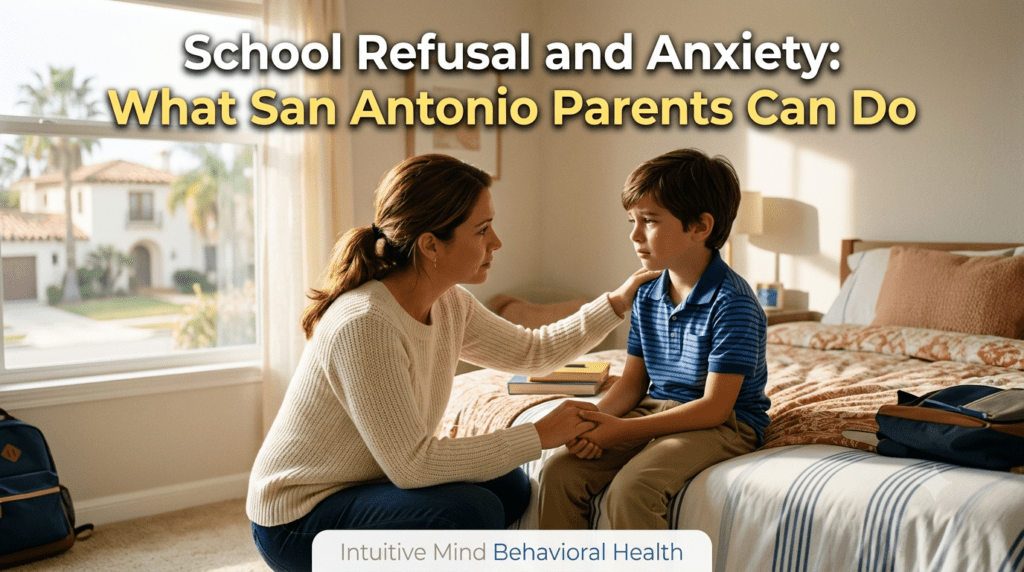
As a parent in San Antonio or the surrounding Texas Hill Country, weekday mornings can rapidly escalate into distressing battles. If your child regularly cries, complains of severe stomach pain, throws intense tantrums, or flatly refuses to get into the car for school, you are not alone—and your child is not simply being “difficult.”
School refusal (often called school avoidance) affects up to 5% of school-aged children. Unlike truancy, where students skip school without parental knowledge, school refusal happens with the parents’ full awareness—and usually causes immense stress for the entire family.
Recognizing school avoidance as a symptom of clinical anxiety is the first critical step toward restoring calm to your mornings and confidence to your child.
Common Root Causes of School Refusal
School avoidance rarely stems from a single event. It is usually triggered by an interaction between underlying emotional vulnerabilities and environmental stressors:
1. Separation Anxiety
Common in younger children, the fear of being away from parents or caregivers can cause panic about something bad happening to their family while they are at school.
2. Social Anxiety & Fear of Judgment
Older children and teens often experience intense fear of being judged, teased, embarrassed during public speaking, or excluded by peers at school.
3. Academic Stress & Performance Panic
Unaddressed learning differences, ADHD, or extreme perfectionism can turn the classroom environment into a source of constant feeling overwhelmed.
4. Somatic Stress Response
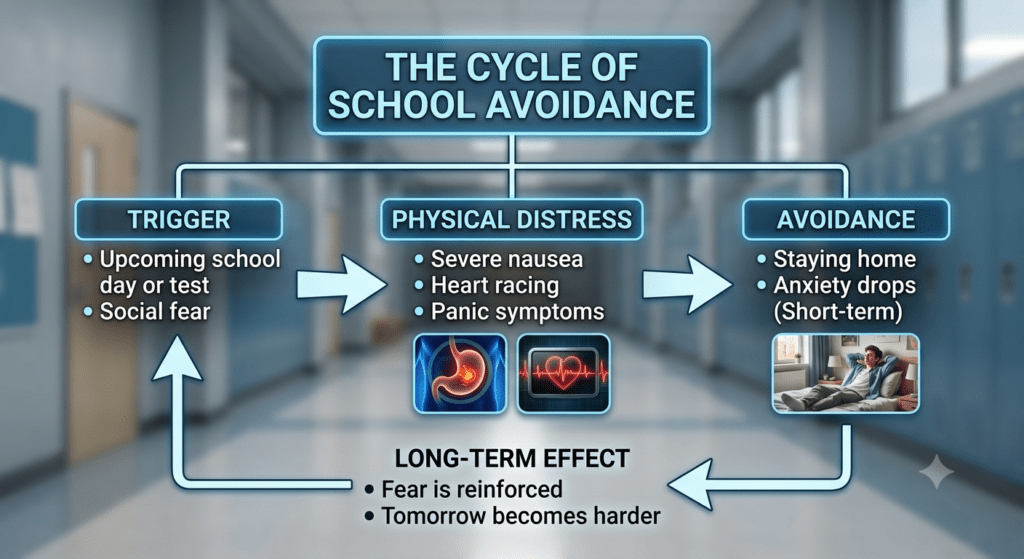
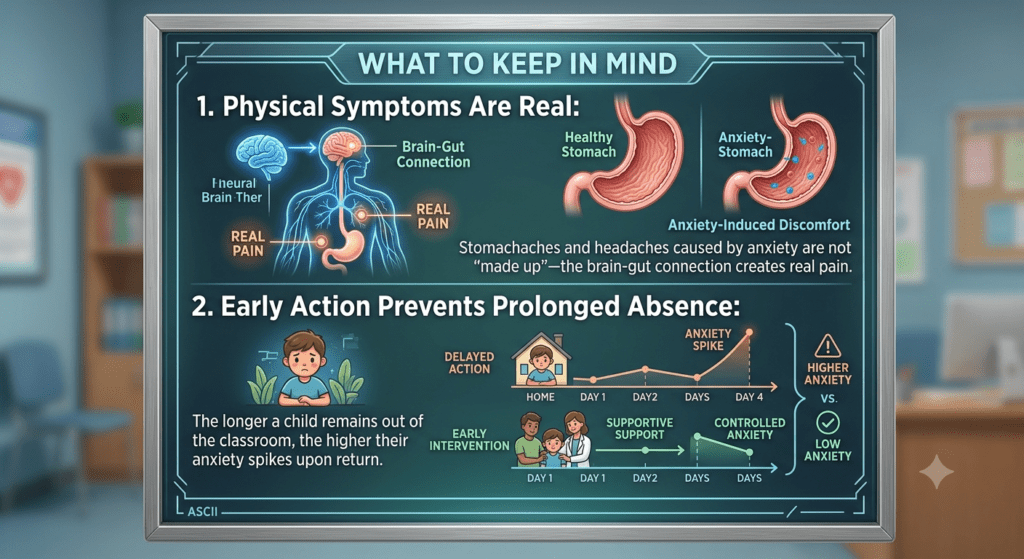
Anxiety releases stress hormones like cortisol and adrenaline, causing real physical suffering—including morning vomiting, dizziness, muscle tension, and chronic headaches.
School Refusal vs. Truancy: Key Differences
| Trait / Behavior | School Refusal (Anxiety-Driven) | Truancy (Behavioral) |
| Parental Awareness | Parents are fully aware; child is at home | Child skips school without parents knowing |
| Emotional State | Marked by fear, panic, somatic pain, distress | Marked by lack of interest, rule-breaking |
| Academic Concern | Child usually cares about grades/homework | Student often lacks academic engagement |
| Location During Hours | Stays home where they feel safe | Out in the community with peers |
Practical Action Steps for San Antonio Parents
When confronting school refusal, parents can implement structured strategies while seeking professional evaluation:
- Rule Out Underlying Medical Causes: Have your pediatrician evaluate recurring physical complaints to ensure no primary physical illness is present.
- Keep Weekend & Weekday Routines Consistent: Maintain stable sleep patterns and limit screen time during typical school hours when a child stays home.
- Validate Emotions Without Validating Avoidance: Say, “I see how anxious you feel, and it is okay to feel scared. But school is safe, and we will figure this out together.”
- Partner with School Staff: Communicate early with guidance counselors and teachers in your San Antonio school district to establish 504 accommodation plans or gradual return protocols.
- Seek Professional Psychiatric Evaluation: Work with a specialized pediatric mental health provider to assess underlying anxiety, neurodevelopmental factors, or mood disruption.
Integrative Pediatric Psychiatric Care at Intuitive Mind
At Intuitive Mind Behavioral Health, located convenient to North San Antonio and Stone Oak in New Braunfels, we offer compassionate, root-cause psychiatric evaluations for children, teens, and young adults.

Led by Lydia Kimeli-Pope, MSN, PMHNP-BC, our practice bridges the gap between biological health, emotional wellness, and academic success. We utilize 90-minute intake evaluations to give families time to share their full story.
When appropriate, we order comprehensive blood work (checking thyroid function, vitamin status, and metabolic markers) and utilize GeneSight® pharmacogenomic testing to guide precise medication choices without unnecessary trial-and-error.
Explore our specialized clinical services by visiting our dedicated pages for anxiety care services, depression care, mood disorder treatment, and bipolar disorder care.
“Children don’t refuse school to be difficult—they do it because their nervous system feels unsafe. When we treat the underlying anxiety, school becomes manageable again.” — Lydia Kimeli-Pope, MSN, PMHNP-BC
Learn more about our practice values and clinical leadership on our about page.
If your child or family is facing a severe mental health crisis, immediate assistance is available. Contact the 988 Suicide & Crisis Lifeline by calling or texting 988 for free, 24/7 support.
For additional clinical guidance on childhood anxiety and school refusal, visit the National Institute of Mental Health (NIMH) or the Substance Abuse and Mental Health Services Administration (SAMHSA).
Why San Antonio & Hill Country Families Trust Us
Families across San Antonio, Stone Oak, Garden Ridge, Schertz, and New Braunfels choose Intuitive Mind Behavioral Health for our clinical expertise and family-centered care.
Connect with our clinical team today through our contact page to schedule an evaluation.
Step-by-Step Pathway to Care
Getting help for your child’s school anxiety is structured, supportive, and clear.
- Free 15-Minute Consultation: Speak with our care team to discuss your child’s symptoms and ensure our practice model fits your family.
- Digital Pre-Visit Intake: Complete secure online developmental and medical history forms prior to your visit.
- 90-Minute Family Assessment: Meet with Lydia Kimeli-Pope, MSN, PMHNP-BC, for an in-depth clinical evaluation.
- Targeted Diagnostic Testing: Order functional blood work or GeneSight® DNA testing if medication management is being considered.
- Tailored Treatment Roadmap: Receive a comprehensive plan combining evidence-based medical care, therapy coordination, and school accommodation guidance.
Support Your Child’s Journey Back to the Classroom
You do not have to struggle through difficult mornings alone. Expert, compassionate pediatric psychiatric care is available close to home.
- Primary Action: Book a Free 15-Minute Consultation
- Direct Phone: Call our office at (830) 302-4097
- Explore Services: Read more about our anxiety care services or depression care
We proudly support children, teens, and families in San Antonio, New Braunfels, Stone Oak, Schertz, and across Texas via telehealth.
This content is educational and does not substitute for formal clinical evaluation or medical advice. Always consult a licensed healthcare provider regarding your physical or mental health needs.
About the Author
Intuitive Mind Behavioral Health — Lydia Kimeli-Pope, MSN, PMHNP-BC
Board-Certified Psychiatric Mental Health Nurse Practitioner
Intuitive Mind Behavioral Health provides integrative psychiatric care for children, teens, young adults, and families across San Antonio, Bexar County, Comal County, and statewide via Texas telehealth. We combine evidence-based psychiatric medicine with functional lab testing, lifestyle wellness, and family-centered support.
📍 387 W. Mill St. Suite 106, New Braunfels, TX 78130
Accepting new patients. Free 15-minute consultations available.