

Recognizing Early Changes in Seguin Families
Raising teenagers and young adults in a historic, close-knit community like Seguin, Texas, offers wonderful community bonds. However, watching your child transition into independence can also bring hidden worries. When a young adult suddenly changes behavior, pulls away from family traditions, or seems entirely detached from reality, parents often feel a frightening sense of helplessness.
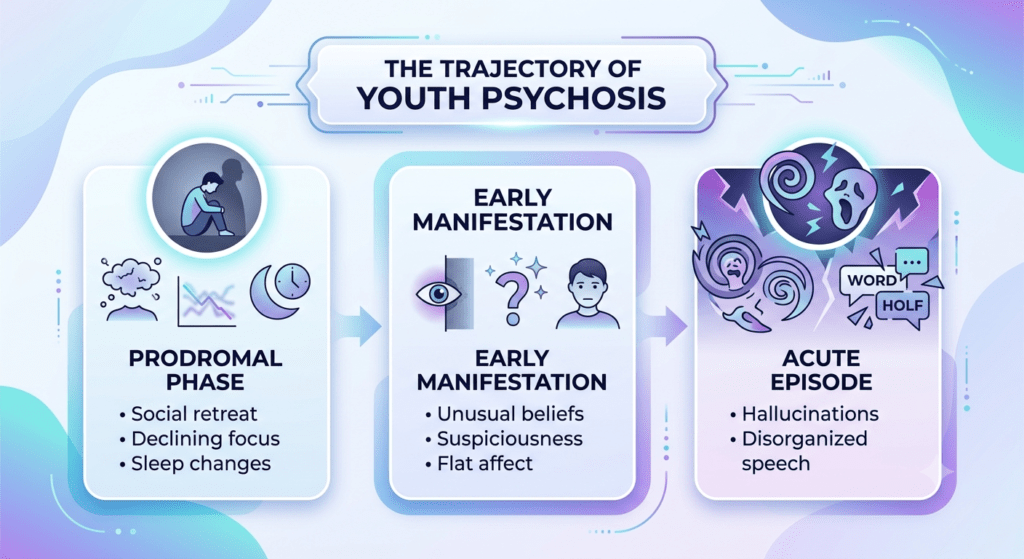
Schizophrenia is a complex brain-based condition, but contrary to common media portrayals, it rarely appears overnight. It typically develops gradually through a “prodromal” phase—a subtle shifting period where behavioral and cognitive changes take root long before a formal crisis occurs.
Recognizing these early signs can help parents secure timely, compassionate intervention that dramatically improves long-term outcomes.
Early Warning Signs Parents Should Look For
During the late teens and early twenties, brain maturation undergoes massive shifts. Distinguishing between normal adolescent moodiness and emerging psychiatric illness can be difficult. However, certain persistent patterns warrant professional attention:
1. Severe Social Withdrawal and Isolation
A young adult who was previously engaged with friends, sports, or family suddenly stops communicating, locks themselves in their bedroom for days, and abandons all social connections.
2. Noticeable Drop in Academic or Occupational Functioning
A bright high school or college student in Seguin suddenly experiences a sharp decline in grades, struggles to complete basic tasks, or quits a stable job without a rational explanation.
3. Suspiciousness or Paranoid Beliefs
Expressing unusual, unshakeable convictions—such as believing peers, teachers, or strangers are plotting against them, watching them through devices, or talking about them behind their backs.
4. Unusual Perceptual Experiences (Hallucinations)
Hearing whispers, mumbling, or distinct voices when no one is present, or seeing things that others cannot perceive. Young adults often hide these experiences out of fear until symptoms intensify.
5. Disorganized Speech and Thinking
Jumping rapidly from one unrelated topic to another, creating nonsensical words, or stopping mid-sentence because their train of thought has abruptly vanished (thought blocking).
Symptom Categories: Positive vs. Negative Signs
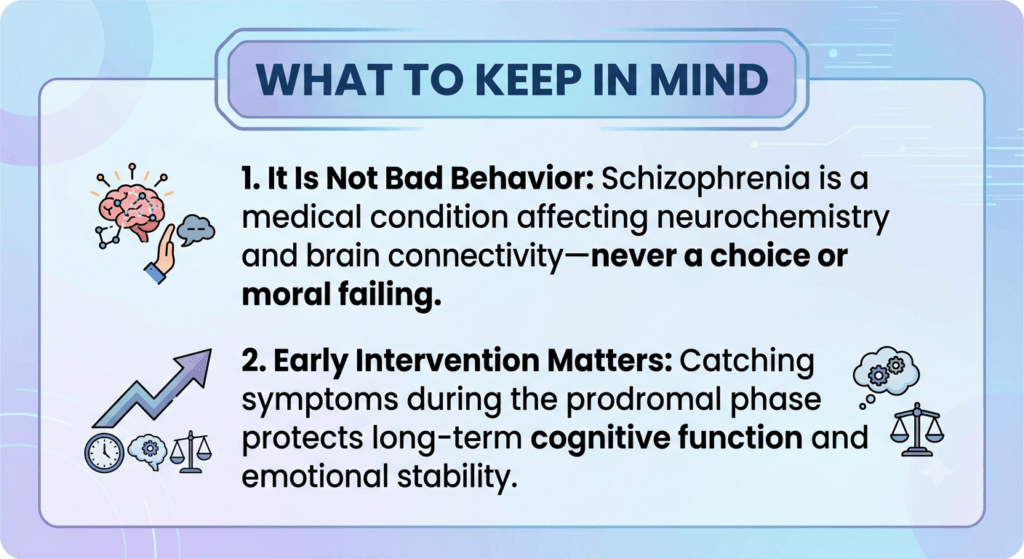
| Symptom Category | Clinical Definition | Common Behavioral Examples |
| Positive Symptoms (Additions to normal function) | Behaviors or thoughts added to a person’s experience | Auditory hallucinations, visual misperceptions, paranoid delusions, bizarre ideas |
| Negative Symptoms (Absences from normal function) | Capabilities or emotions that become muted or missing | Emotional flatness, lack of facial expression, severe apathy, loss of speech fluency |
| Cognitive Symptoms | Disruptions in working memory and executive processing | Inability to concentrate, poor decision-making, trouble following a conversation |
The Integrative Approach to Youth Psychiatric Care
Navigating suspected psychosis requires an unhurried, highly specialized medical evaluation. At Intuitive Mind Behavioral Health, located just a short drive from Seguin in New Braunfels, we provide sensitive, comprehensive psychiatric care for young adults and their families.
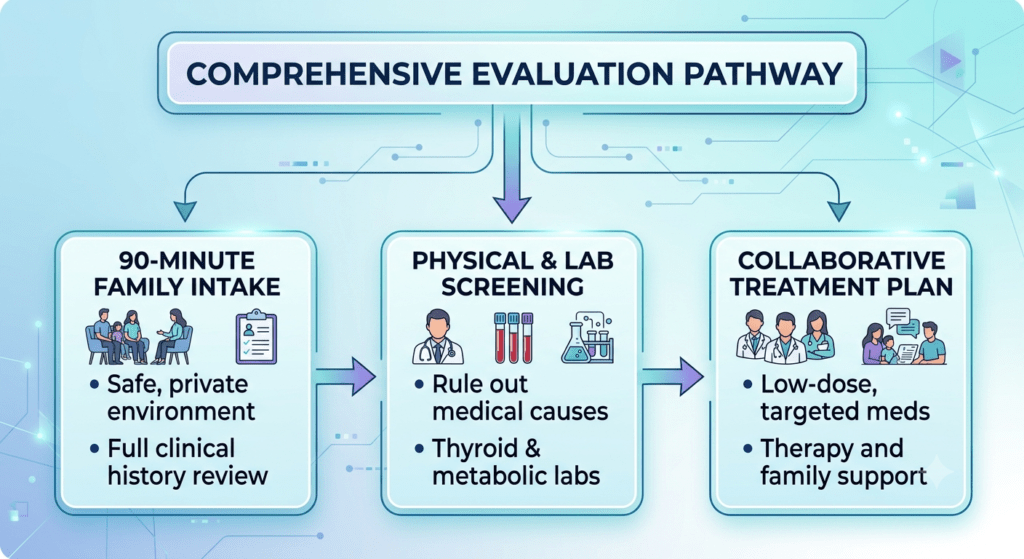
Led by Lydia Kimeli-Pope, MSN, PMHNP-BC, our practice understands how frightening this journey can be for parents. Our 90-minute initial intake provides a safe, non-judgmental space to review symptoms, medical history, and developmental changes.
We utilize thorough physical and laboratory screenings to rule out underlying medical or metabolic triggers, ensuring accurate diagnosis and targeted, evidence-based care.
Explore our specialized clinical pathways by visiting our dedicated pages for anxiety care services, depression care, mood disorder treatment, and bipolar disorder care.
“When a young adult begins showing signs of psychosis, parents need clear answers and steady guidance, not rushed appointments. We walk beside your family every step of the way.” — Lydia Kimeli-Pope, MSN, PMHNP-BC
Learn more about our practice philosophy and background on our about page.
If your child or loved one is experiencing an immediate psychiatric crisis or expressing thoughts of self-harm, urgent help is available. Contact the 988 Suicide & Crisis Lifeline by calling or texting 988 for free, 24/7 confidential support.
For comprehensive educational materials and clinical research on early psychosis and schizophrenia, visit the National Institute of Mental Health (NIMH) or the Substance Abuse and Mental Health Services Administration (SAMHSA).
Why Seguin & Guadalupe County Families Trust Us
Families across Seguin, Marion, McQueeney, and Guadalupe County choose Intuitive Mind Behavioral Health for our clinical expertise and compassionate, family-centered approach.
Connect with our practice today through our contact page to discuss your concerns or reserve an appointment.
Step-by-Step Pathway to Care
Taking the first step toward specialized care for your young adult is structured and reassuring.
- Free 15-Minute Consultation: Connect briefly with our care coordinators to discuss what your young adult is experiencing and see if our clinic is the right fit.
- Digital Pre-Visit Forms: Complete secure medical and developmental history paperwork online prior to your visit.
- 90-Minute Clinical Intake: Meet with Lydia Kimeli-Pope, MSN, PMHNP-BC, for a thorough, unhurried evaluation.
- Targeted Medical & Lab Screening: Complete recommended blood panels or neurological screenings to rule out contributing physical factors.
- Collaborative Treatment Plan: Receive a tailored, evidence-based care roadmap combining medication management, therapy referrals, and family education.
Get Support for Your Family Today
You do not have to navigate the uncertainties of early psychosis alone. Compassionate, expert psychiatric care is available just minutes from Seguin.
- Primary Action: Book a Free 15-Minute Consultation
- Direct Phone: Call our office at (830) 302-4097
- Explore Services: Read more about our anxiety care services or depression care
We proudly support families in Seguin, New Braunfels, Marion, San Marcos, and across Texas via telehealth.
This content is educational and does not substitute for formal clinical evaluation or medical advice. Always consult a licensed healthcare provider regarding your physical or mental health needs.
About the Author
Intuitive Mind Behavioral Health — Lydia Kimeli-Pope, MSN, PMHNP-BC
Board-Certified Psychiatric Mental Health Nurse Practitioner
Intuitive Mind Behavioral Health provides integrative psychiatric care for children, teens, young adults, and families across Seguin, Guadalupe County, and statewide via Texas telehealth. We combine evidence-based psychiatric medicine with functional lab testing, pharmacogenomic precision care, and family-centered support.
📍 387 W. Mill St. Suite 106, New Braunfels, TX 78130
Accepting new patients. Free 15-minute consultations available.